
You keep going for it one shot too early
The three-shot pattern that wins the point for you, both US teams qualifying for Doha, padel's global growth curve, and Tucson's indoor courts.
Wide, middle, angle.
You’re at the net, they’re pinned at the back glass, and a slow ball floats up with your name on it. You swing for the line. It clips the tape, or the glass spits it back, and now you’re the one running.
At club level, going for the winner is usually the losing play. The walls hand your pace straight back. The team that constructs the point wins it; the one that tries to end it usually loses.
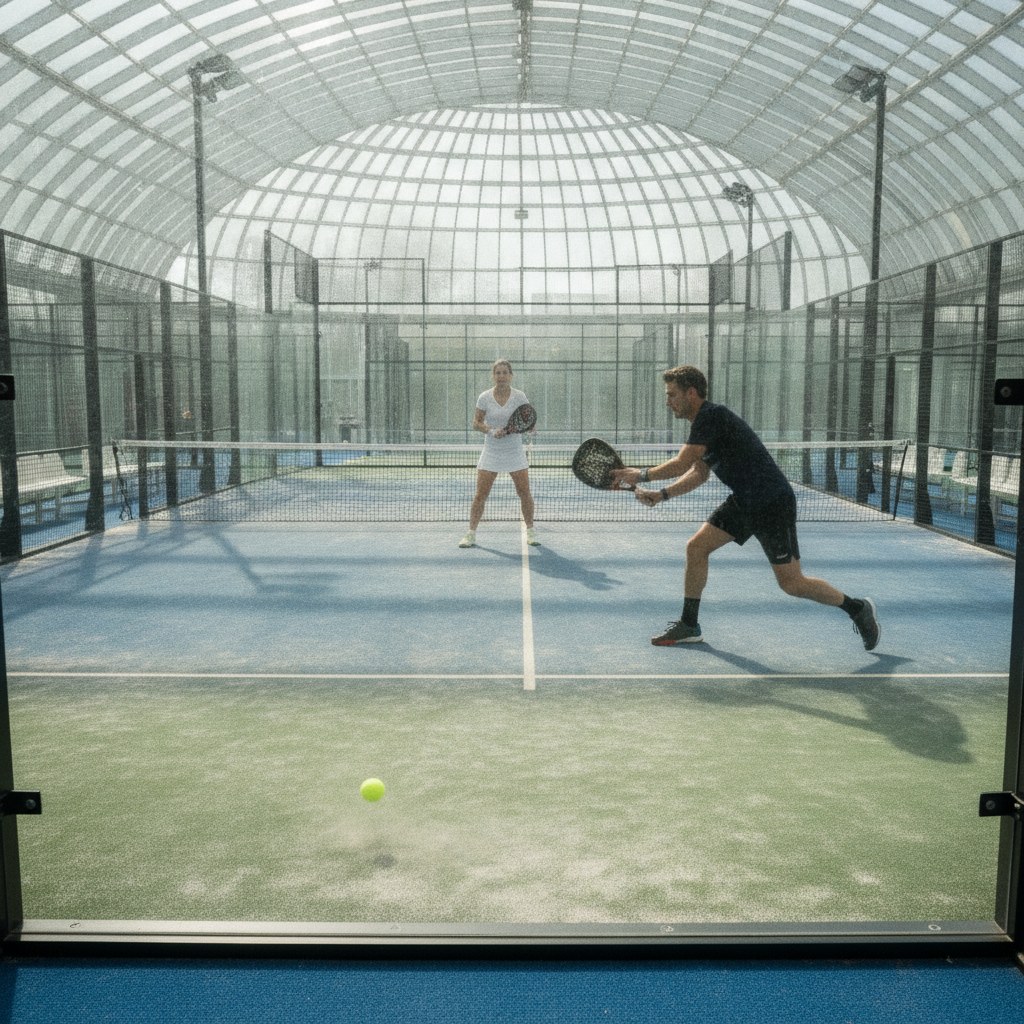
Wide, middle, angle
So construct. There’s a three-shot pattern that does it, all played from the net:
- Wide. Take the floaty ball as a soft bandeja into a back corner. Not to win it, to make one defender run. The moment they move, a seam opens between them.
- Middle. Volley into that seam, at the feet of the player who slid over to cover. A ball at the feet can only be lifted, so back it floats, soft and sitting up.
- Angle. Now finish it, a volley into the corner the out-of-position defender can’t reach. Still not a hard ball. The open court is the winner, not your power.
None of it is full pace. You didn’t hit better shots; you made their position worse.
Next session, take one point a game where you’d force the line and go wide instead. Then middle. Then take what opens.
There are four more of these, plus the defensive ones, in the padel combination plays guide.
The winner shows up on its own. Your job is the two shots before it.
Both US teams are going to Doha
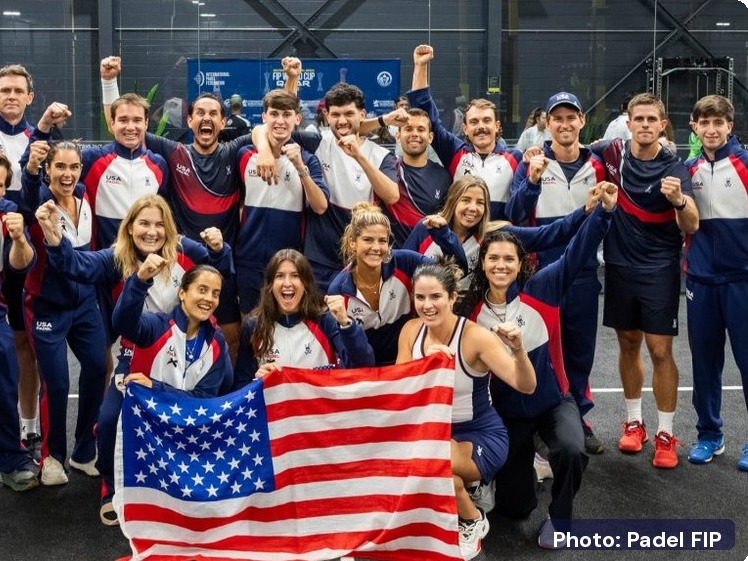
Three nations went to District Padel in Mississauga, just outside Toronto, for the North and Central America qualifier: the United States, Canada and Mexico. Two places in the men’s draw of the FIP World Cup were available. One in the women’s.
The US men beat Canada 3-0, and never looked like doing anything else. Vinny Di Francesco and Christopher Humphreys, Nico Agritelley and Matias Segura, Raul Ruiz Alvarez and Jose De Armas. No set closer than 6-3. Mexico also beat Canada 3-0, which settled both men’s places before the US and Mexico had even played each other on the Sunday.
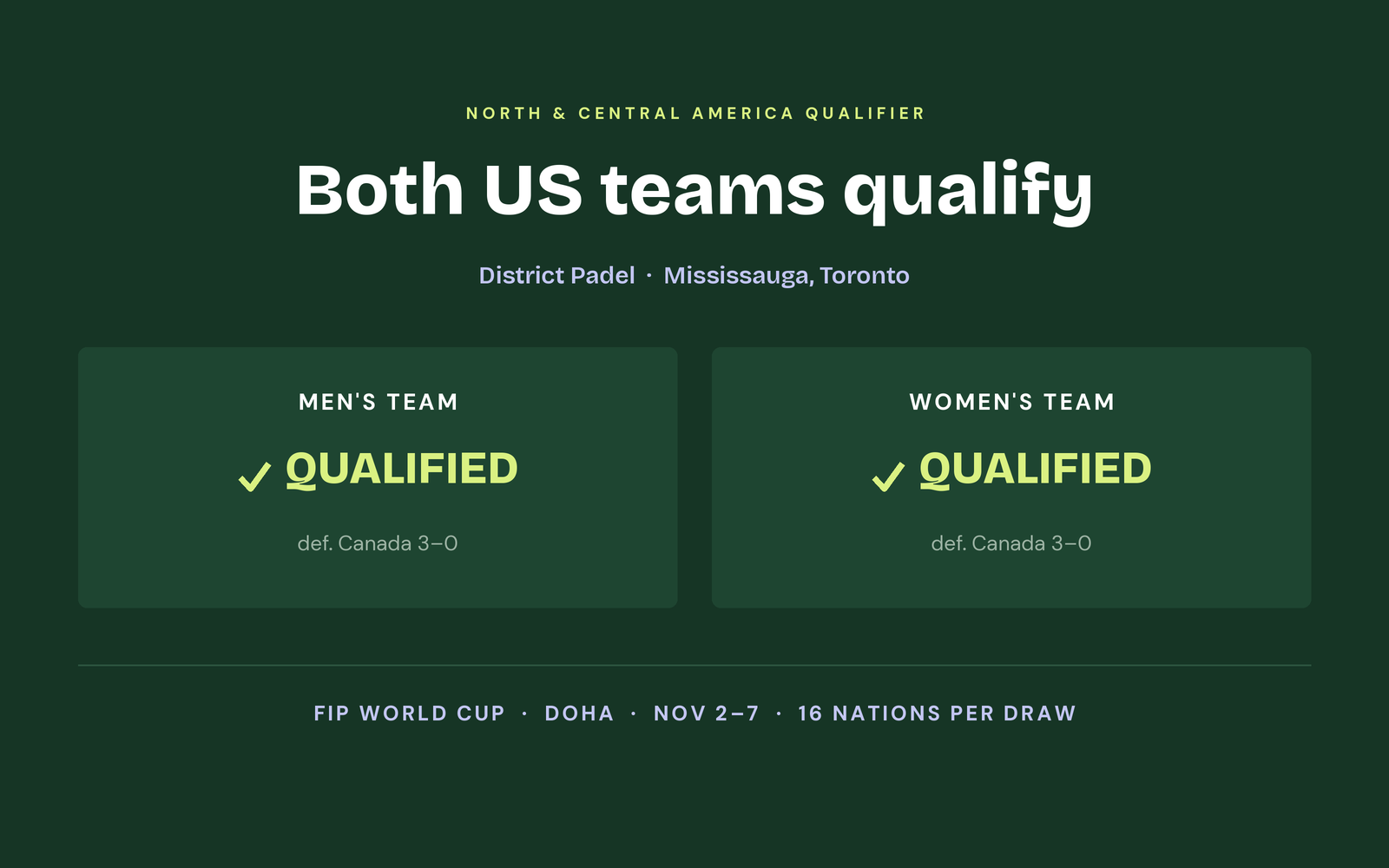
Then the harder one. Two places for three nations means somebody goes home. One place for three nations means two do, and that was the women’s math all weekend.
It came down to the final day against Canada, and the US women didn’t leave it close. Brittany Dubins and Marta Morga went 6-2, 6-1. Carla Rodriguez and Daniela Ruiz didn’t drop a game, 6-0, 6-0. The only pair made to work was Clementina Riobueno and Dhany Quevedo, who took a 7-5 first set and closed it 6-4.
“What an incredible week with such a special group of girls,” Dubins said. “I couldn’t be more proud of this team.”
Doha hosts the FIP World Cup from November 2 to 7. The draw is 16 men’s national teams and 16 women’s. Two of them are ours.
On our radar: padel is scaling worldwide, and the US is on the same curve
The International Padel Federation just named the hosts of its next two European Championships at once: the Netherlands in 2027, Germany in 2029. It has never booked two editions in advance before. Governing bodies don’t plan that far ahead for a fad. They do it when they can already see the growth coming.
And it is coming. By the federation’s own count there are more than 38 million players across over 170 countries, with participation expected to pass 105 million by 2030. A decade ago this was mostly a Spanish and Argentine game. Now the road to this year’s World Cup runs through qualifiers in the Americas, Europe, Africa and Asia before it ever reaches Doha.
The US is on that same curve, just earlier on it. New clubs keep opening across the country, and a sanctioned national circuit has taken hold, one with real rankings and entry deadlines, not just weekend hit-arounds. The sport isn’t arriving here. It’s already scaling, a few years behind the places that got a head start.
Which shrinks the question. Not whether padel gets big in the US, but how soon a sanctioned draw opens close enough for you to enter.
Court of the week
The Pad Tucson, seven indoor courts at 300 S Toole Ave downtown. It opened in 2025 as the third location in The Pad chain, sharing a building with a gym, a bar, pickleball courts and table tennis. Booking runs on the club’s own system rather than one of the big platforms, and parking is free.
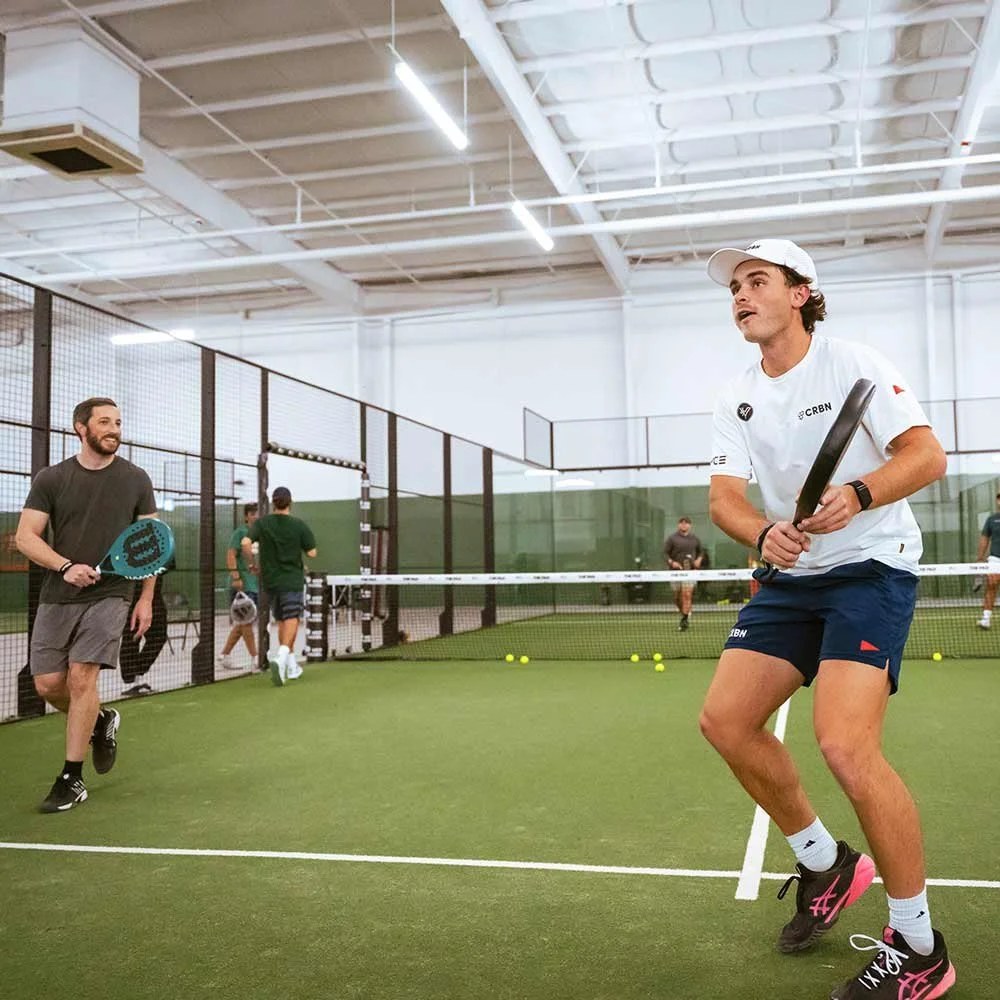
Best part is the roof. In a Tucson August an indoor court isn’t a comfort feature, it’s whether you play at all. Doors open at seven on weekdays and stay open until ten.
Tucson also has two sanctioned draws coming. A USA Padel 100 runs here August 28 to 30, and entries close on the 24th. A bigger one, a USA Padel 500, follows September 18 to 20 across town at Padel Alley. Doha in November is one end of this sport; a Tucson draw is the other.
See you next Sunday.
Padelkin