
Combination plays and shot selection
How to sequence padel shots in real points. When to lob, when to chiquita, when to bandeja, and how to set up the kill. Closes the strategy series.
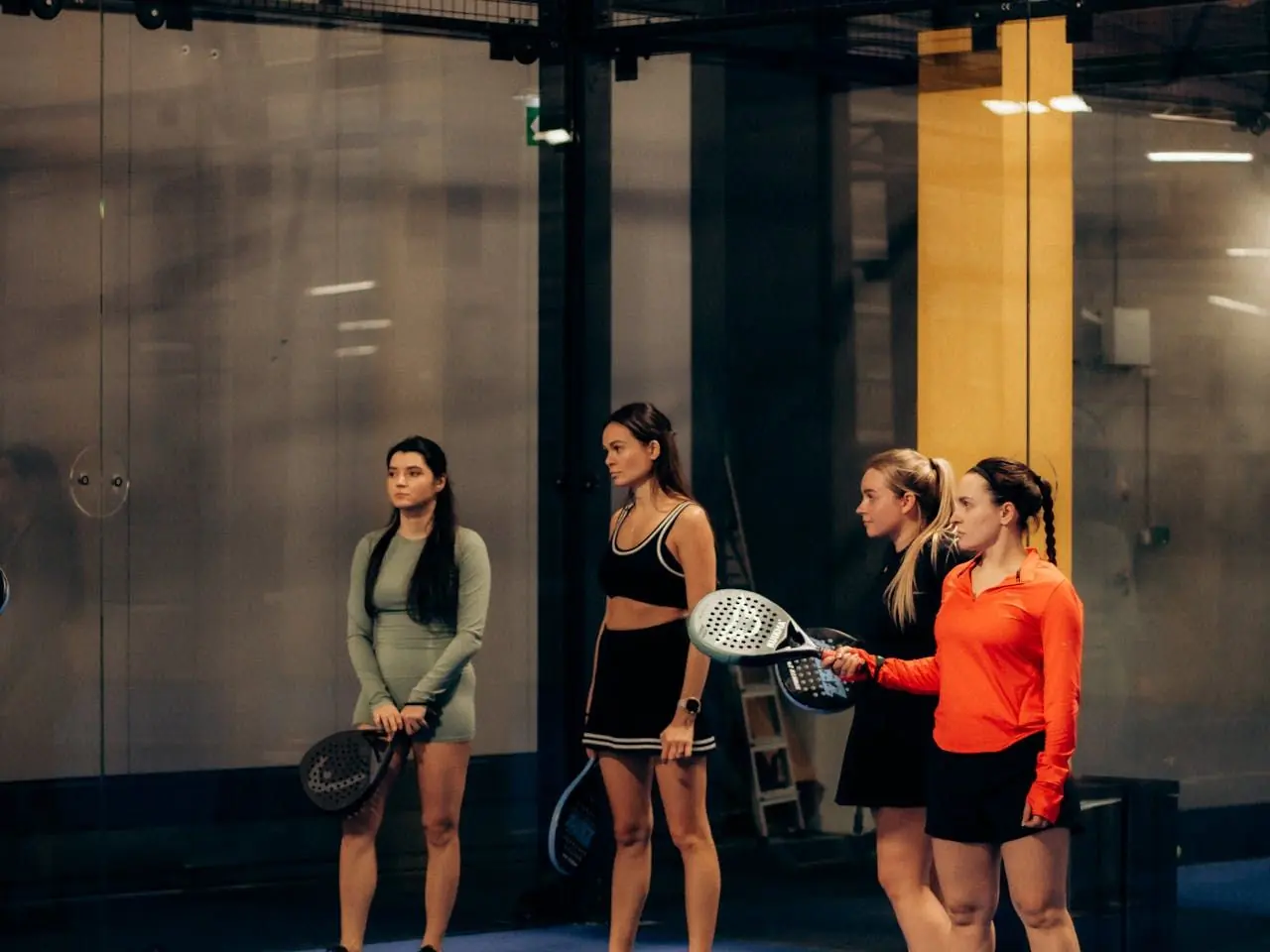
You can know every shot in padel and still lose every game. We see it every Saturday. A player with a clean bandeja and a workable bajada gets dismantled by someone with worse technique but a better sense of when to use what.
Knowing the shots is the prerequisite. Knowing when to use which one is the whole game.
This guide assumes you’ve worked through the strategy series already: the bandeja, the víbora, the bajada, and the kick smash. Those shots are the vocabulary. This is the grammar.
The one rule
If you only take one thing from this article: in padel, the team that constructs the point wins it. The team that tries to end the point usually loses it.
Every shot selection question, every “should I hit this or that?” moment, collapses into that frame. The question isn’t “can I win this point right now?” The question is “what do I make my opponent do next?”
Once you have that lens, the combinations make sense.
The five offensive combinations to know
These are the sequences that win recreational-to-intermediate padel matches. They aren’t pro-tour combinations. They’re the patterns that consistently force a mistake at the level most US players are playing.
1. Lob, bandeja, bajada (the classic cycle)
This is the most-played sequence in adult padel anywhere. Back team lobs the net team. Net team plays a bandeja to keep the net. Back team hits a bajada off the glass to push the net team back to the baseline.
If the bajada lands deep and heavy, the net team is now defending instead of attacking. They lob to reset. The cycle repeats.
Whoever blinks first (a short bandeja, a soft bajada, a lob that floats) loses the point. You don’t win this cycle. You don’t lose it. The team that stays in it longest wins.
2. Chiquita to overhead
The chiquita (the soft drop shot) is the most underused weapon in recreational padel. It exists for one purpose: pull the net team forward when they get comfortable hugging the baseline.
The combination: chiquita to bring opponents in, opponents play a short ball, you put it away with a bandeja or víbora into the open space they just left. The first shot looks defensive. It’s actually a setup.
The mistake recreational players make: hitting chiquitas as winners. They aren’t winners. They’re setups. The point ends two shots later.
3. Wide, middle, angle
Tennis players especially struggle with this one because tennis at the rec level rewards going for lines. Padel doesn’t.
The combination: hit a wide angled ball to one corner to force the defender to recover, then a middle ball to the gap between defenders, then finish into the angle of whichever defender is out of position. Three shots, each building on the previous one.
The kill shot lands in a corner the defender can’t get to. None of the three shots are full-pace. The angles and the timing do the work.
4. Serve, float, put-away
Padel serves are underarm. You can’t ace anyone above beginner level. So the serve is a setup, not a weapon.
The combination: hit a serve with enough spin or angle that the return floats slightly higher than the receiver wanted. Follow your serve to the net. Volley the floater into the open court.
The point ends in three shots. Your serve doesn’t need to be hard. It just needs to make the return slightly worse.
5. The lob trap
If a net team has been playing aggressive bandejas for a while, they start to creep forward expecting easier overheads. That creep is exploitable.
The combination: a slightly higher, slightly deeper lob than your recent ones. If they’ve crept forward, they’ll either get jammed (smashing from a worse position) or have to scramble back to play the ball off the glass. Their next shot is weaker than the previous ones. That’s where you attack.
You can also reverse-engineer it: feed them three soft lobs they can bandeja comfortably, then one that lands six feet deeper than the others. Pattern recognition fails. Their next shot is short.
The three defensive combinations
When you’re stuck at the back of the court, defense isn’t passive. It’s setup work for the next exchange.
1. Glass return, bajada, relob
Ball comes off the back glass. You take it high and hit down on it, a bajada, to push the net team back into defense. They lob to regain time.
You lob back, deeper, to push them into a defensive bandeja. Now you’re not just surviving. You’re rebuilding the cycle.
2. The high deep lob reset
When you’re truly out of position (one player jammed against the back glass, the other scrambling), the right answer is a high, deep, defensive lob. Not flashy. Not offensive. Just height and depth.
The point of the reset lob isn’t to win the point. It’s to buy you the three seconds you need to get back to neutral. Once you’re neutral, you’re playing the rally again instead of just surviving it.
3. The block to chiquita
Tough shot, but the highest-leverage one in defense. You block a heavy bandeja or víbora with soft hands so it dies just over the net. Defense turns into offense in one shot.
This works at intermediate level and above. Below that, blocking a heavy ball without putting it into the net takes more touch than most players have. Drill it before you trust it.
Shot selection by court position
A mental map for “what do I default to from here?”
At the back, both players back. Default: lob the net team. Almost always. The lob keeps you in the point, forces them to play a defensive shot, and tests their bandeja. Hit bajadas only when the ball comes off the glass and you have time to load up.
At the back, partner is at the net. Default: try to lob the cross-court net opponent (not the one your partner is screening). Your goal is to get to the net to join your partner. The lob is the path there.
At mid-court. Default: get out of this zone fast. Either lob and advance, or hit a soft volley and advance. Don’t try to win the point from here. You’re between offense and defense, effective at neither.
At the net. Default: bandeja the lob. Volley the drive. Don’t smash the volley. The point doesn’t end on your shot. Your shot sets up the point’s end.
The three worst shot-selection mistakes
These are the ones we see ruin matches at the recreational level.
1. Smashing the slow ball. When a defender hits a soft, floaty ball that sits up, instinct says “kill it.” The smash usually goes long, off the wall, or right at the defender’s body. The right answer is almost always a soft bandeja into the corner. Slower ball, easier finish.
2. Hitting through when you should drop. Defenders camped at the back are vulnerable to chiquita, not to power. Power shots feed their bajada. Soft shots break their position. The harder it feels, the more likely it’s the wrong choice.
3. Forcing a winner from defense. Lob first, win second. You can’t win a point from a defensive position. You can only set up the next exchange. Recreational players who try to crush their way out of defense lose those points 80 percent of the time.
How to drill this
Three drills, in priority order:
1. The lob-bandeja-bajada cycle. Two pairs. Back team only lobs. Net team only bandejas. Run the cycle 10 to 15 shots without trying to win. Just learn the rhythm. Switch sides. Run it again. Twenty minutes of this teaches the pattern your match brain needs.
2. The chiquita setup. Three-shot constraint: chiquita, then volley or bandeja into the space opponents created. If you don’t get a setup ball, lob and restart. No winners allowed.
3. Position-based decision drill. A friend or coach feeds you balls and calls out your court position before you hit (“you’re at the back,” “you’re at the net”). You have to verbalize the default shot before you hit it. Forces conscious shot selection. Annoying for one session, transformative after three.
What to do next
Three things, in order:
1. Watch your own matches. Record one. Watch it back. Count how many times you defaulted to the lob from the back versus tried to hit a winner. That number tells you where you are.
2. Re-read the shot guides through this lens (all four are linked up top). The shots make different sense once you see them as nodes in a combination instead of independent skills.
3. Drill one combination per session. Not all five. Pick the one you struggle with most. Run it 200 reps. Move on to the next combination next week.
Padel is patient. So are the players who win at it.