
Asian Games 2026: Why Every Padel Player Should Care
Padel debuts as a medal sport at the 2026 Asian Games in Aichi-Nagoya, Sept 19 to Oct 4. The most consequential moment for the sport in years.
For sixteen days starting September 19, 2026, padel takes the biggest stage it’s ever been on. The Asian Games in Aichi-Nagoya, Japan, will hold padel medal events for the first time in any continental Olympic Games. If you’re a casual player who barely follows the pro scene, this is still the event you should care about. Here’s why, what’s actually happening, and how to follow it without leaving padelkin.com.
TL;DR
- The 20th Asian Games run September 19 to October 4, 2026 in Aichi-Nagoya, Japan.
- Padel is on the medal program for the first time at any continental Games.
- The competitors are athletes from Asian Olympic Council nations only. So no Tapia, no Galán, no Lebrón, no Coello.
- Why it matters anyway: this is padel’s most credible step yet toward a possible Olympic future, and the most-watched padel competition most casual players will ever see broadcast in real Olympic-style coverage.
- Padelkin will cover the Games across the Sunday Drop, Instagram, and the Padelkin community. Get on the list and you’re in.
What’s actually happening
The Asian Games are the continental version of the Olympics for the Asian Olympic Council, run every four years. The 20th edition lands in Aichi-Nagoya in autumn 2026 with a full Olympic-style program: athletics, swimming, judo, esports, and now padel.
The padel competition is scheduled for the back half of the Games, with medal events expected across men’s doubles, women’s doubles, and mixed doubles. Match schedules will be confirmed by the Olympic Council of Asia and the International Padel Federation closer to the event. We’ll mirror the schedule on padelkin.com once it’s published, with a US time-zone version because most matches will land in the evening hours stateside.
What’s not happening: the global stars from Spain, Argentina, and the rest of the Premier Padel circuit. The Asian Games is closed to non-Asian athletes. So the field is from a different talent pool than the one most fans follow week to week. That’s a feature, not a bug, and we’ll explain why in a second.
Why this is genuinely a big deal
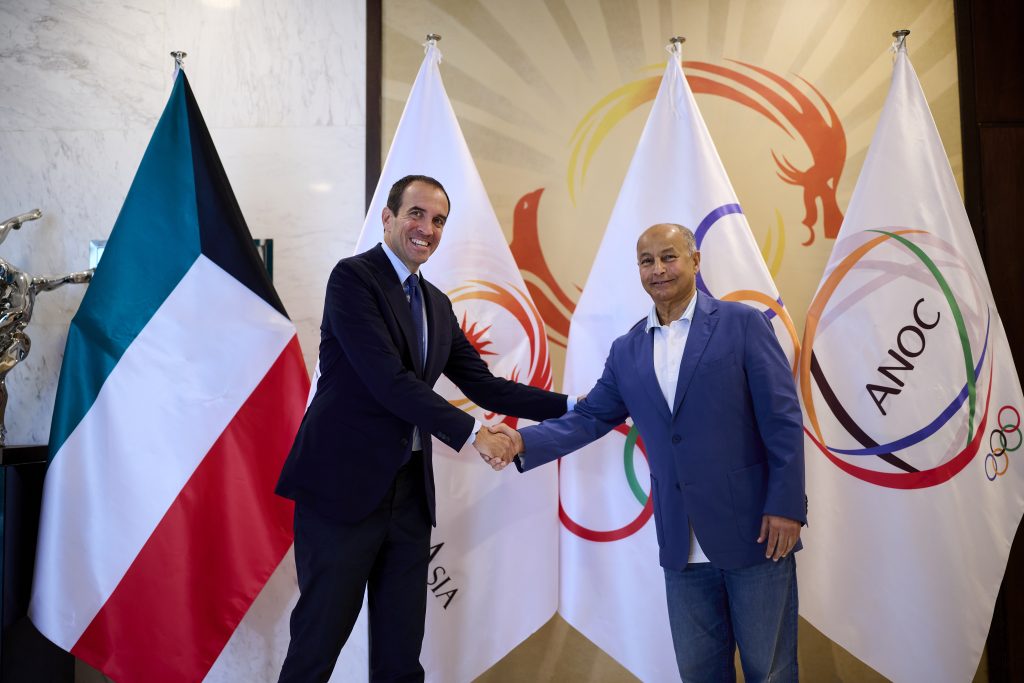 Photo: International Padel Federation (FIP). The signing that confirmed padel as a medal sport at the 2026 Asian Games.
Three reasons stacked.
1. Olympic pathway. Padel has been lobbying for Olympic inclusion since around 2020. The shortest credible path runs through continental Games and federation-recognized international events. Inclusion at Asian Games 2026 isn’t a guarantee of anything, but it’s the kind of credibility marker that the IOC explicitly looks at. If you want to watch padel at LA 2028 or Brisbane 2032, a successful Asian Games event is part of how that gets unlocked.
2. The biggest non-tour padel event ever broadcast. Premier Padel and the legacy WPT events get serious production, but Olympic-style continental Games are a different tier of broadcast. The graphics, the storytelling, the bracket coverage, the medal ceremonies. Even if you don’t recognize a single name on the court, the production alone will be the most polished padel coverage you’ve ever watched. That polish raises the floor for what padel broadcasting looks like everywhere else.
3. Asian padel is about to break out. Saudi Arabia has been investing federation money into padel for years. Qatar has hosted Premier Padel events and is building infrastructure. Japan and China have small but rapidly growing scenes. India, the UAE, and a half-dozen other Asian Olympic Council nations are sending teams. Whatever happens at Aichi-Nagoya, the next twelve months of padel will see Asian markets accelerate hard. New pros, new sponsorships, new courts, new gear options. The sport you play will look different a year from now.
Who’s expected to contend
This is informed guessing more than a leaderboard. The actual draws and federations’ final rosters won’t be published until later in 2026. But the early signals on who to watch:
- Saudi Arabia is the heaviest favorite for medals. Their federation has put real budget behind player development for years, and several Saudi pros have been training in Spain. If the format favors well-coached doubles teams, expect them on the podium.
- Qatar has the longest infrastructure runway in the region. They’ve hosted top-tier international events and produced players who’ve competed on the international circuit. Expect strong doubles teams in both the men’s and women’s draws.
- Japan is the host nation and the second-largest padel infrastructure in Asia after Saudi. Home advantage is real, and Japan has been building toward this for years.
- China has fewer top-tier pros today but a growing recreational base and substantial federation focus. Expect a competitive showing rather than medals, with the gap closing fast over the next four years.
- UAE, Kuwait, Oman, India all have programs in early-to-mid stages. Watch for one or two breakout players you haven’t heard of.
We’ll publish a real player guide with photos, bios, and what to watch for once federation rosters are confirmed. That goes out in the Sunday Drop closer to September.
What it means for the average player
Three concrete things for anyone who plays a couple of times a week and isn’t a stats nerd.
Better coverage habits. When you watch a sport in Olympic-style production, you start picking up patterns and shot names you wouldn’t otherwise. Match play in the Asian Games will be analyzed shot-by-shot in ways that normal pro tour broadcasts skip. You’ll learn more padel just by watching the build-up to medal points than by playing six casual sessions.
More gear, more brand competition. Asian federation interest means brands like Bullpadel, Adidas, Nox, Head, and Babolat will compete harder for sponsorship deals in the region. That competition trickles back into product cycles. Expect the racket lineups for 2027 to look broader and faster-iterating than the 2026 ones.
Cultural validation. Tell a friend at work that padel is going to be at the Asian Games and watch their reaction shift. The sport has spent a decade as “that European thing.” Asian Games participation reframes it as “the next sport going global.” Whatever you think of that framing, it shifts conversations.
How to follow it from anywhere
Time zones first. Aichi-Nagoya is 13 hours ahead of Eastern, 16 ahead of Pacific. So matches at 2 PM local time in Japan land at 1 AM Eastern the same morning. Most of the broadcast-friendly day session will be very early morning stateside, and the evening session in Japan will be the most viewer-friendly window for anyone watching from here.
The official broadcast partner has not been announced for North America as of this writing. We’ll mirror that here once it’s confirmed.
What we’re running on Padelkin during the Games:
- Daily Games coverage. Highlights, upsets, and tactical moments posted across Instagram and the Padelkin community throughout the Games. The Sunday Drops during the Games window will go heavy on what mattered the previous week.
- Community bracket calls. Players call their medal picks inside the community. No platform required, we count up after the closing ceremony.
- Recap series. When the Games end, we’ll publish a “what happened, what it means” feature on padelkin.com. Plus a Sunday Drop dedicated to the moments worth remembering.
You don’t have to be a follower of pro padel to enjoy this. Most of the audience won’t be. Our coverage is written assuming you don’t already know the rosters.
What to do this week
Three small things, in order:
1. Mark your calendar. September 19 to October 4. Just put a recurring “padel days” hold on those mornings.
2. Subscribe to the Sunday Drop. The Games-week issues will cover what’s worth knowing. We’ll send a heads-up before the Games start so you know what to expect.
3. Join Padelkin. Bracket calls and daily takes happen inside the community. The room is small enough now that you’ll know names by the time the Games actually start.
If you have a friend who plays casually and keeps saying “I should watch more padel,” send them this article. The Asian Games is the lowest barrier to entry the sport has ever offered for a real, structured viewing experience. Don’t make them figure it out alone.
The bigger picture
Padel has spent the last six years going from “a thing your Spanish friend talks about” to “a real sport here with over a thousand courts and a media ecosystem.” The Asian Games is the next step. Not the destination, not LA 2028, but the proof point that gets quoted in every “is padel ever going to be in the Olympics?” article between now and 2028.
Whatever happens on the court in Aichi-Nagoya, the people watching will be a meaningfully larger audience than anything padel has had before. We want padelkins to be in that audience. That’s the whole point.
Sixteen days. Subscribe and we’ll meet you on Day 1.