
How much does a padel court cost?
What a padel court really costs: about $50,000 with a usable slab on site, up to $100,000 without. The ground under it decides which number you get.
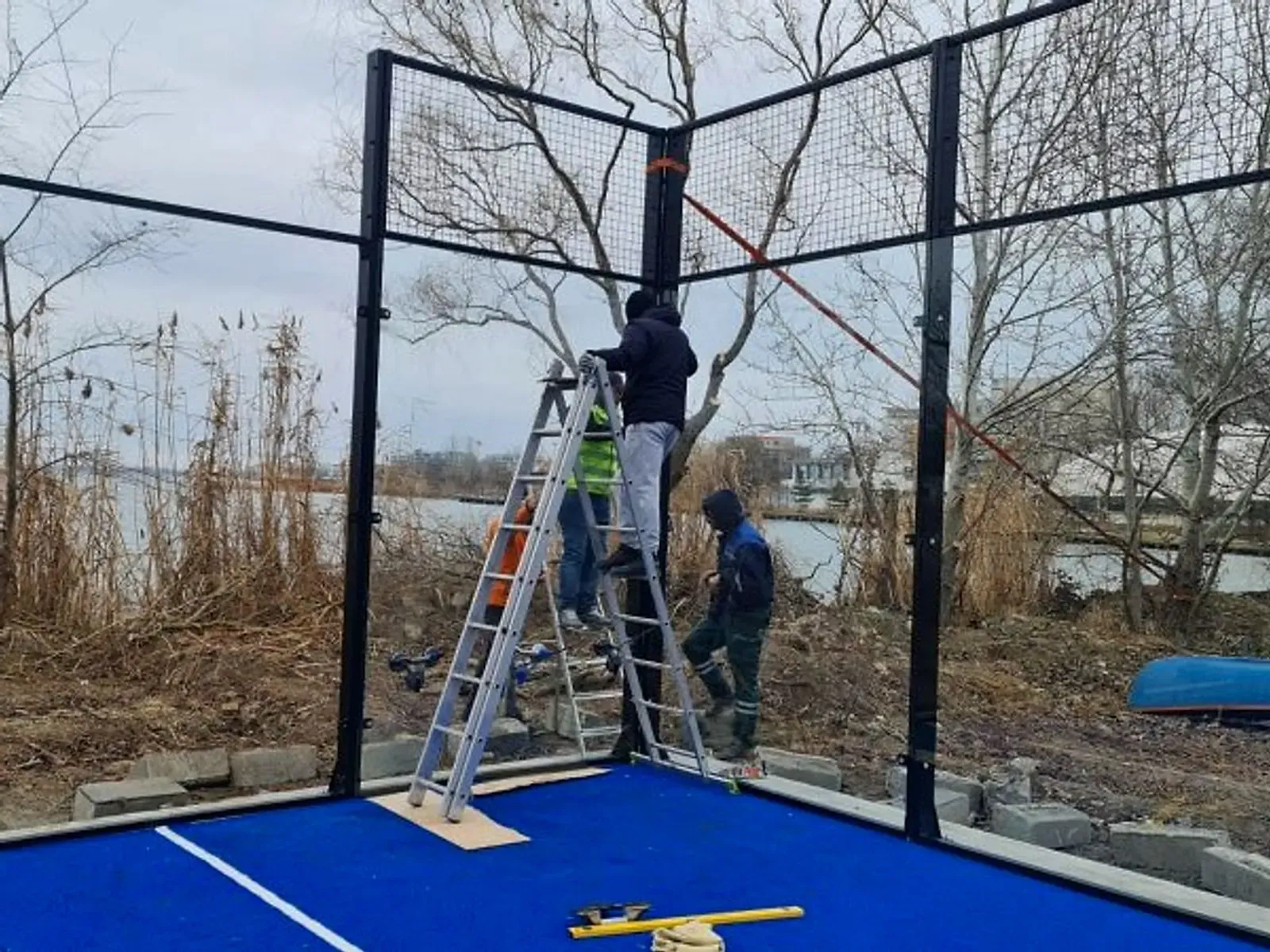
Look up what a padel court costs and one page of results hands you a $30,000 answer and a $120,000 answer, both from people who build courts for a living. Neither is lying. Every quoted price is the kit, and the concrete under it, the lights over it and the permit behind it decide whether the project is fifty thousand dollars or a hundred.
The tables all price one court, too, which is the one thing almost nobody in the US actually builds.
TL;DR
A single outdoor padel court in the US typically costs around $50,000 all in if the site already has a usable concrete slab, and up to about $100,000 if a new foundation has to be poured. The court kit itself, glass and steel and turf, is only $30,000 to $50,000 of that.
- Price the ground first. The foundation is the most site-dependent line in the budget.
- The lines nobody quotes are thousands each. Permits, engineering, freight, lighting, a soil study.
- One court is the exception. Just 17 clubs in our directory run a single court, out of 252 that publish a count. The median runs four.
What the $30,000 to $50,000 actually buys
For thirty to fifty thousand dollars you get a court system: tempered glass panels, the steel mesh enclosure they mount into, padel-spec turf, and the net. What it almost never includes is anybody putting it together. Whether shipping is in the box price depends on the quote, and that is worth checking before you compare two of them.
The steel holds the court up. The glass mounts into it, 12mm tempered, about half an inch, and that thickness is a safety spec rather than a luxury one: the ball comes off the wall at pace and a player arrives right behind it.
The enclosure alone runs roughly 40 to 60 percent of the build. That makes the court model the biggest lever inside the kit: fewer posts mean bigger unbroken glass spans, better sightlines, and a higher price. Same rules, same court, different bill.
Installation is its own $5,000 to $15,000, tracking your site and your crew rather than the court. Add that to a build that pours its own foundation and the kit you were quoted is about half of what you spend.
The concrete decides the number, not the court
Price the ground first, then the court. A padel slab covers about 2,153 square feet that has to sit flat, drain and carry reinforcement, a bigger and more heavily reinforced pour than a pickleball court needs. It goes in before anyone opens a shipping container.
What it costs is where the published numbers disagree most. One US builder puts foundation and site prep at $30,000 to $50,000 per court, the price of the kit all over again; another itemizes it around $8,000 to $25,000. They aren’t contradicting each other so much as describing different dirt: soil, drainage, truck access and local concrete pricing move this line further than any decision you make about the court.
The cheapest foundation is the one that’s already there. An existing slab in good condition cuts that line sharply or removes it, which is why an old hard tennis court is the most straightforward start a padel project can get, and most of the gap between the fifty-thousand-dollar court and the hundred-thousand one.
“Existing slab” is a demanding phrase, though: level, sound, drained and big enough to take the court. A cracked pad you have to break out and haul away is worse than bare ground.
The lines that ambush a first-time budget
| Line | Planning range |
|---|---|
| Court system (glass, steel, turf, net) | $30,000–$50,000 |
| Installation | $5,000–$15,000 |
| Foundation and site prep | $8,000–$50,000, entirely site-dependent |
| Freight and delivery | $8,000–$22,000 |
| Permitting and engineering | $2,000–$12,000+ |
| Geotechnical study | $1,000–$3,000 |
| Lighting | $4,000–$15,000, depending on how far power has to run |
These are planning ranges, not quotes, and they don’t stack into a total you can hand a lender. Lighting is the line people assume is small until they check where the nearest power is. Four to six LED floodlights and the poles to hang them on come to a few thousand dollars, and that part is predictable. Running a new electrical supply out to a court at the back of a lot is what moves the number, and that cost is set by the distance to the panel, not by the fixtures.
Freight surprises people because it isn’t always in the box price. The manufacturers are mostly in Spain and Latin America, and moving a court across an ocean and then across a state runs from a sixth of the kit price to more than half of it. Tariff exposure sits on top, turning on how the court gets classified at the border, and it can shift between the day you sign and the day the container lands, which on an imported court is 10 to 14 weeks apart.
Permitting is the line with no ceiling: two thousand dollars in a permissive county, twelve thousand and up where the reviewer wants stamped drawings and wind-load calculations. Zoning review is a common obstacle for outdoor racket courts generally, driven by noise complaints and setbacks. A geotechnical study is the cheap line that prices the expensive one.
A quote well under these ranges usually has your site left out of scope. One published example project came to just over $73,000 in 2023 prices, with design, permitting and electrical excluded. Check yours for foundation, permitting and local installation. If those are missing, you haven’t found a cheaper court, you’ve found a shorter contract.
Why almost nobody builds one court
Builders will tell you multi-court projects cost less per court, and the reasons are boring and correct: one crew mobilization, one foundation and drainage job, one perimeter, one bulk order, spread across four courts instead of one. None of them publishes a discount percentage, because it depends entirely on scope.
What we can tell you is what the US market did with that math. Our US padel courts directory holds 264 live clubs, and the 252 that publish a court count run 1,109 courts between them. The median club has four. Just 17 of them run a single court, roughly one in 15, while just over 60 percent run four or more.
That median is why your club works the way it does. Four courts is a league running alongside a lesson alongside your Tuesday doubles; a one-court site goes dead the moment you aren’t the person booked on it.
You can build one, and a handful of operators have. But a single court is a court, not a club. If you’re pricing a build, price four.
Indoor, outdoor, and what your climate charges you
Indoor costs more, and how much more depends on whether you’re putting up the building. Dropping a court into a structure that already stands is a different project from raising a roof for it, and the roof, the ventilation and the climate control are where that money goes. One builder puts the increase at 20 to 40 percent of budget, which is one opinion rather than a rule.
Outdoor skips the building and pays the weather instead: drainage that works in a real downpour, corrosion-resistant hardware near salt air, wind-load engineering the permit office may insist on anyway. Spec the drainage and the hardware for the climate you actually get.
The US hasn’t picked a side. Among the clubs in our directory that record it, 109 are indoor, 112 outdoor and 18 run both, so there’s no national default to copy: your climate and whatever already stands on the site make the call. For you it becomes a playing question anyway, cancelled sessions, sun in your eyes, how differently the ball behaves in cold air. That’s the real comparison in indoor vs outdoor padel, and it matters more to your Tuesday than the budget does.
What this costs you, the person who just wants to play
You may have arrived from the other direction, holding a booking screen and wondering why an hour costs what it costs. The build number is the answer.
A Los Angeles club publishes $70 for a half hour on a regular court and does the division itself: $17.50 a person. That’s one club in one expensive city, not an average. Plenty of US clubs sit in the $30 to $60 an hour band while big-metro clubs reach $80 to $150, far enough apart that any single “average US court price” describes almost nobody.
The mistake is reading your local rate as the club squeezing you. A club that spent between fifty and a hundred thousand per court before a ball was hit, four courts deep, on top of rent, lighting and staff, is not renting you an hour for the price of a gym day pass.
It’s also, we think, why the nearest good club is often a drive: courts get built where somebody could find a slab, a landlord and a permit, not where you live. That geography is what makes where to play padel in the US a real search. The fix is the division that LA club already did for you: book with three others and read the per-person number.
FAQ
How much does it cost to build a padel court in the US?
Around $50,000 where a usable concrete slab already exists, and up to roughly $100,000 when a new foundation has to be poured. Every published range, ours included, is a planning tool rather than a price: the site sets the real number.
What’s the most expensive part of a padel court?
On most builds the enclosure, at roughly 40 to 60 percent of the total. The foundation varies most, though, and on a site with no usable slab it can rival the court itself.
Is it cheaper to build several padel courts at once?
Per court, yes, and the saving sits in the lines that only happen once: mobilization, foundation and drainage, the perimeter. No builder publishes a discount percentage, so price two versions of the build and compare them yourself.
Can you build a padel court in a backyard?
Physically, if you have the room and the budget. A regulation court is 20m by 10m, about 2,153 square feet before any run-off space, on a properly reinforced slab rather than an existing patio. The harder part is the paperwork, and what a municipality allows varies enormously. Price that conversation before you price the court.
How to price a padel court build
- Start at the slab, not the catalogue. Find out what’s already on the site, and what condition it’s in, before you shortlist a court model.
- Get a site-specific quote, and read what’s excluded. Foundation, permitting, electrical and local installation are what quotes quietly leave out. Only a quote against your dirt is a price.
- Check what your nearest clubs charge. Look up the courts near you in our directory and compare their published hourly rates first.
- Get one padel read a week. The Sunday Drop is our weekly email: one fixable habit, plus a US court worth knowing.
The court is the cheap part. The ground writes the check.