
Who said faking finishers is bad?
The volley your opponents read as a smash, both US teams sweeping their way to Doha, how to enter the 2026 US Open, and Nashville's six outdoor courts.
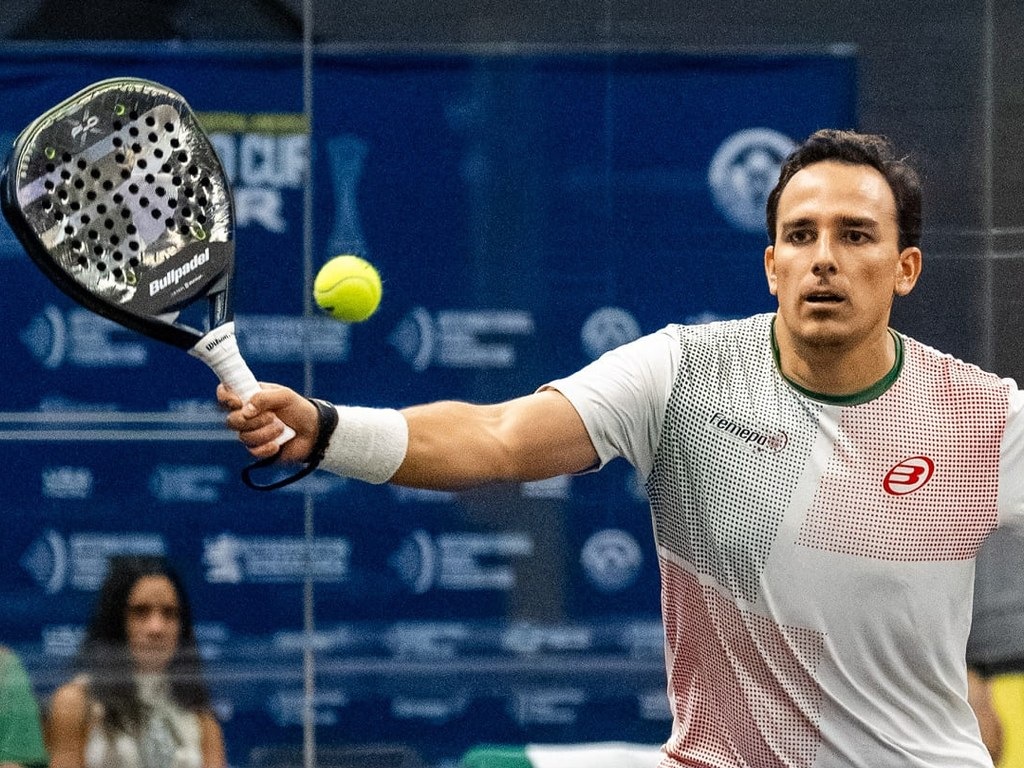
The volley nobody reads.
Two Mexican players charged the net at the same time. They’d seen the racket go up, they knew what was coming, and they wanted to be close enough to do something about it.
Sofia Adamovich never hit the smash. She took the pace off and pushed a soft volley over them instead, judged for length so precisely that it died on the turf before either could turn and run it down.
Your opponents aren’t reading the ball. They’re reading you, and they commit to what your body tells them before your racket ever touches it. So the volley that wins is the one they read as something else.
Here’s why it works:
- They commit to your body, not to the ball. Racket up and shoulder turned reads as smash from across the court, and two players moving forward at speed have no brakes.
- Length beats power against a pair at the net. A hard ball gives them something to block. A slow one landing behind them is a footrace they’ve already lost.
The fix is a habit, not a shot. Prepare every high ball identically, then pick what you actually hit as late as you can stand.
Next session, take three high balls a set and play the soft one instead. Deep enough that they have to turn, short enough that the back glass doesn’t hand it straight back.
One condition decides all of it: they have to believe the smash is coming. If you’ve never hurt them with a real one, there’s nothing to fake. Earn the disguise first, then spend it. And when they’re pinned at the back with the ball sitting up, hit the smash, that’s what it’s for.
There’s more on the soft volley in the padel volley guide.
The best volley of the weekend may have been the slowest one.
Six matches, six wins, and an 8-6 tiebreak
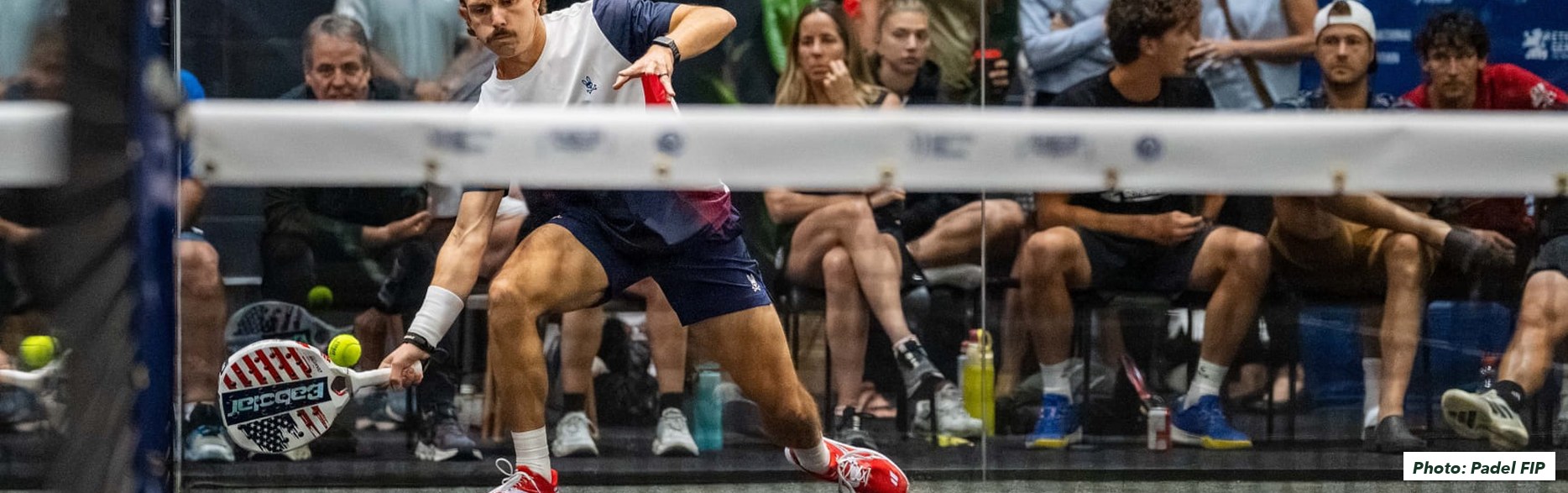 Photo: Padel FIP.
Two ties against Mexico shaped the weekend, one for a place and one for the group.
The women had the narrower road. One women’s place at the FIP World Padel Cup, three nations at the qualifier in Mississauga, so the group had to be swept. They swept it. Six matches, six wins.
The Mexico tie is where it turned. Marta Morga and Brittany Dubins took the first match 6-3, 6-2, a scoreline that hides how long they had to work for it. Then Sofia Adamovich and Daniela Ruiz won the opening set 6-4, lost the second 6-1, and came back to take the decider 6-3. That sealed the tie.
It did not seal the place. That came on the final day against Canada, where Clementina Riobueno and Dhany Quevedo closed it out 7-5, 6-4 — the tie we covered last week.
The men’s places were already settled by the time they met Mexico on the final day, so what was on the line was the group. Vinny Di Francesco and Chris Humphreys lost the opener. Matias Segura and Nico Agritelley levelled it 6-1, 6-1 after dropping a first-set tiebreak. One-all, and a decider.
That went to Raul Ruiz Alvarez and Jose De Armas, partners on the circuit for two years. First set theirs, second to Mexico on a tiebreak, third to another tiebreak. With the match sitting on Mexico’s racket, Ruiz Alvarez hit a forehand so heavy that neither opponent could return it or get clear of it, dragging them level. The US closed it out 8-6, and the bench emptied.
Both teams fly to Doha in November. USA Padel is calling it a clean sweep of qualification on both sides of the draw, and it’s hard to argue. Every match in Mississauga was streamed and the replays sit on FIP’s YouTube channel, which is where you’ll find the Adamovich volley.
On the calendar: US Open Padel Championships 2026
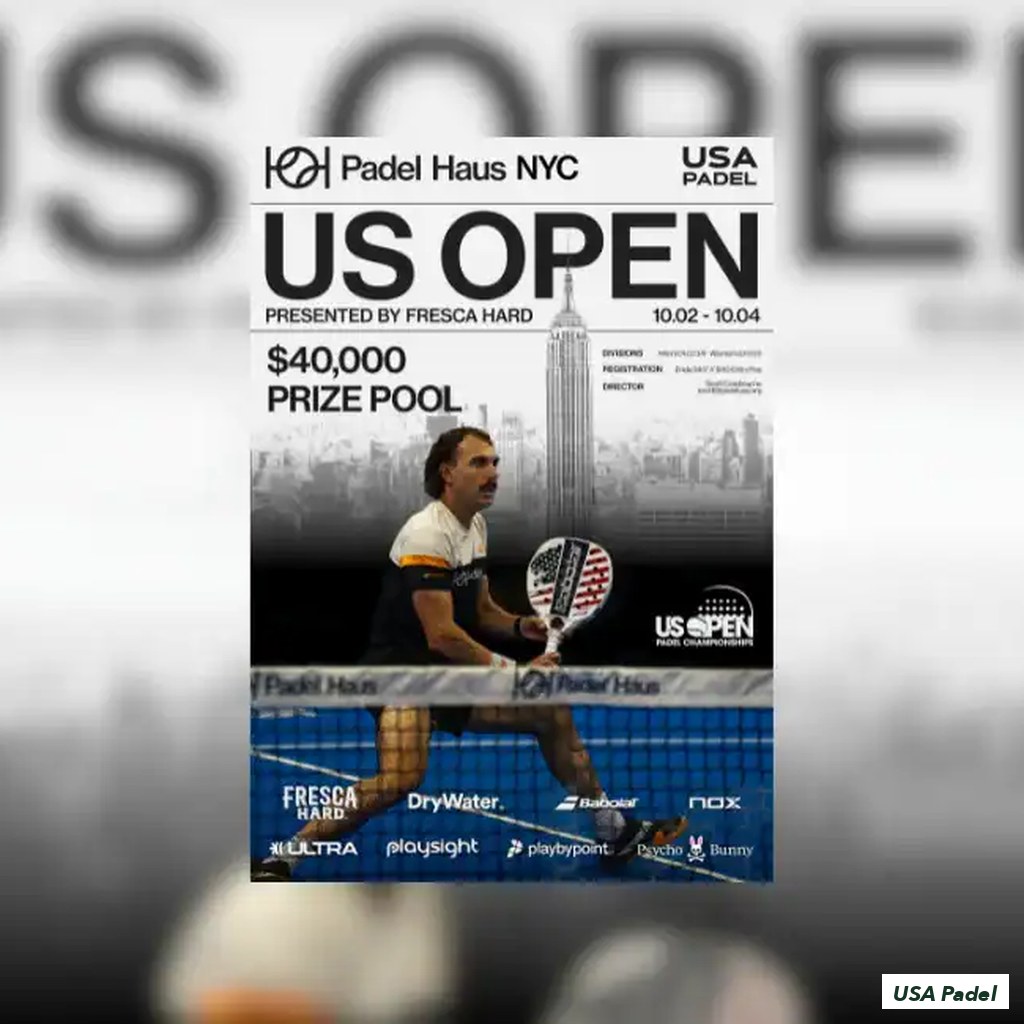 Artwork: USA Padel.
The 2026 US Open Padel Championships run October 2 to 4 in New York. Division 1 and every final are at Padel Haus Greenpoint, five indoor courts including one built to international competition spec, and the tournament is played across three Padel Haus venues in the city.
USA Padel handles entries, draws and the schedule. Padel Haus runs the site, their third straight year hosting it.
The number that moved is the Division 1 prize pool: $40,000, the largest the tournament has ever carried, split evenly between the men’s and women’s fields. That means the women’s draw plays for the same money as the men’s. Winners take $9,000 a pair, finalists $4,500 and semifinalists $2,250.
The divisions below D1 are open to enter. D1 is the pro draw, but D2 through D4 take entries from men’s and women’s players, and registration is live now. Babolat is putting up prizes across those divisions, so it isn’t a participation ribbon either.
Entry is $110 a player, the same in every division and on both sides of the draw. D1 closes September 17 at 11pm ET, and D2 through D4 close a week later on September 24. Enter D1 without qualifying and you drop into D2 automatically, holding your place on the D1 waitlist until the 24th. Every draw caps at 32 pairs, selected on USA Padel rankings and then verified WPR, with two wild cards held back.
The schedule is front-loaded onto the Friday. Men’s D2 and D3 start at 9am, men’s D4 no earlier than noon, and the women’s D2 to D4 draws no earlier than 4pm. D1 plays its round of 32 on the Friday morning and the round of 16 that afternoon, with quarters and semis on the Saturday and the finals on Sunday. The player party and USA Padel town hall is Saturday at 6pm, open to every player, member and member club.
The event is part of National Padel Month in October. If you’ve been waiting for a reason to play a real draw instead of a Tuesday league, that’s your reason, and there’s enough runway left to find a partner and get sharp. There are no refunds once your deadline passes, and partner changes after it go through the tournament director. Enter on the 2026 US Open entry page before your division closes.
Court of the week
Sensa Padel Nashville, six outdoor Wilson courts at 1320 Adams St, right in Germantown and a short walk from the neighborhood’s dining when you’re finished. The pro shop rents rackets and stocks balls and gear, which sounds like a footnote until you’re in Nashville for three days with no kit and one free morning.
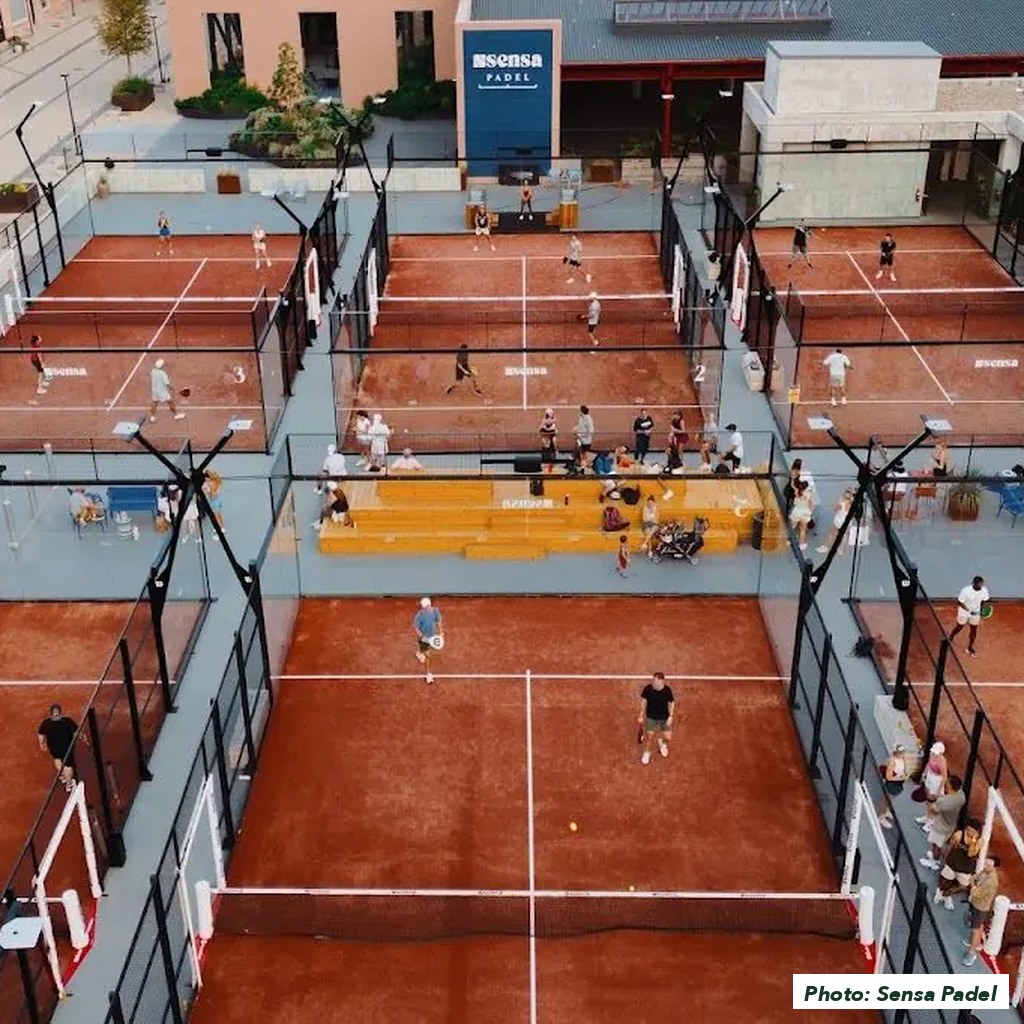 Photo: Sensa Padel.
The calendar stays full: private and group lessons, clinics, leagues, open play, socials and junior programs. Weekday evenings and weekends are the peak, so book those early. Mornings are the quieter and cheaper window, and on an outdoor court in a Nashville summer they’re the sensible one too.
The club runs its own booking system, so book direct rather than hunting for it on an app. Doors open at seven every day, and stay open until nine on weekdays. See Sensa Padel Nashville.