
The padel shoes buying guide
Which padel shoes to buy, and how to pick the right sole for your court surface. Tiered picks from $70 to $160+.
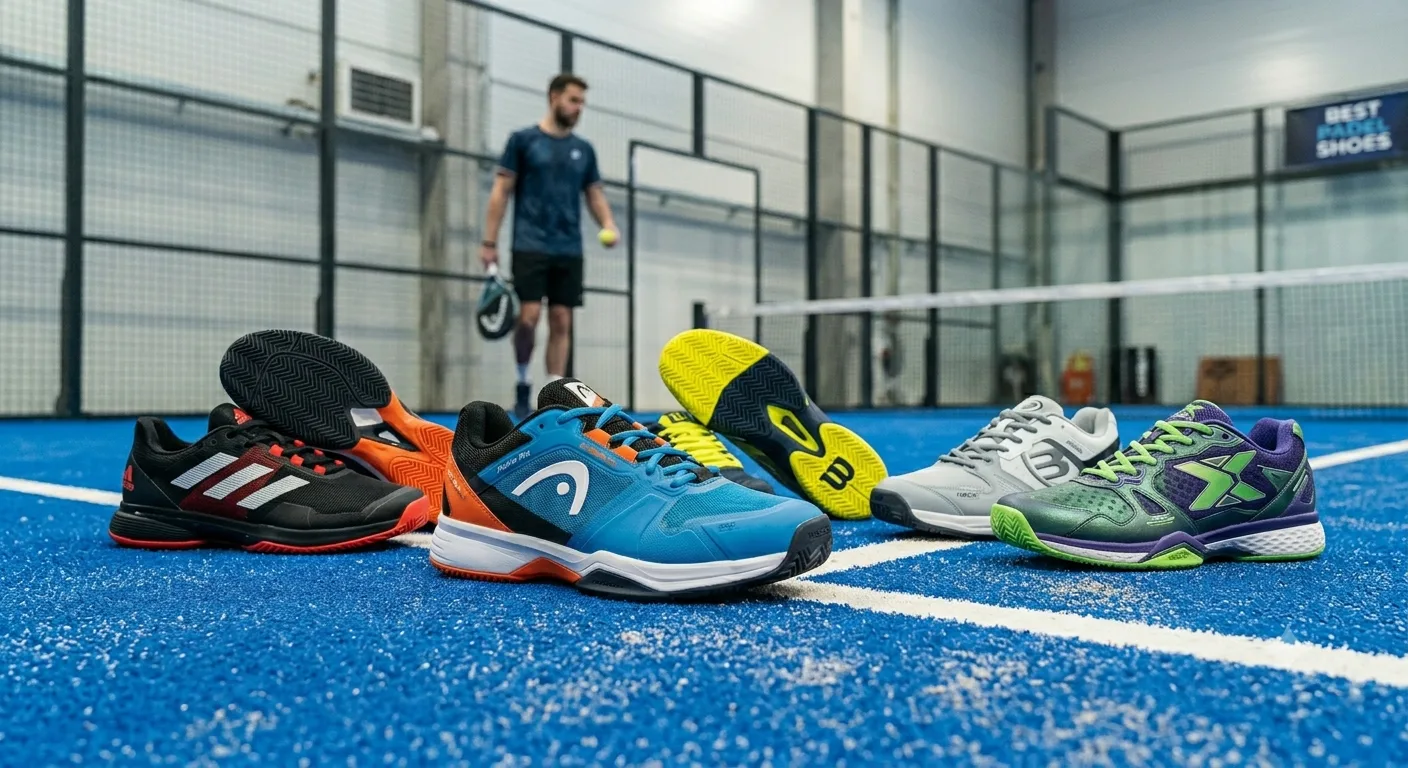
You’ve probably played in your tennis shoes at least once. They worked fine for a session or two, and nobody stopped you. But after a few months of real play, you notice the slipping, the ankle rolling on a hard lateral push, the forefoot wearing through faster than any tennis season would explain. That’s padel doing what padel does.
This guide won’t tell you which shoe has the best colorway. It’ll tell you the one thing that actually separates a padel shoe from a tennis shoe, because that’s what changes the buying decision, and then walk the rest: what to ignore, what tier makes sense for where you are, and three picks across the range.
TL;DR
The only thing that truly separates a padel shoe from a tennis shoe is the sole. The right sole depends on your court’s surface type, not your budget or the brand name.
- Figure out your court’s surface first (call the club, or look at the court).
- Herringbone soles for high-sand courts. Omni soles for lower-sand or carpet surfaces.
- After sole: lateral reinforcement and a toe cap that won’t wear through in a month.
- $100–140 gets you most of what you need. Under $100 still works. Above $140 buys you weight and premium materials.
Can you wear tennis shoes for padel?
Short-term: yes. Medium-term: no, and here’s why it actually matters.
Standard tennis shoes are built for hard courts or clay. Hard-court versions have flat, smooth outsoles designed for traction on painted concrete. On artificial turf with sand, they slide unpredictably, not the controlled slide padel asks for. Clay-court versions come closest, because they share the herringbone outsole design a padel shoe uses, but they’re still missing the lateral reinforcement padel’s constant side-to-side movement demands.
The failure mode is usually two things. The forefoot wears through fast: padel shoes have a reinforced toe cap for exactly this, because you drag your toe on nearly every lunge. And your ankle rolls on a hard lateral cut, because standard tennis shoes are built for forward acceleration, not the wide, low base padel needs.
You don’t need padel shoes before your first session. After a few, you’ll want them.
The one thing that actually matters: sole type
Padel courts are artificial grass with silica sand infill. The amount of sand varies by club, and that’s what determines which sole you need. Most buying guides skip straight past this decision.
Herringbone soles
The herringbone pattern runs in a V-shape across the outsole, the same design used on clay-court tennis shoes. On a court with a standard-to-high sand infill, it lets you slide in a controlled way: grip when you push, then release just enough on a lateral stop so you’re not jarring your knees. Most US padel clubs with standard outdoor artificial turf call for herringbone.
Omni soles
Omni soles use small rubber studs or dots across the outsole. They grip harder, which is what you want on a lower-sand surface, a carpet-style court, or an indoor facility where the turf is tighter. The trade-off is that sliding becomes harder. Play with omni soles on a high-sand court and you’ll be fighting the surface on every direction change.
Combo and mixed soles
Some shoes blend both patterns: studs in the center for grip, herringbone on the edges for slide. These are the safest all-surface pick if you play at multiple clubs and don’t know what you’ll land on each time.
How to find out which sole your court needs
Call the club before you buy. Ask whether they recommend herringbone or omni, or whether their courts run a lot of sand. Most clubs know their surface and will tell you in under a minute.
If you can’t reach anyone, look at the court itself. High-sand courts have a visible, loose layer of sand on the surface. Lower-sand courts look tighter and more uniform. When in doubt, herringbone is the safer default for most US outdoor facilities.
Not sure which clubs are even near you? The padel court directory has over 170 US clubs listed, with addresses and booking info.
What else matters (after sole)
Sole type is the whole ballgame on a first purchase, but three other things make a real difference over months of play.
Lateral support. Padel is side-to-side more than any tennis you’ve played. The shoe needs a firm, low-profile midsole and a wide base so your foot doesn’t roll inside the shoe on a hard lateral push. Look for TPU reinforcement around the midfoot and heel.
Toe cap reinforcement. This is the spot that fails first on non-padel-specific shoes. Padel-specific models have an extra rubber or durable overlay at the toe. Without it, you’ll see the mesh wearing through with regular play.
Cushioning. Enough to handle the repeated impact of jumping, stopping, and landing. Not so much that the shoe feels soft and unstable underfoot. You want energy return, not a mattress.
Budget tiers: what you get at each level
Under $100. Gets you the right sole and basic lateral structure. Cushioning and durability are the trade-offs. Good for someone playing once a week who wants a proper padel shoe without a big commitment.
$100 to $140. Real lateral reinforcement, a proper toe cap, better midsole materials. The jump from under $100 to this range is worth it for anyone playing twice a week or more. This is where most dedicated recreational players land.
$140 and up. Lighter builds, premium outsole compounds (Michelin, Vibram), more advanced upper materials. The difference from mid-range is real but marginal for most recreational play. Makes sense if you’re competitive, playing frequently, or want the best available.
Picks by tier
Three padel-specific models across the range. No tennis crossovers.
Head Revolt Pro 5.0 (entry-to-mid)
A padel-specific shoe with a clay herringbone outsole, a triple EVA midsole with DynaFoam cushioning, and CORE-CONTROL: a three-piece TPU frame that holds your foot through lateral cuts. Molded PU upper with reinforcement in the high-wear areas. A well-rounded choice at beginner and intermediate level for players who want solid structure without paying into the performance tier.
Asics Gel Resolution X Padel (mid-to-performance)
The padel-specific version of Asics’s most stability-focused court shoe. Its outsole is a sand-friendly tread pattern designed for artificial grass, distinct from the hard-court version. Dynawall lateral stability system and Dynalacing for even pressure distribution across the top of the foot. A good pick if lateral stability is your primary concern, or if you’ve had ankle issues in court shoes before.
Babolat Jet Premura 3 (top tier)
The lightest shoe on this list at 305g, with a Michelin-developed outsole and a Matryx® Micro upper built for breathability and support. Juan Lebrón’s signature shoe, and one of the most popular at competitive level. You’re paying for weight, materials, and an outsole compound built specifically for artificial turf. The right buy if you play multiple times a week and want the best available.
FAQ
Can I use padel shoes on a tennis court?
You can, but the outsole wears faster than it should on hard surfaces. On clay, wear is less aggressive. For regular cross-use, dedicated shoes for each surface is the right answer. If you only have one pair, padel shoes on clay work tolerably well; padel shoes on hard courts will shorten the sole’s life.
Do padel shoes run true to size?
Most do, but go up a half size if you’re between sizes. Feet swell during play, and you need room for your toes on sudden stops. A shoe that fits snugly in the store will feel tight by the end of a long session.
How long do padel shoes last?
It depends on frequency and surface. With regular play, a mid-range shoe holds up well before the outsole starts to go. The first failure point is almost always the toe: when you see the mesh showing through at the front, the shoe has done its job.
How to buy your first pair of padel shoes
The order of operations: figure out your court surface, pick the sole type, then fit it to your budget.
Call your club and ask about the surface. Herringbone for high-sand courts, omni for carpet or low-sand, combo if you play around. From there, pick the tier that matches your frequency. Twice a week or more, the $100–140 range earns back its cost in durability. Once a week or just starting, under $100 works.
If you haven’t locked in a racket yet, the padel racket buyer’s guide covers the same tier-first framework for your next purchase. And for one fixable habit every Sunday, plus a US court worth knowing, the Sunday Drop is there.
Open questions:
- Specific retail prices for Head Revolt Pro 5.0, Asics Gel Resolution X Padel, and Babolat Jet Premura 3 at US retailers. Tier ranges used instead; prices to verify before going live.
- Affiliate retailer links (user to add later).
- Cover image: padel shoes on court surface or close-up of outsole. Confirm before flipping draft:false.