
How to find padel partners when you don't know anybody yet
New club, no partner, nobody's number in your phone? Skip the app hunt. Here's how to find padel partners through the sessions your club already runs.
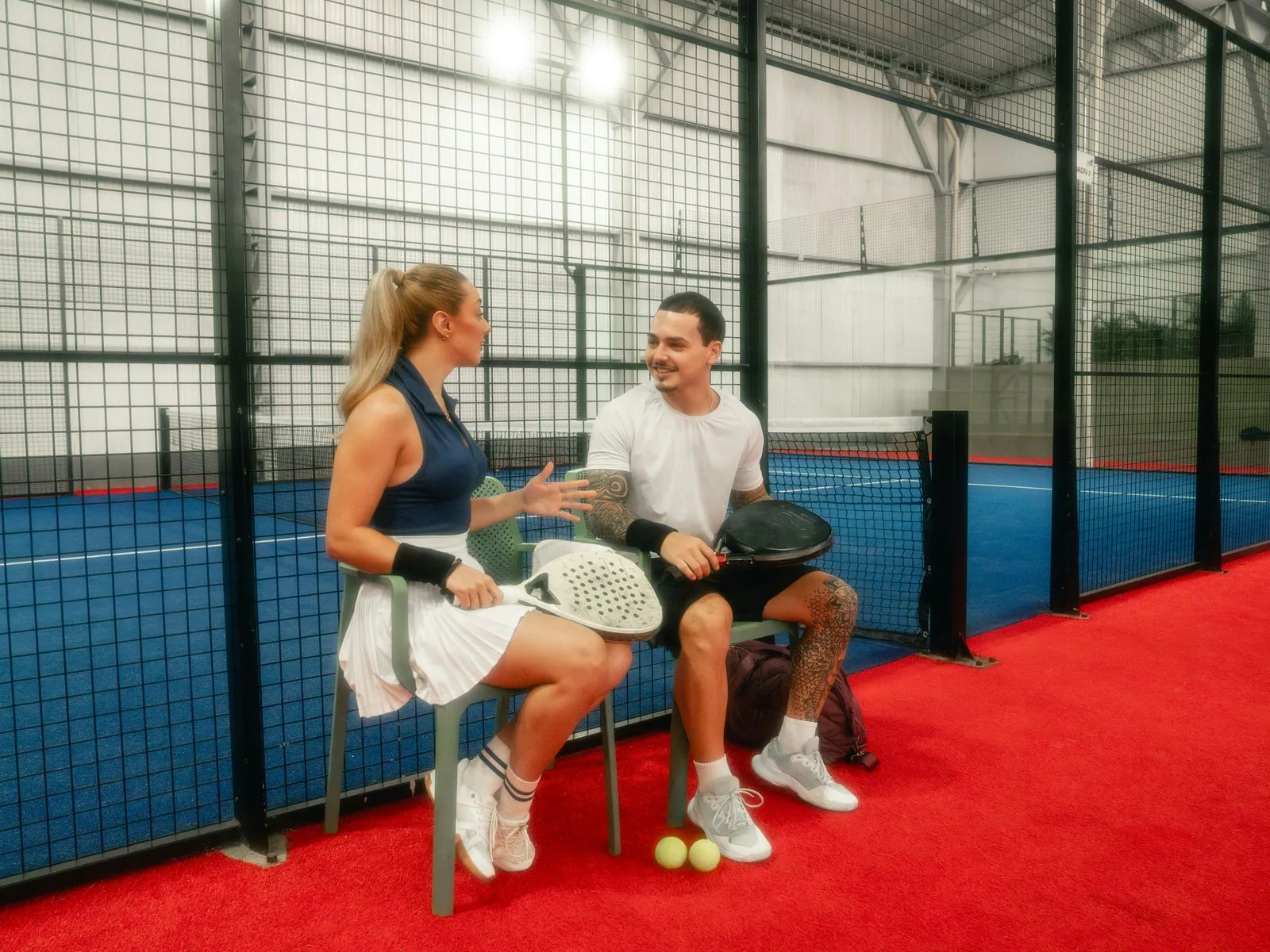
You’ve got the racket. You’ve found a club. You have nobody to play with, and padel isn’t a sport you can do on your own.
Every guide says the same thing: download an app and message strangers. That was written for Europe. In the US it hits a wall on day one: the app may not be the one your club uses.
Stop looking for a partner. Walk into the groups your club already runs and let the partners come out of them.
TL;DR
Four moves, and you can start all four this week.
- Stop hunting for a partner, build a bench. One partner cancels. Six people don’t all cancel on the same Tuesday.
- Go to the club’s rotating night. Open play, americano, mexicano: the format hands you new partners every few games.
- Book a group clinic, not a private lesson. Same hour on court, and you leave knowing people who also need a fourth.
- Ask reception for the group chat. Plenty of clubs have one, and it rarely gets offered unprompted.
Why finding padel partners is the hardest part of starting
Padel is doubles. The court is walled and built for four, so a solo player doesn’t need one person. They need three, all free in the same hour, on a court that’s free too.
New enough that the walls still surprise you? What padel actually is covers the ground floor.
So the goal isn’t a partner. It’s a bench of six, because any given week you need three of them free, and with one partner your padel runs on somebody else’s work schedule.
Start with the club calendar, not the app
Before you message a stranger, open your club’s schedule and find the night partners rotate. It goes by several names: “open play,” “social night,” “club night.” The format sits in the description.
Americano. Social doubles where you score as an individual, not as a pair, with partners and opponents rotating on a schedule fixed before anyone arrives. You play with a spread of the room whether you know anybody or not.
Mexicano. Same shape, except each round’s pairings are rebuilt from the live standings, so you drift toward people playing at your speed.
For a stranger, the americano is the highest-yield night on the calendar: the schedule does the introductions and nobody has to be brave. It takes one sentence. “I’m new, I don’t have a partner, can I sign up solo?” At a rotating night that’s the normal case, not a favor.
If the only rotating night is billed for advanced players, ask when the next all-levels one lands.
Book a group clinic instead of a private lesson
Same hour on court, two different outcomes. A private lesson fixes your volley. A group clinic puts you in a room of people at your level who need a fourth as badly as you do.
Check your club’s calendar before assuming it doesn’t run one. Close to half the clubs we track offer coaching, so the clinic is probably already on the schedule.
Tell the coach why you’re really there, before the warm-up: “I’m new and I’m looking for people to play with, so if anyone needs a fourth, point them at me.” Pairing players is part of the job and it costs them nothing.
Take the private lesson when you have a fault you can name. Until then the group hour is doing two jobs and the private one is doing one.
Ask for the club group chat, and know what to post
Plenty of clubs have a chat somewhere: WhatsApp, a Discord, a group text the desk keeps. Reception rarely offers it, because to them it’s internal plumbing. So ask: “Is there a group chat for players looking for games?”
Then don’t lurk. Post once, in your first week.
Give your availability, not your flexibility. “Weeknights after seven, Saturday mornings” beats “pretty flexible,” because flexible makes the other person do the work.
Offer to be the fourth. The most useful player in any group chat is the one who fills a gap on short notice.
Then answer fast when somebody bites.
Which padel app your club runs decides how you use it
There’s no default padel app in the US, which is where the standard advice falls over.
Of the 256 clubs in our courts directory, 74 book through Playtomic and 59 through PlayByPoint. That’s two thirds of the clubs that name a platform, and neither covers even a third of the directory. The rest run custom systems, club apps and one-offs, and a large group publishes no booking platform at all. Whatever app a guide tells you to download, odds are your club isn’t on it.
If your club is on Playtomic, it’s a genuine partner-finding tool. You can create a private match, make it public so strangers fill the open slots, or search active matches nearby and join one. It runs a player level estimation system too, so an open match tells you roughly who you’d be playing.
If your club is on anything else, treat the app as booking and nothing more until it proves otherwise. The tell: open the booking page and look for matches other players have posted. No list means no feed to refresh, so your way in is the session the club posts on its own calendar.
Be honest about your level
Overstate your level and the first game is usually the last. Everyone works it out early, nobody says anything, and the invite stops coming. Understate it and the group moves you up within a session.
So set yourself a touch low and let the games correct you. The exception is real: playing above your level now and then is how you improve, and a good group will carry a fourth who’s trying. Doing it every week is where you become the reason rallies end early.
Describing your game beats a rating anyway, and if your club’s numbers confuse you, what your padel level actually means untangles them. Try: “Solid off the back wall, shaky at the net, happy to play up.”
How to become the player people invite back
Getting into one game is a tactic. Getting invited back runs on ordinary behavior, not your forehand.
Show up on time, and bring balls. Every minute you’re late comes off three other people’s session, and they notice.
Settle up on the court. Whoever booked already fronted it, so don’t make them ask.
Cancel like an adult. Cancel early, and find your own replacement when you can. The no-show without a message is what groups hold against people.
Stay for the drink after. A lot of next month’s games get arranged after the last point, not during it.
Then become the organizer. Keep booking the court and filling it, and the invitation stops being a thing you wait for.
Say yes to more invitations than feels comfortable, with one caveat: going from nothing to padel most nights of the week is how new players meet common padel injuries. Ramp up gradually and your bench outlasts your elbow.
What to do if your city barely has padel yet
The sport hasn’t landed evenly. Florida and Texas between them hold close to half the clubs in our directory, 66 and 52 of 256. California is next at 26, New York at 15, and neither is close. Anywhere else, your nearest club is probably newer, smaller, and sitting on empty court hours it doesn’t want.
Read that as an opening. A quiet club needs regulars more than you need it, so you land on a short list when somebody calls looking for a fourth. Ask reception to text you when a group is a player down, offer to help start a social night if there isn’t one, and check the US padel courts directory for clubs within driving distance.
The tell that a club is worth committing to isn’t its court count. It’s whether the desk asks your name twice.
FAQ
What is the best app for finding padel partners in the US?
It depends which one your club runs, because an app only helps if the players near you are on it. Playtomic has a public match feed you can join as a stranger, so that’s your fastest route in. Otherwise the club’s calendar is the tool and the app is just checkout.
What is an americano in padel?
A social doubles session where you score as an individual instead of as a pair. Partners and opponents rotate on a schedule set before the night starts, so you play with a spread of the group rather than one person all evening. A mexicano rebuilds each round’s pairings from the live standings instead.
Can you play padel with only two people?
You can share a court and hit, and one-on-one coaching is a normal booking. But a match is doubles, so two people still need two more. If it’s usually just the pair of you, drill in those hours and spend the social effort on finding the other half.
How do I find padel partners as a complete beginner?
Group clinic first, then the club’s beginner or all-levels session. Both are built for people who arrive alone. Say you’re new when you sign up, because it changes who they put you with. At an all-levels session, nobody is auditioning you.
How to find padel players near you
All of it fits in one week.
- Open your club’s calendar tonight and sign up solo. The next open play, social night or americano. The sentence is “I’m new, no partner, can I join?”
- Book a group clinic instead of a private lesson. Tell the coach in the first minute you’re looking for people to play with.
- Ask reception for the group chat this week, then post when you’re free and that you’ll happily be the fourth.
- Subscribe to the Sunday Drop. One email a week: something to try on court, plus a US club worth the drive.
One partner is a single point of failure. Go get six.