
Common padel injuries, and how to stop collecting them
Sore forearm two days after playing? The common padel injuries, what actually loads each one, and the change you can make on court this week.
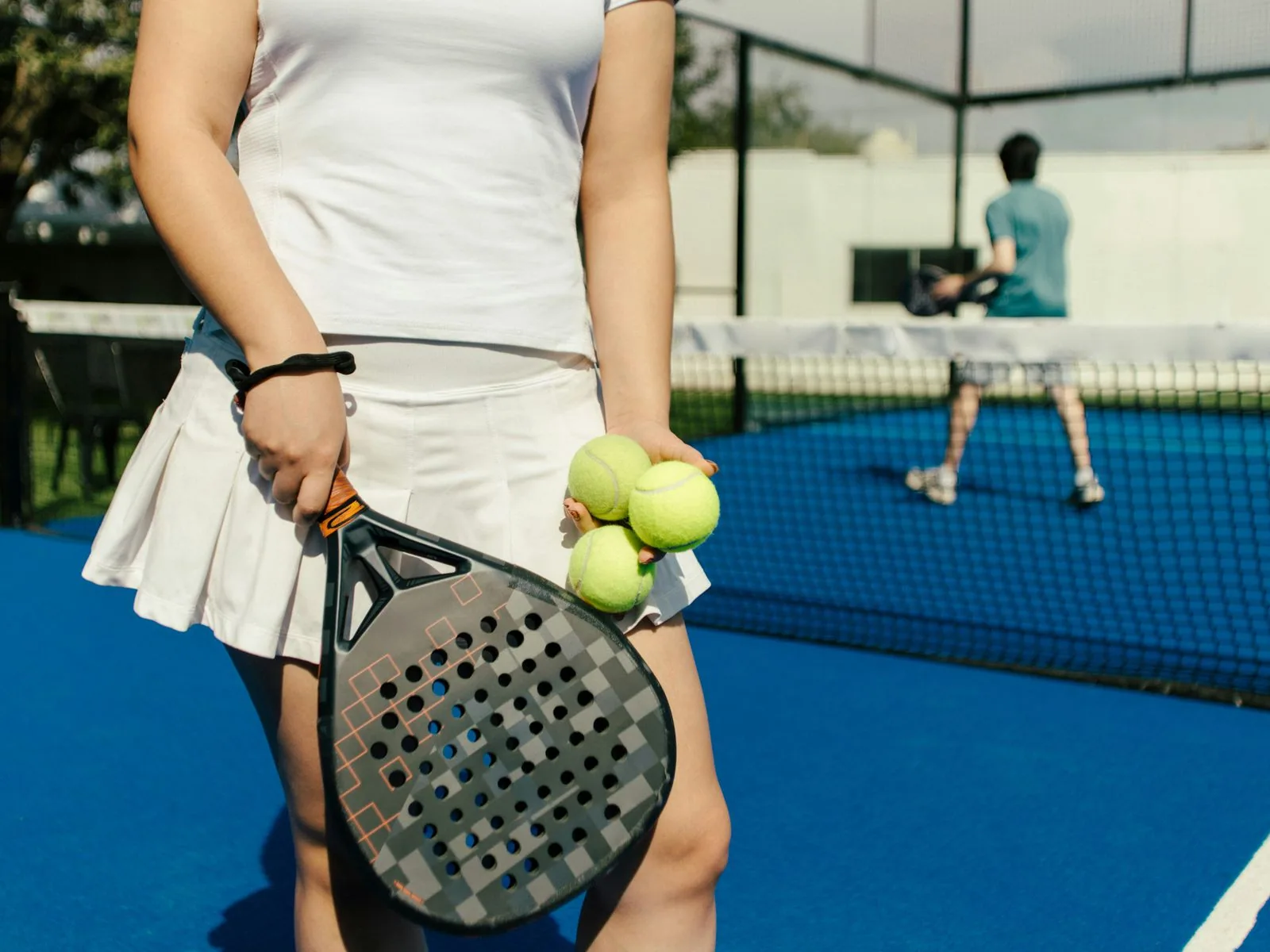
The forearm that aches two days later. The knee that says something on the stairs. Padel gets the blame. The culprit is a short list of habits you can’t feel yourself doing, and we see them every week at the courts we play. Here’s what loads each part of you, and the change that takes it off.
TL;DR
Two jobs, and the injury list follows them: your arm absorbs, your legs brake. Mostly tendons complaining, not breaks.
- The elbow leads every count. Named first in the pooled research, ahead of knee, shoulder and lower back.
- Below the waist is the bigger pile. More than half of all injuries counted in recreational players were lower limb.
- Four changes worth making. Shoes that suit sand, ten minutes of movement first, softer hands, hours added gradually.
Why padel loads the body the way it does
Padel runs around three injuries per thousand hours of play, and at a couple of hours a week that’s the better part of a decade. Across a year, a bit over a third of recreational players picked something up: in your regular four, one or two of you.
Padel asks two things nothing else in your week asks. Your arm absorbs a ball that keeps coming back off the wall. Your legs stop and turn in a space too small to run in.
The explanation that comes with the research is a read rather than a result: a lot of overheads, an arm contracting continuously to slow the ball, no strings to soften the impact, and a backhand rarely played with two hands.
So the sore spots aren’t random. Each one is one of those two jobs.
Padel elbow: the most common injury in the sport
Every study in the review that split injuries by joint put the elbow first, ahead of the knee, shoulder and lower back. The diagnosis behind most of it is the one called tennis elbow.
The tell is in how you’re playing. Notice two things next session: whether your hand ever loosens between points, and how many balls you muscle back instead of letting the wall hand you the pace.
Both are also the fix. Grip pressure belongs at contact and nowhere else, and a ball off the wall arrives with energy you can use instead of replace. If you’re swinging something heavy and head-loaded, choosing a padel racket with less weight up top is a plausible fix rather than a proven one.
Softer hands between shots. That’s the one for your next session.
The wrist: a hinge, not a whip
The wrist rarely tops an injury list. It matters for what it hands upstream: newer players flick at the ball with a flexed wrist, and the elbow absorbs what the smallest joint couldn’t.
The sport does use the wrist, live at contact on a topspin smash. What it isn’t is your power source on a drive or a ball off the back glass, and that’s where the flicking happens. There, it’s a hinge you hold: set it and swing from the shoulder.
The shoulder: every ball above your head
Players blame the smash. The shoulder’s work is every ball that goes up there, and padel keeps sending them.
The bandeja, the controlled overhead that holds the net, is played above the shoulder rather than at full stretch, on a shorter swing.
Not every ball above your head is a smash. Most of them shouldn’t be.
The knee and calf: braking, not running
A padel court gives you nowhere to run. Two hard steps, stop, turn, for an hour. Which is why more than half of everything counted in recreational players happened below the waist.
The tell is how you’re sore the next day. Not winded, not tired all over, but sore somewhere you can point to. That kind fades on its own. Pain that turns up in the same spot every time you play, or is there before you start, is worth a physio’s look rather than a guess.
The work that heads it off is dull: single-leg balance and heel drops off a step, a few minutes often.
The lower back: the arch in every overhead
Every ball you take above your head and behind you extends your spine and rotates it in one motion. Once is nothing. The count is the problem.
The mistake is letting the ball get behind you before you commit. Taken a step earlier, it’s hit with less arch, and it’s the better shot anyway: the kick smash is built on contact in front of the body, never behind it.
Move your feet back sooner and your back stops paying for your patience.
The ankle: sand, shoes, and the wall
A padel court is synthetic turf with sand brushed into it, built for a foot that slides a little under load. Running shoes do the opposite: grip forward, cushion down, no lateral support, so the foot slips when you wanted it planted and sticks when you needed it to give. That raises the odds of a slip and a rolled ankle. The fix nobody gets excited about: padel shoes built for the surface, or a clay-court sole.
The wall is the other half: look for the glass on your way back rather than discovering it.
What actually loads what
| Body part | What loads it | The change |
|---|---|---|
| Elbow | Absorbing ball after ball | Softer grip between shots |
| Wrist | Flicking for pace | Set it, swing from the shoulder |
| Shoulder | Overhead volume | More bandejas, fewer smashes |
| Knee and calf | Braking and turning | Single-leg balance, heel drops |
| Lower back | Extension plus rotation | Take the ball earlier |
| Ankle | Sand and the wrong sole | Padel or clay-court shoes |
A rough map, not a rule. What shifts the call is your age, your hours lately, and what you bring from another sport. Newer players, over-thirties and bad sleepers turn up more in the data, as associations rather than causes.
The ten-minute warm-up you’ll actually do
Ten minutes, all of it moving. No sitting on the floor holding a hamstring.
- Swing while you walk. Leg swings both directions, arm circles both ways.
- Move the way the game moves. Side shuffles, short sprints with hard stops, a few lunges. You’re rehearsing braking.
- Open the shoulders and trunk. Rotations with the racket across your chest, then slow shadow overheads, no ball.
- Hit soft before you hit hard. Cross-court, then volleys, then let somebody put one up. The first full smash shouldn’t be the first overhead.
Which side of the court you play changes what you warm up: the left side takes more overheads, so give step three longer.
How to prevent padel injuries
None of it comes from being careful. It comes from changes you make on purpose, and these four are where we’d start.
- Swap the shoes first. If you’re still in running shoes, everything else here is second.
- Do the ten minutes before your next session, not next month. Turn up early, or use the first five minutes of the slot.
- Add hours gradually. If padel just became your whole week, that jump is the easiest thing here to walk back.
- Book the next one. Find a padel court near you, then subscribe to the Sunday Drop for one fixable habit a week.
Padel doesn’t really break people. It keeps a running tab, and this is how you pay it down.
FAQ
What is the most common injury in padel?
The elbow, specifically the tendon problem people call tennis elbow. It’s the most frequently reported site across the pooled studies, ahead of knee, shoulder and lower back. But most-injured single joint isn’t most-injured region: your legs account for more.
Is padel bad for your knees?
Half true. It’s a braking sport, not a running one, so knees take repeated decelerations, and lower-limb injuries are the biggest group overall. That’s load, not damage, and load is something you prepare for.
How do you prevent padel elbow?
Loosen your grip between shots, and set your wrist rather than flicking for pace. Then let the wall return the ball’s energy instead of muscling everything back.
How long should you warm up before padel?
About ten minutes, all of it moving. Leg swings and arm circles, then side shuffles and hard stops, then shadow overheads and a few soft cross-courts. The first real ball shouldn’t be the first thing at speed.