
The padel lob: what a good one actually does
Most lobs get intercepted, even at pro level. That's the design, not the failure. How to hit the padel lob, where to aim, and the rules that decide points.
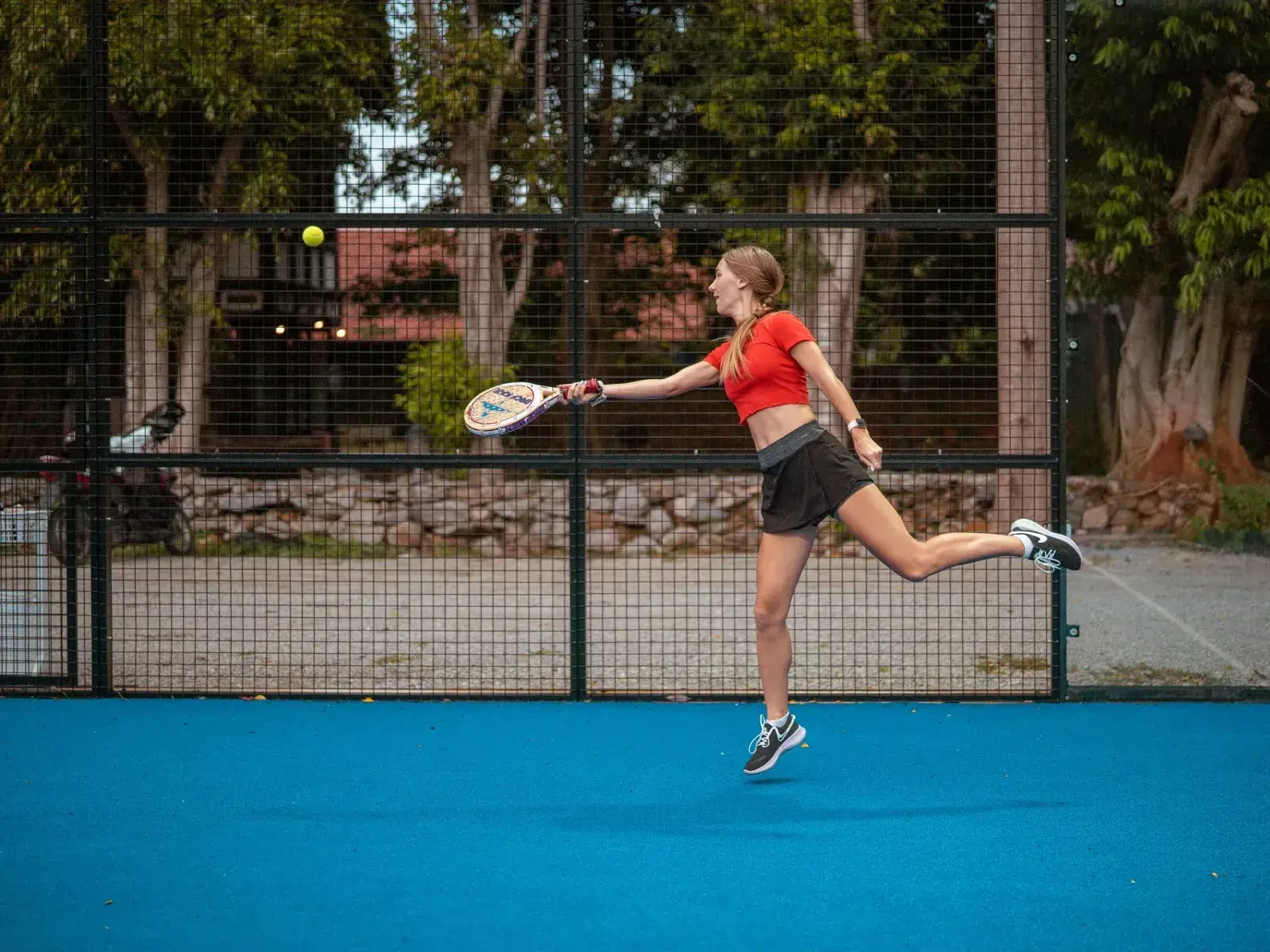
You lift a lob, it feels clean off the racket, and they step back and cut it off anyway. The overhead comes down at your feet, and you file the lob away as a failure. Do that enough times and you stop lobbing.
Pros get intercepted too. Most of the time, in fact. Which means the standard you’re judging yourself against, did it go over their heads, is the wrong one. The standard that matters is different: what your lob forced them to hit.
TL;DR
The lob (the globo, in Spanish) is how you escape defense. Four things to change about how you play it:
- Getting intercepted is normal. In men’s matches at the 2024 Premier Padel circuit, only 16.3% of lobs cleared the opposing pair.
- Judge it by what they hit next. A good lob turns their smash into a bandeja, a controlled holding shot, and buys your pair time to move up.
- Height first, depth second. Open racket face, low to high, landing past the service line but before the back glass.
- Aim by job, not by habit. Cross-court for margin, down the line when passing them is the point, away from the left-side player either way.
Most lobs never go over anyone’s head
Researchers coded 2,063 lobs across 10 matches at the 2024 Premier Padel circuit. In the men’s matches, only 16.3% of lobs cleared the opposing pair. The other 83.7% got intercepted and hit with an overhead. In the women’s matches, 26.1% cleared and 73.8% got intercepted.
In the men’s matches, that is the best players in the world clearing the net pair roughly one time in six.
The reason is simple: the pair at the net refuses to give up the net. They’d rather back up a step and take it out of the air with a volley than retreat, because the net is where padel points get won (studies of pro play put that at about 80% of points).
Now set that beside a different study, which coded 1,324 defensive-to-offensive sequences from the 2018 women’s World Padel Tour finals. The lob was the shot used in 85.4% of them, and defending pairs reached the net in 70.4% of those situations, with the lob the shot most strongly associated with that outcome.
Hold the women’s numbers together. A shot that clears opponents about a quarter of the time is still the main road back to the net. Which means clearing them was never the job.
One more wrinkle. In a separate study of men’s professional matches, the winning pairs actually hit slightly fewer lobs than the losing pairs, 8.9% of their strokes against 9.3%. That isn’t an argument against lobbing. The lob is how you escape defense, so lobbing a lot partly measures how much time you spent there.
The limits matter here. These are small samples (the first study is 10 matches, 24 players, one tournament, and its authors flag it), and every number is professional. Nobody has measured amateur padel. We’d guess lobs clear opponents more often at US club level, because club overheads are weaker, but that’s inference, not a finding.
What a good lob actually does
Stop asking whether it went over. Ask what they had to hit.
A ball that arrives high and deep pushes their contact point back and later, and the smash they wanted stops being available. They play a bandeja instead, the controlled overhead that holds the net without finishing the point. The bandeja is the antidote to the lob: placement over pace, speed off the ball, position kept.
That’s your win. Their attacking shot became a holding shot. The ball returns slower, you and your partner get a beat to walk forward, and the rally resets on fairer terms.
A lob that clears them is a bonus. A lob that downgrades their next shot did the job.
How to hit a padel lob
The racket face is the one thing separating a lob from a drive. Everything else is a normal groundstroke.
- Prepare early and sideways. Turn, racket back, same as any groundstroke.
- Open the face. Point it up, more towards the sky. That’s where height comes from, not from swinging harder.
- Low to high. Start the racket below the ball, finish above your head.
- Push up with the legs. Bend, get low, drive up through the ball. Lifting your whole body to find height just makes you unstable.
- Land it past the service line. Deep enough to be awkward, but before the back glass so it doesn’t sit up off the wall.
Grip stays your normal continental padel grip. No special grip is needed, and swapping to one just adds a step.
The priority order is worth memorizing: high first, deep second. Height buys the time, and it also means less rebound off the glass when the ball lands deep. A rough target to aim for is a lob around 7–8 m up, above the court floodlights, more a working guideline than a measured standard.
One tip, not a rule: keep your preparation identical to a chiquita or a low drive, then open the face late.
Most short lobs trace back to fear of hitting long. You shorten the arm, quit on the follow-through, and the ball lands exactly where their smash lives. Indoors, err long. Outdoors in wind, that margin disappears fast, so give yourself less of it.
If you’d rather watch, here’s a short walkthrough of the same fixes: the open face, the low-to-high swing, and the depth to aim for.
Where to aim, and why the data and the coaching disagree
The data and the coaching pull in opposite directions here, and both are right.
Data first. In that same 2024 Premier Padel study of men’s matches, of the lobs that did clear the opposing pair, 46.5% went down the line, 29.8% went cross-court and 23.7% went up the middle. The findings land on down the line as the most effective direction in men’s padel for getting past the pair, and cross-court as the least. The reasoning: the opponent directly in front of you usually stands closer to the net than his partner, and the ball travels a shorter distance, so he gets less time.
Standard coaching teaches the opposite. Aim cross-court, because the diagonal is longer and gives you more room for error.
They’re answering different questions. Cross-court buys margin, which is what you want when you’re stretched or just resetting; make it your default while your control is still building. Down the line is the higher-percentage way to actually pass them, which is what you want when passing them is the goal.
The bigger decision for most intermediates isn’t direction, it’s person. Lob away from the left-side player, the overhead threat on most pairs. The same study found the right-side player receives most lobs, which it ties to the higher proportion of right-handed players and weaker returns from that side.
One myth while we’re here: lobbing isn’t one partner’s job. The study found no association between which side a player covers and who hits the lob (p = 0.796).
The sliced lob, and why your ceiling may veto it
One version worth knowing: the sliced lob, or globo pinchado in Spanish (you’ll also see picado and cortado for the same shot).
The value isn’t exotic spin, it’s the shape. The ball descends on a steeper, more vertical path instead of a flat arc, which degrades both the smash and the bandeja, and it forces opponents to look straight up. Outdoors in bright sun, that’s a genuine problem for them. It’s one of the least-trained shots in the sport, which is where the opening is.
There’s a catch, and it’s architectural. Plenty of US indoor clubs have ceilings too low to hit high lobs at all. The official rules require a minimum court height of 6 m throughout and suggest 8 m for new builds, so the maximum-height lob is partly a question of which building you’re standing in.
Two rules that decide points
The ceiling. Under the FIP rulebook in force from 01.01.2026, a return is correct when the ball bounces in the opponent’s court and then goes out of court, hits the ceiling, the lights, or any other object unrelated to the court. So a lob that bounces in their court first and then clips the ceiling is a good shot and you win the point. You only lose it when the ball hits the ceiling before bouncing.
Plenty of padel sites state this flatly wrong. One local caveat: many US indoor facilities run house rules for low roofs, so check what’s posted at your club.
Back wall versus side wall. After a correct bounce, a ball leaving over the end wall ends the point on the spot; nobody chases it. A ball leaving over the side wall or through the door is still live, and the point is only lost when it bounces a second time or touches something unrelated to the court. So a lob deep enough to bounce in and fly out over the back is an outright winner, while the same ball exiting sideways can be run down. Out-of-court play depends on the facility (access points, an obstacle-free area, light poles clear of the safety zone), so many courts don’t qualify.
What to do after you lob
Lob and sprint is how you get smashed at your feet. The cue to hold onto: stop moving when your opponent is about to make contact, and when you stop, split step.
Travel while the ball is in the air, be balanced when they hit, repeat until you’re both at the net. The strip between the service line and the second post is where you least want to be standing at contact, which is the same reason padel court positioning decides more points than your swing does.
And tell your partner what you’re playing. A lob only takes the net if both of you come forward.
How to practice the padel lob
- Change your scorecard for one match. After each lob, note what they hit: smash, bandeja, or nothing. Stop counting heads cleared.
- Drill height before depth. Ten lobs where the only goal is height, then ten aiming at the strip past the service line. Book somewhere from the padel court directory.
- Ask about your ceiling. If you play indoors, learn the house rule before it costs you a league point.
- Subscribe to the Sunday Drop for one fixable habit a week, plus a US court worth knowing.
A lob that gets intercepted still did its job if the ball came back slower. Judge it that way and you’ll lob more, which is most of the improvement.
FAQ
Why do my lobs keep getting smashed?
Almost always because they’re short. The usual cause is fear of hitting long: you shorten the arm and abandon the follow-through, so the ball lands where an overhead is easy. Height comes from an open racket face and a low-to-high swing, not from more effort.
Should I lob cross-court or down the line?
It depends on the job. Cross-court gives you a longer diagonal and more room for error, which is why coaching teaches it as the default and why it’s right under pressure. In men’s matches at the 2024 Premier Padel circuit, down-the-line lobs made up 46.5% of the ones that actually cleared the opposing pair against 29.8% cross-court, so down the line is the pick when passing them is the goal.
What happens if my lob hits the ceiling?
Under the FIP rules, if the ball bounces in your opponents’ court first and then hits the ceiling or the lights, it’s a correct return and you win the point. You lose it only if the ball hits the ceiling before bouncing. Many US indoor clubs run house rules for low roofs, so check what’s posted at yours.
Is the padel lob a defensive or an attacking shot?
Both, and the split is coaching language rather than something researchers measure. Defensive lobs go up when you’re pinned at the back and need recovery time: maximum height, maximum margin. Offensive lobs are the same shot with less margin, played to push a comfortable net pair backwards so you can advance.