
What is a Bandeja, and Why it's so important
The bandeja is the shot that turns beginner padel into real padel. What it is, when you use it, and why your game stays stuck without one in your arsenal.
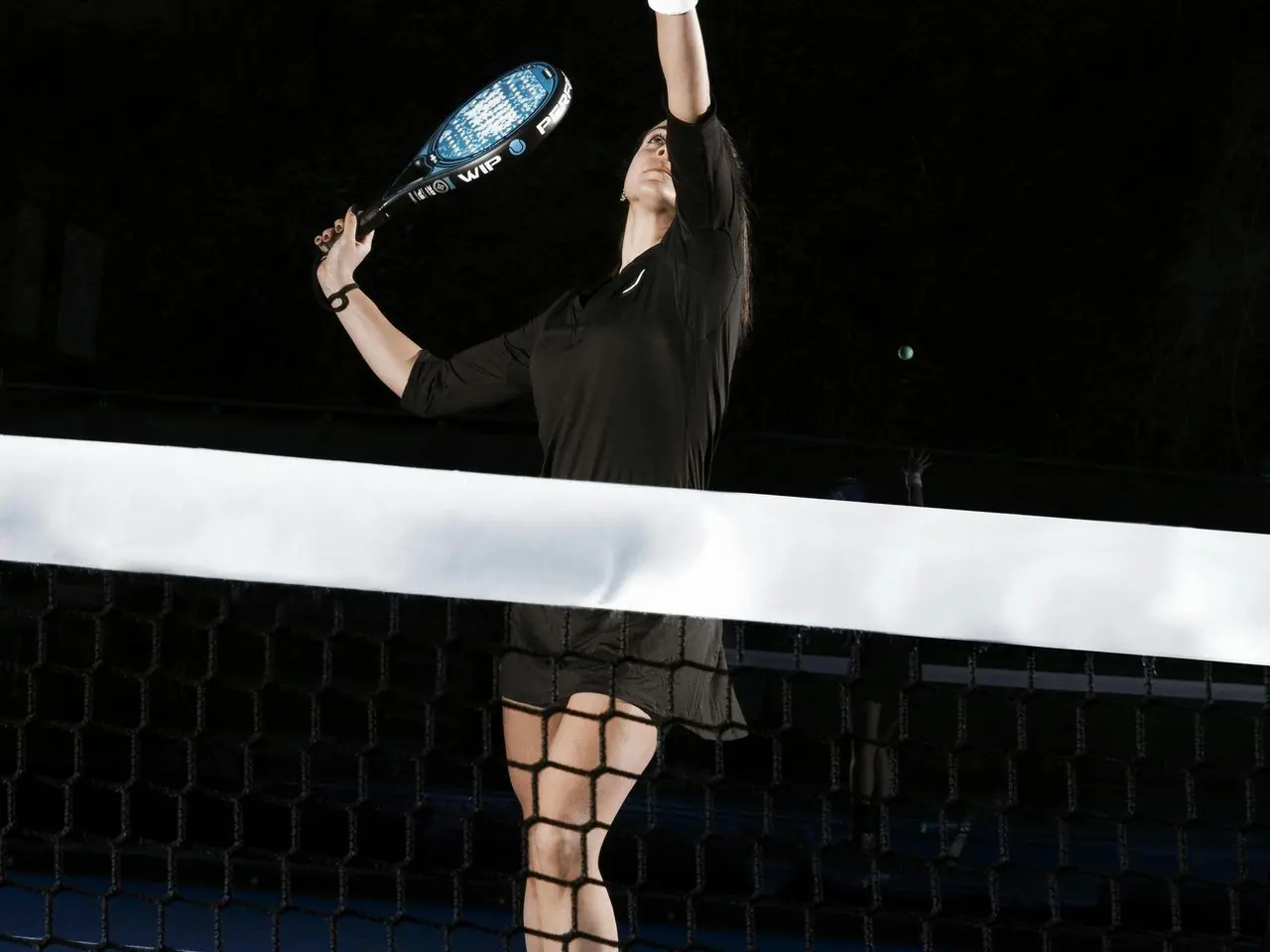
If you’ve played padel for a few months and your game has plateaued, the bandeja is almost always the missing piece. It’s the most-used shot at the intermediate level and above, and it’s the single biggest unlock when you stop being a beginner and start being a padel player. Here’s what it is, why it matters more than any other shot you can learn next, and how to start adding it to your game this week.
TL;DR
The bandeja is a controlled defensive overhead, played with a slicing motion when the opponents have lobbed you. It looks slow. It is on purpose. The point of the bandeja is not to win the rally, it’s to keep your position at the net while pushing the opponents back. Padel is a game of court position. Whoever owns the net usually wins. The bandeja is the tool that lets you keep the net even when the other team is doing everything they can to push you off it.
If you don’t have a bandeja, you have two bad options when they lob you: smash (risky, low-percentage) or let the ball bounce (you’ve conceded the net). The bandeja is the third option, and it changes everything.
What the bandeja actually is
The word bandeja means “tray” in Spanish, and the shot is named after the motion. You hit it from above your head, with the racket face slightly open, in a slicing motion that travels from high to low. Think of carrying a tray of drinks across a crowded room: that’s roughly the path your hitting arm takes. Smooth, controlled, never violent.
The technical details, in order:
- Stance: Sideways to the net. Not square. Your shoulder leads, not your chest.
- Contact point: Above the shoulder, but not full-extension overhead like a smash. Closer to the height of a high tennis volley.
- Racket face: Slightly open, between flat and 45 degrees.
- Motion: Slice. The racket cuts down and through the ball, not over it. You’re carving the ball, not crushing it.
- Spin: Backspin and a touch of sidespin. The ball stays low after the bounce on the other side.
- Target: Deep into the opponents’ court, close to the back glass. Not for a winner. For a wall they have to dig out.
The first time you hit one cleanly, it feels weirdly slow and weirdly satisfying at the same time. Like you’ve found a cheat code. That’s the right feeling.
If watching is easier than reading, here’s a clean breakdown of the bandeja and its main variations. Worth ten minutes once and then again after your next session.
When you actually use it
Constantly. More than any other shot at the intermediate level.
In a typical doubles point in padel, you and your partner are at the net, and the opposing team will try to break your position by lobbing you. They’ll do it with a globo (a high lob from the back), they’ll do it with a soft chip (a low lob just over your head), they’ll do it whenever they sense pressure. Lobs are the most-used response to net play in padel, full stop.
The bandeja is your default reply. Specifically:
- When the lob is a touch too high to smash safely. A real smash needs the ball to be at full reach, well above your head, and ideally short. Anything else, you bandeja.
- When the lob is a touch too short to let bounce. If the ball is going to land anywhere in the front half of your side, you take it out of the air with a bandeja. Letting it bounce means you’ve left the net.
- When you’re not in perfect position. If you’ve shifted, if your partner is moving, if you’re slightly under the ball, the bandeja is the safe play. You’ll keep the rally alive and reset the position.
You’ll hit a bandeja six or seven times in a typical 30-second rally, sometimes more. Pros hit dozens per game. The shot is the connective tissue of intermediate-and-above padel.
Why it’s the bridge from beginner to intermediate
This is where most players get stuck for six to twelve months without realizing why.
At the beginner level, your padel looks something like this:
- You serve. They return. You volley.
- They lob. You panic.
- You either smash (and miss, half the time) or let the ball bounce and retreat to the back wall.
- The point is now a baseline rally. You and your partner are deep, they’re at the net. They’re about to win.
The lob is the beginner-killer. It’s not that beginners can’t hit good shots from the front. It’s that they can’t stay at the front when the other team starts lobbing. The bandeja is the answer the rest of the padel world figured out a long time ago.
Without it, your ceiling is “decent baseline rallier.” Which is fine for casual play but a wall for actual progress. With it, you become a player who can hold the net for an entire match, which is what real padel looks like.
This is the reason the bandeja sits exactly at the threshold between “I play padel” and “I play padel.” Your game changes the moment it lands.
What changes when you have one
Specific things you’ll notice in the first month after the bandeja clicks:
- You stop fearing the lob. It used to be the shot that ended your offense. Now it’s a shot you reply to. Different posture, different mindset.
- You stay at the net longer. Whole points instead of one or two volleys before retreating.
- Your partner trusts you more. They stop having to drift back to cover the lobs you can’t handle. They can hold their own side.
- You start winning points by attrition. Padel is a long-rally sport. The team that maintains pressure longer usually wins. The bandeja keeps pressure on without taking risk.
- You realize how much your old game depended on luck. Before, you needed a clean smash or an opponent error. After, you can construct a point.
Every bandeja you hit safely is one more rally where you got to play padel the way it’s supposed to be played, not the panicked baseline version.
How to actually start learning it
Three steps. Do them in order.
1. Shadow swings, no ball, ten minutes a day for a week. Stand sideways to a wall or imaginary net. Practice the motion: shoulder turn, racket up over the head, slice down and through the contact zone. Slow, repeated, deliberate. Get the body comfortable with the shape before you put a ball in.
2. Easy feeds, with a partner or pro, two sessions. Have someone stand on the other side of the net and toss soft lobs to your forehand and backhand sides. Don’t try to win the point. Aim for one thing: land the ball deep, past the service line, ideally close to the back glass. Hit twenty in a row before you change anything.
3. Live play, with a goal. For your next four matches, give yourself one rule: when they lob you, your default response is a bandeja, not a smash. Even when you think you can smash. Especially then. You’re training the instinct. You’ll feel under-aggressive for a few games. After that, you’ll feel like a different player.
A reasonable benchmark: after ten focused sessions, half of your bandejas should land in the back third of the opponents’ court. That’s the threshold where it’s a real shot in your game and not a hopeful idea.
If you can take a single 30-minute private lesson on the bandeja with a coach, do it. The motion is small enough that one good session of feedback fixes most beginners’ biggest issues (over-rotating, hitting too flat, contact too low) faster than a month of self-practice.
What unlocks after
The bandeja is also the gateway shot for the rest of the intermediate shot tree. Once it’s reliable, the next layer comes online quickly:
- Víbora (the “snake”). The more offensive cousin of the bandeja, with sidespin, used to attack a slightly weaker lob. Same family of motion, different intent. Adds 10 mph and changes the bounce pattern.- Bajada. An attacking shot played from the back court, taken high off the back glass and hit downward. The shot that wins you back the net after opponents successfully lob you.- Kick Smash. The topspin overhead that bounces and kicks out over a side fence for a por tres winner. The hardest shot in the sport, and the one that closes the offensive shot tree.- Chiquita (the “little one”). A soft low ball played near the net to bring opponents forward when you want to lob them in turn. The bandeja’s tactical opposite.
These shots all start to feel possible once you have a reliable bandeja. The shot tree opens up. Padel stops being “rally and hope” and starts being “construct and finish.”
What to do next
If this is the article that made the bandeja click, do these three things:
- Book a court this week. Find your closest one in the Padelkin court directory.
- Tell a coach you want a 30-minute bandeja lesson. Most clubs will fit you in if you ask specifically.
- Subscribe to the Sunday Drop so the next shot-of-the-day breakdown lands in your inbox before you forget.
If you’ve been playing for a year and you’re still missing this shot, this week is the week. Join Padelkin and tell us you’re chasing the bandeja. Someone in the community is probably at the same court as you next weekend.