
Why positioning matters most in padel
Stuck at the same level for too long? Often it's where you stand, not how you hit. Padel court positioning: three zones, no man's land, and moving as a pair.
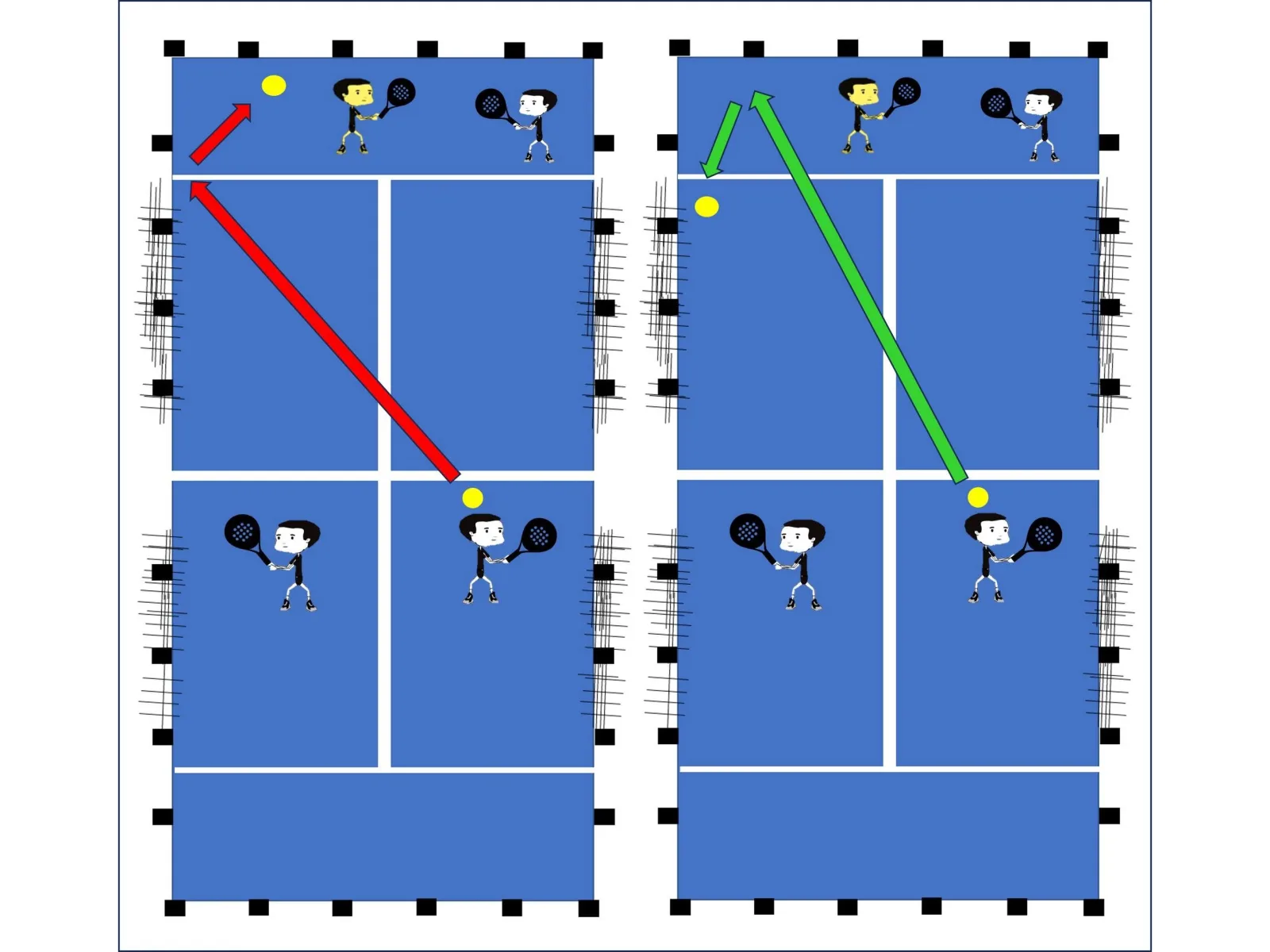
You can have a clean bandeja (the controlled overhead that holds the net), a heavy serve, and a smash you’re proud of, and still lose to the slower pair across the net. We watch it happen every week. The reason almost always comes down to one thing nobody taught you: where you’re standing.
This guide is about padel court positioning, the most underrated skill in the sport. It costs nothing, it requires no new stroke, and at beginner and intermediate level it wins more points than anything else you could practice. If you came from tennis, some of your instincts here are working against you. We’ll fix that too.
TL;DR
In padel, position beats power, the walls recycle pace, so clean winners are rare. Four habits win back the points you’re leaking:
- Set a home base. Both at the net or both at the back, and move between them together.
- Skip no man’s land. The strip by the service line lets you neither volley nor defend. Pass through, don’t park.
- Lob to take the net. Float it over them, follow it in as they retreat.
- Don’t stay split. One up, one back is fine for a beat; close back to level fast.
Why positioning beats power in padel
Here’s the part that breaks tennis brains: in padel, you almost never hit a clean winner past a team set at the net. The back walls keep the ball alive. You crush a passing shot, it rebounds off the glass, and now it’s sitting up for your opponent to put away. Power gets recycled. The wall hands it right back.
So the sport doesn’t reward the biggest swing. It rewards the pair in the better spot. Control and net presence beat raw pace, because the only way to truly take time away from an opponent is to be standing somewhere that lets you hit the ball before it slows down. That somewhere is the net.
This is the whole reason positioning matters more in padel than in any racket sport you’ve played. If you’re fuzzy on why the walls change everything, what is padel covers the basics, and how to play padel walks the full rule set. This guide assumes you’ve got those and wants to fix where you stand.
The three zones of a padel court
A padel court is 10 m wide and 20 m long, split by a net in the middle. The service lines sit 6.95 m from the net on each side. Behind each service line is a back wall: the lower 3 m is glass you can play off, with a metal fence above it.
Forget the exact figures for a second and think in zones. There are three, and each one lets you do a different job.
| Zone | Where it is | What you can do there |
|---|---|---|
| The net | A couple of meters back from the net | Volley, finish, control the point |
| No man’s land | Around the service line, roughly mid-court | Almost nothing useful |
| The back | Behind the service line, near the glass | Defend, use the wall, and build your way back to the net |
Two of those zones are real positions. The middle one is a trap.
The net: where points are won
The net is the winning position, full stop. Standing a couple of meters off the net, you take the ball early, you hit down into the court, and you give your opponents no time. The pair at the net sets the terms of the rally. The pair at the back has to work to turn it around.
This is why everything in padel strategy comes back to one question: how do we get to the net, and how do we stay there?
The back: where you defend and rebuild
The back is not a punishment, and it’s not purely defensive. It’s a real, stable position where points get built. Standing behind the service line, near the glass, you have time. A deep ball lands, rebounds off the back wall, and comes up at a comfortable height for you to play.
From here you do more than survive. You can lift a lob to push the net team back, drop a chiquita (a soft, low ball at their feet) to drag them down off the net, or play a bajada (an attack off the back wall) to climb forward. Stronger players can flat out hurt you from deep. The back is only passive if you let it be.
There’s no shame in the back. Pairs spend whole rallies there, patiently building the ball that lets them advance. The shame is in standing in front of it, stranded in no man’s land, for no reason.
No man’s land: the trap in the middle
Now the zone that costs you the most. No man’s land is the strip around the service line, the mid-court area roughly 6.95 m from the net. It feels like progress, like you’re “moving up.” It’s actually the worst place on the court to stand. Coaches call it the transition zone, and that word is the point: it’s space you move through, not a spot you set up in.
Here’s why it punishes you. You’re too far from the net to volley, so balls dip and die at your feet before you can step in. And you’re too close to the back glass to use it, so a ball that rebounds off the wall jams you before you can turn and set. You get the downside of both positions and the upside of neither.
Passing through it is fine. Accelerating through it is fine. Standing there is how you donate points, and against intermediate opponents or better, they’ll make you pay every time.
The two positions that actually work
Once you accept that the net and the back are the only real positions, the rule writes itself. You and your partner are always in one of two shapes.
Both up or both back, as your default
Both at the net, attacking. Or both at the back, defending. Those are your two home positions, and the goal is to be in one of them together.
You’ll still get staggered sometimes, one up and one back, and that’s fine for a beat: off the return of serve, or while one of you is moving up mid-rally. The problem is staying that way. When one player is stuck at the net and the other is pinned back, a diagonal gap opens straight through the middle, and a half-decent opponent will thread the ball into that seam all day. Tennis taught you to split the court like that. Padel rewards closing back together, fast.
Move as a pair: the invisible rope
So you move together. Picture an invisible rope tying you to your partner, a few meters long. When they go forward, you go forward. When they get pushed back, you go back. You slide left and right together, staying roughly parallel.
If the rope ever stretches, if one of you drifts up and the other lingers, that diagonal gap reopens. The fix is to stop thinking about your own position and start thinking about the pair’s shape. Two players, one unit, always level.
How to take the net, and keep it
If the net wins points, the real skill is getting there from the back and not surrendering it once you arrive.
The lob: your ticket forward
The lob is how you take the net from the back. You’re pinned deep, the other pair is up and comfortable, and instead of trying to blast through them, you float a high one over their heads. They have to turn and retreat to chase it off the glass. While they’re going back, you’re coming forward. The lob flips the rally: their attack becomes their defense, and you’ve stolen the net.
It only works if it’s a good one, though. A lob that lands short or low is worse than not lobbing at all: they step in, smash it, and leave you pinned at the back. Hit it deep enough that they can’t attack it, and you’ve bought the time to move up.
A good lob is worth more than a good drive at this level. The drive feeds the wall; the lob moves people. And when a good lob isn’t on, a chiquita does the same job from below: soft and low at their feet, it drags them off the net so you can take the space.
Crossing no man’s land without getting caught
The catch is that getting from the back to the net means crossing no man’s land, the exact strip you’re trying to avoid. The trick is timing, not speed.
- Move while the ball is traveling. When your lob is in the air heading to the back, that’s your window. Use those moments, when nobody can hit you, to gain ground.
- Split-step when they’re about to strike. As your opponent loads up to hit, stop and split-step, balanced and ready. Don’t get caught mid-stride in the middle when contact happens.
- Repeat. Travel on their backswing, stop on their contact, travel again. You leak forward in safe bursts instead of sprinting into a volley you can’t handle.
Cross it like that, and no man’s land turns into a hallway you pass through, not a room you live in.
Keeping the net: don’t force the finish
Taking the net is only half the job. Keeping it is the other half, and it’s where players hand points back. When a ball comes that you can’t put away, one dipping at your feet, or a good lob over your head, the urge is to swing for a winner anyway. Resist it. Play a controlled bandeja instead, hold your position, and reset the rally on your terms. A forced winner you miss gives back everything you worked to take. The net isn’t only where you finish points; it’s a spot you protect.
Serve and return: where to stand
Two moments cause the most positioning confusion, so keep them simple.
On the serve, the server hits and immediately moves up to join their partner at the net. The whole point of the serve in padel isn’t power, it’s to buy your pair the time to get up and take the attacking position together.
On the return, stand deep, back near the service line and toward the center, where you can handle the serve and read what’s coming. After a good, deep return, advance and look to get forward. One thing for the serving side: don’t auto-rush the net behind every serve. If the return comes back deep and low at your feet, that’s a ball you respect, not one you charge.
The positioning mistakes that cost you the most points
We’ve made all of these. Here are the five that leak the most points at beginner and intermediate level.
- Lingering in no man’s land. The big one. You drift up, you freeze, you get jammed. Commit forward or drop back, but don’t park there.
- Getting stuck one-up-one-back. A quick stagger is fine (off the return, mid-transition); staying split is what opens the diagonal gap through the middle. Recover to level as fast as you can.
- Both drifting to the same side. You both slide to chase a wide ball and leave half the court open. Stay roughly parallel, not stacked.
- Not retreating together after a lob. They lob, one of you goes back for it, the other stays up. Now the rope is stretched and the gap is back. If one retreats, both retreat.
- Ball-watching, or both going for the same ball. Two players staring at the ball, both lunging for it, nobody covering the court. Track your partner’s shoulders, call “mine” or “yours,” and trust the split.
None of these are technique problems. Every one of them is a feet problem, which means every one is fixable today, for free.
How to improve your padel positioning
You don’t fix all of this at once. You fix it one habit at a time.
- Pick one thing for your next session. The highest-leverage choice is this: the second you notice you’re near the service line and not moving, get behind it. Just that. Catch yourself in no man’s land and step back to the defending position. One habit, one match.
- Drill it on a real court. Positioning clicks with reps, not reading. Grab a partner, find a court near you in the padel court directory, and play a few games where the only goal is staying level as a pair.
- Layer in the shots once the feet are right. When you’re consistently in the correct zone, combination plays shows you what to actually hit from there, and how to sequence shots into a finish.
- Get one a week. Subscribe to the Sunday Drop for a weekly Padelkin email, one fixable habit at a time, plus a US court worth knowing.
Fixing your feet is the cheapest upgrade in padel. No new racket, no new stroke. Just stand in the right place, with your partner, and watch how many points stop leaking.
FAQ
What is no man’s land in padel?
It’s the strip of court around the service line, roughly mid-court, where you’re too far from the net to volley and too close to the back glass to defend off the wall. You get jammed either way, which is why it’s the most common spot to lose points from. Passing through it is fine; standing in it is the mistake.
Should both players go to the net in padel?
Yes, when you can get there together. Your two home positions are both up at the net or both back. You’ll be staggered one up, one back at times, off the return or mid-transition, and that’s fine for a beat; the mistake is getting stuck split, which opens a diagonal gap good opponents will exploit.
How do I get to the net from the back?
Mostly with a good lob, deep over the net pair so they have to turn and chase it while you move up behind. Make it count: a short lob is worse than nothing, because they’ll smash it and leave you pinned at the back. A chiquita (a soft ball at their feet) works too, dragging them off the net so you can step in. Either way, move while the ball is traveling and split-step as they’re about to hit, so you’re never caught mid-stride in the middle.
Is positioning more important than technique in padel?
At beginner and intermediate level, yes. Because the walls keep balls alive and recycle power, clean winners are rare, so the pair in the better position usually wins the rally. Fixing where you stand wins more points than any single new stroke.