
What is a Bajada? The Shot That Wins You Back the Net
The bajada is the attacking shot from the back court after a lob pushes you off the net. What it is, when to play it, and when not to.
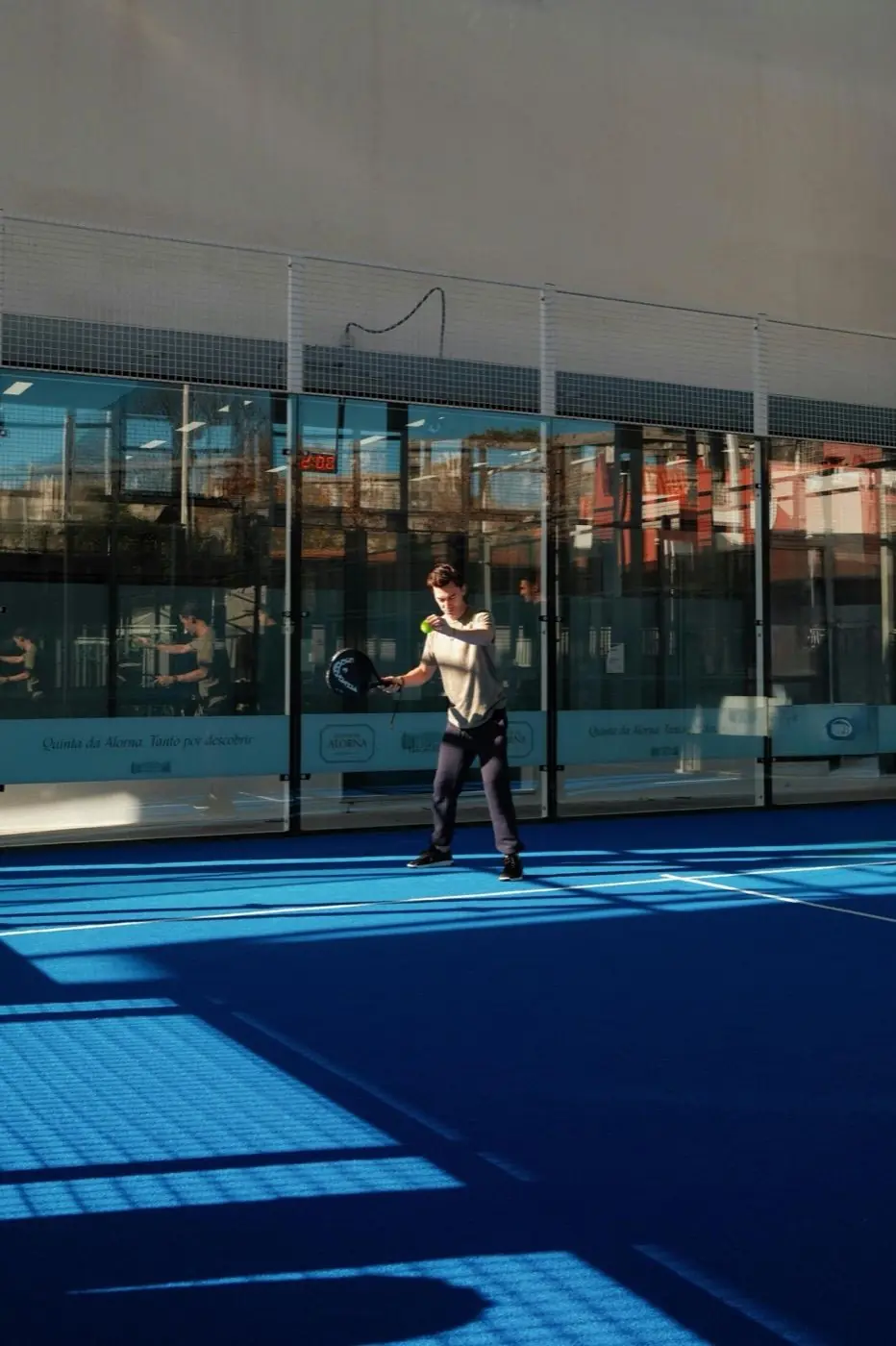
If the bandeja and the víbora are how you hold the net, the bajada is how you take it back. Bajada means “descent” or “coming down” in Spanish, and the shot is named for what it does: the ball drops off the back glass into your strike zone and you attack it on the way down, flipping the rally. Here’s the shot, when to use it, when to leave it alone, and why it’s the moment the back court stops being a place where rallies go to die.
TL;DR
The bajada is an attacking shot played from the back of the court, after the ball has bounced once on the floor, hit the back glass, and dropped back down into your strike zone. It’s the only major attacking shot played from the back. Bandeja and víbora are net shots played from above the head. The bajada is a forehand or backhand taken as high as you can comfortably handle it, roughly between waist and shoulder, hit downward and hard so you can advance to the net behind it.
The bajada is the answer to “I just got lobbed, am I done in this rally?” The honest answer for an intermediate player without a bajada is yes, probably. The honest answer with one is not even close.
What the bajada actually is
The bajada is a downward strike, not a lift. Your racket goes up early, above head height, and you hit down and through the ball as it drops. That downward path is what keeps it low over the net and diving at their feet. Take it too late, down around your waist, and you’re forced to lift it instead, which is when bajadas start sailing long.
The technical detail, in order:
- Stance: Sideways to the net, weight on the back foot, knees loaded. Stand beside the ball’s line, not directly behind it, so you have room to swing.
- Reading the ball: Track it into the back wall and get your racket up before it arrives. You want to be loaded and waiting, not reacting late.
- Free hand: Point at the ball with your non-racket hand, and keep pointing. It works like a cursor. You’re marking the spot the ball is going to arrive at, so when it drops to roughly where your hand is, you’re hitting a target you already set instead of guessing. It turns your shoulders while you do it.
- Contact point: As high as you can comfortably take it, roughly waist to shoulder, and well in front of the body. The higher and earlier you meet it, the more you can do with it.
- Racket path: High to low, hitting down and through the ball. Flat to slightly sliced, so it stays low and dives rather than sitting up.
- Body rotation: Hips and shoulders open through the swing. The arm follows the body, not the other way around.
- Target: Deep, hard, ideally at opponents’ feet near the service line. Cross-court is the safer default. Down the line is the riskier-but-rewarding choice.
The first time you hit one cleanly, two things happen: the ball comes off flatter and heavier than you expected, and you find yourself instinctively walking toward the net while it’s still in the air. That second thing is the right instinct. A bajada that lands clean has earned you the net. Take it.
If watching is easier than reading, here’s a clean breakdown of the bajada motion and how to play it off the back glass. Worth ten minutes once and then again after your next session.
When you actually use it
The decision tree, simplified:
- Lob is high and short → smash from the net. You don’t go back, you go up.
- Lob is high and deep, you can still reach it overhead → bandeja or víbora from the net. Hold the position.
- Lob is too deep, the ball is going past you and into the back glass → let it bounce, track it off the wall, bajada. This is the bajada window.
- Ball is slow and short off the back glass → bajada chiquita. A soft-touch version that drops just over the net to bring opponents forward.
- Lob drops short, around the service line → you can bajada it without the wall. Less common, but if the ball is going to die in front of you rather than run through to the glass, there’s no rebound coming. Get behind it and attack it on the drop anyway.
The most common bajada situation: opponents hit a deep, well-placed lob, you and your partner both retreat. The ball bounces in the back third of your court, hits the back glass, comes off, and drops back into the court at a manageable height. You’re set up around chest level, balanced, with time. That’s not a defensive moment anymore. That’s offense waiting to happen.
As you improve, bajada chances come up more often, not because the game changes but because you start engineering them on purpose, letting balls bounce that you would once have desperately tried to volley.
When it isn’t on
Not every ball off the glass is a bajada, and forcing it is worse than not having one. Two situations to recognise and refuse:
- You’re crowded. If the ball dies close to the glass and you end up on top of it, there’s no room to swing. Lob it back, reset, and wait for a better one. A shanked bajada costs you more than the lob does.
- It never gets up. If the ball comes off low and never climbs into your strike zone, there’s nothing to hit down on. Push it back flat and low, or play a chiquita to drag them forward instead.
How it differs from the rest of the shot tree
The bajada is the only real attacking shot played from the back of the court. Putting it next to the three net-attacking shots makes the difference clear:
Bajada
- Position
- Back of the court, after the back glass
- Contact height
- Waist to shoulder
- Spin
- Flat to slight slice
- Motion
- High to low, full body rotation
- Goal
- Win back the net
- Risk
- Medium. Mistimed shots fly long.
Bandeja, Víbora, Smash
- Position
- At the net
- Contact height
- Above the shoulder
- Spin
- Slice (back/side) or flat
- Motion
- Across or down through the ball
- Goal
- Hold or extend the net advantage
- Risk
- Low (bandeja) to high (smash)
The bajada lives in a category of its own. It’s not a defensive shot dressed up. It’s a different kind of offense, played from a different part of the court and at a different height. Treat it as its own discipline.
Why it changes your game
Three concrete things shift the moment you have a working bajada.
1. Getting lobbed stops being a loss. Without a bajada, a deep lob from opponents usually ends the rally in their favour. With a bajada, that flips. The lob is no longer a winning shot for them. It’s just a temporary repositioning before you punish their pace.
2. You start engineering the bajada situation. This is the second-order effect. Once you have a bajada, you stop fighting balls that should bounce. You let deeper balls bounce on purpose, knowing the back glass will set you up. That patience is itself a tactical upgrade. You spend less energy chasing volleys you shouldn’t volley, and more energy building points off the back wall.
3. Padel becomes a real loop, not a one-way street. Net → lobbed off the net → bandeja or víbora to hold → bajada to come back → net again. That’s the loop. Without a bajada, the loop only goes one way: you can hold the net, but if you lose it, you’ve lost the rally. With a bajada, the loop closes. You can lose the net and still win.
The bajada is the shot that makes padel feel infinite instead of brittle.
How to learn it (after the bandeja and the víbora)
Three progressive steps. Sequence matters.
1. Shadow the motion, ten minutes a day for a week. Racket up early, free hand pointing, contact high and in front, hitting down through the ball with the body turning. Get a coach or a friend to film one rep so you can see the path. Most beginners’ bajadas look weirdly armed because their bodies don’t know the rotation pattern yet, and the pointing hand is the quickest fix for that.
2. Back-glass feeds, two sessions, slow. Have a partner stand at the net and feed soft lobs into your back court. Let each one bounce, hit the back glass, and drop. Don’t try to crush them. Aim for clean contact at the top of the drop and a deep landing. Twenty in a row, then change ratios.
3. Live play, one rule. For your next four matches, give yourself a single instruction: any deep lob that’s clearly going past you, you let it bounce and bajada it. No volleys, no desperate stretches. Train the recognition pattern. You’ll feel weirdly under-aggressive for two matches. By the third you’ll feel like you’ve added a whole gear.
A reasonable benchmark: after a few weeks of this, most bajadable balls should be coming off clean, landing deep, and leaving you walking to the net. If they aren’t, the problem is usually contact timing rather than motion, and it’s almost always that you’re taking the ball too late.
If you can take a 30 to 45 minute private lesson on the bajada, do it. The motion is more technical than the bandeja or víbora, and a coach watching one rep will save you a season of bad habits.
Common mistakes
The five mistakes that show up most often:
- Waiting for the ball. The single biggest issue. Most players let it come to them off the glass and end up making contact behind their body, down at knee height, with nothing left to hit down on. Get behind it early, racket already up, and take it at the top of the drop.
- Swinging up at it. If you try to lift a bajada the way you’d lift a topspin drive, you either send it long or float it up into a comfortable volley for them. The ball is already coming down. Hit down on it.
- Trying to crush it. A bajada at 70% effort with control and depth is far more dangerous than a full swing that lands in the net. Power is not the point. Placement and contact height are.
- Standing still after the shot. A bajada that lands clean has earned you the right to move forward. If you stay at the back, you’ve wasted the work. Hit, advance, partner advances with you, take the net.
- Bajada-ing balls that are bandeja shots. If you’re moving backward and the ball is still going past your shoulder, that’s a bandeja moment, not a bajada moment. The bajada is for balls that bounce and come off the back glass into your strike zone, not for high deep balls in flight.
What unlocks after the bajada
The bajada is the gateway to the back-court attacking game and to combination tactics that intermediate players rarely see played:
- Bajada chiquita (the drop bajada). Same setup, soft touch instead of drive. Brings opponents forward when they’re sitting back. Variation, not replacement.
- Down-the-line bajada. Higher risk, higher reward. Once your cross-court is reliable, you start hunting the line for winners.
- Bajada into kick smash combo. You bajada deep, opponents block-volley back, your partner finishes with a topspin smash that bounces over the cage. Pure two-shot construction.
- The full lob-glass-attack-loop. With a bandeja, víbora, bajada, and kick smash in the same player, the entire defensive-offensive cycle of padel opens up. This is what intermediate-to-advanced padel actually looks like.
What to do this week
If this article connected to your game, the action plan:
- Book a court and tell whoever you’re playing with that you’re working on bajadas off the back glass. Most rec partners will happily feed you lobs to practice.
- Lock in the bandeja and víbora first if you haven’t already. The bajada makes the most sense as the third shot in that sequence.
- Tell a coach you want a 45-minute bajada session. This shot has more technique to teach than the previous two combined. Worth every minute.
- Move on to the kick smash next. It’s the offensive overhead that closes the strategy series, and it pairs naturally with the bajada in combination plays.
- Subscribe to the Sunday Drop for the next breakdown in your inbox.
If you’ve been at the same intermediate plateau for six months and the lob is still beating you, the bajada is almost always the missing piece. The bandeja keeps you alive in the rally. The bajada wins it back.
The bandeja and víbora hold the net. The bajada brings you home to it.