
What is a Kick Smash? The Hardest Shot in Padel
The kick smash is the topspin overhead that bounces and kicks out over a side fence, out of reach. The hardest shot in padel. What it is and when to use it.
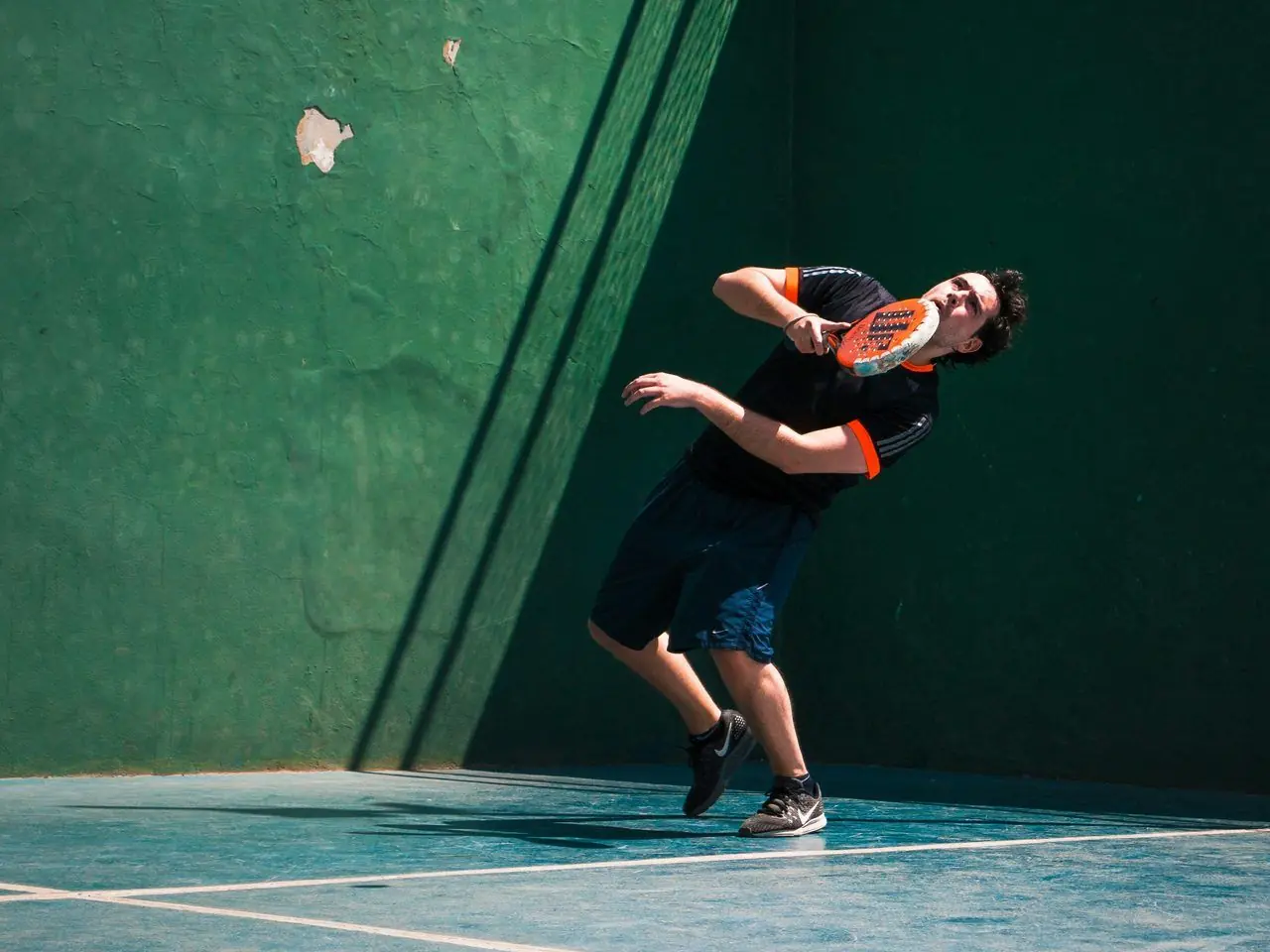
The bandeja keeps you alive at the net. The víbora wins from it. The bajada brings you back to it. The kick smash is what you do once you own the net and want to end the rally. It’s the topspin overhead that bounces in the opponents’ court, kicks high off the floor, and sails clean over a side fence for a por tres winner. It is, by most padel coaches’ agreement, the hardest shot in the sport. It’s also the one that defines the difference between a strong intermediate and an actual advanced player. Here’s what it is, why it’s so hard, and how to start the multi-year road to a reliable one.
TL;DR
The kick smash is a topspin overhead played from the net, used to attack high lobs that land short. The defining feature is the topspin: instead of slicing or flattening the ball, you brush up the back of it at contact. The result is a ball that bounces deep in the opponents’ court and then kicks upward off the floor, often clearing a side fence and leaving the court entirely. When that happens, the rally is over. The point is yours, and so is the highlight.
If you’re not already comfortable with the bandeja, víbora, and bajada, the kick smash is the wrong shot to chase right now. It sits at the top of the shot tree for a reason. Build the foundation first, then come back.
What the kick smash actually is
The motion is closer to a tennis kick serve than to anything else in padel. Continental grip, sideways stance, brush up the back of the ball with significant body rotation and leg drive. Power is incidental. Spin is the whole point.
The technical details, in order:
- Stance: Sideways to the net, knees bent, weight back, slightly under the ball.
- Grip: Continental (handshake). An eastern forehand grip won’t generate enough topspin.
- Contact point: Above the head, slightly in front of the body, never behind it.
- Racket path: Up and through, brushing the back of the ball from low to high. The face of the racket stays roughly vertical at contact, with a slight forward tilt.
- Body rotation: Hips and shoulders open through the swing. Legs drive up. The arm is the last link in the kinetic chain, not the first.
- Wrist action: Active at contact, snapping forward to add spin acceleration. This is where most beginners’ kick smashes fall apart.
- Target: Deep, landing on or just before the opponents’ service line. Too short and the ball won’t have enough room to kick high. Too deep and you’re hitting a flat smash with no topspin benefit.
When you hit one cleanly, the ball does something dramatic. It lands deep, hits the opponents’ court, then kicks up at a steep angle and exits the cage entirely. That’s por tres, literally “by three,” the ball clearing a side fence and leaving the court. Worth the same point as any other winner. Replayed in the group chat ten times more.
If watching is easier than reading, here’s a clean breakdown of the kick smash motion and the contact point that produces real topspin. Worth ten minutes once and then again every few weeks while you’re working on it.
How it differs from the rest of the smash family
There’s more than one kind of smash in padel, and the kick smash is one of the harder distinctions to make at first. Putting it next to the others helps:
Flat Smash (Remate)
- Spin
- Flat or minimal
- Goal
- Pace through opponents
- Outcome
- Winner if clean, returnable if not
- Difficulty
- Medium
Kick Smash
- Spin
- Heavy topspin
- Goal
- Kick over the side fence for por tres
- Outcome
- Often unreturnable when struck cleanly
- Difficulty
- Highest in the sport
And against the broader overhead family:
- Bandeja: Defensive slice. Backspin. Goal: hold position.
- Víbora: Offensive slice. Sidespin. Goal: pressure the corner.
- Flat smash: Offensive flat. Goal: pace through.
- Kick smash: Offensive topspin. Goal: kick over the cage.
Each shot lives in a different physical and tactical zone. The kick smash is at the very top of the offensive tree because it combines the hardest mechanics (topspin overhead) with the highest reward (an unreturnable winner that often ends the point with the ball outside the court).
When to actually use it
The decision tree, simplified:
- Lob is short, high, in the front half of your court → kick smash territory. This is where it lives. You have time, you’re balanced, the ball is up and in front.
- Lob is short but lower → flat smash. Not enough room above for a clean topspin contact. Hit it flat for pace.
- Lob is medium-height in the front half → víbora. The kick is a longer commitment than the víbora; if the ball doesn’t give you the time, take the víbora.
- Lob is deep or you’re moving back → bandeja or bajada. Anything not in the front half is not kick smash territory.
A reasonable mix: for every ten smashable lobs, you’ll kick smash maybe one or two at the start. Over time, as your kick smash becomes more reliable, that ratio shifts. Pros at Premier Padel level kick smash close to half of their smashable lobs, because the percentage of “won points” goes up dramatically when the ball can sail out of the cage.
The corollary is also true: don’t kick smash a lob that should be a flat smash. Trying to add topspin to a low overhead causes the ball to dump into the net. The shots aren’t interchangeable. Pick the right tool for the lob.
Why it changes your game (and why most players never really get it)
A working kick smash does three things, and each is a step beyond what the rest of the shot tree gives you.
1. It adds an unreturnable shot. Bandejas keep rallies going. Víboras pressure opponents. Flat smashes win points if they’re clean. The kick smash wins points and removes the ball from play entirely. That’s a different category. There’s no defensive answer to a clean kick smash that exits the cage.
2. It changes opponents’ lob tactics. The moment opponents see you can hurt them with a topspin smash, they stop hitting lobs that fall in your kick smash zone. They lob higher, deeper, and softer. Each of those changes makes their lobs easier for you to bandeja or attack with a víbora. The threat of the kick smash improves your other shots without you hitting another ball.
3. It signals tier. Recreational padel is full of players who can’t kick smash and don’t try. Intermediate-and-above padel is full of players who try, miss, and rally on. Advanced padel is players who can. The shot is a real marker of the climb. People who watch your match know within ten minutes whether you have one in your bag.
The reason most players never get a clean kick smash isn’t physical. It’s patience. The shot takes hundreds of focused reps and many months of misses before it starts working. Most players give up around the second month and quietly stop trying. The ones who keep at it pull ahead of everyone they used to play with.
How to actually start learning it
Four progressive steps. Don’t compress the timeline.
1. Make sure the foundation is in place. If your bandeja, víbora, and bajada aren’t yet at intermediate-comfortable, your kick smash work will fall apart. Lock those in first. The kick smash is what comes after you own the net and the back court.
2. Shadow the topspin motion, every day for a month. The motion is small. Sideways stance, racket up, brush up the back of an imaginary ball, finish across your body. The hand should feel like it’s “wiping” the ball upward. Get the body comfortable with the path before you put a real ball in.
3. Easy feeds, two sessions a week, focused on spin not power. Have a partner or coach toss medium-height lobs in the front half. Don’t try to win the point. Aim for visible topspin and a deep landing. The first time you hear the strings make a different sound than a flat smash, you’re getting close. Twenty in a row before you change anything.
4. Live play, with strict shot selection. For your next twenty matches, only attempt the kick smash on lobs that are clearly short, high, and in your strike zone. No ambitious attempts on borderline lobs. You’re training the recognition pattern before you train the shot itself. Most players’ kick smash misses come from picking the wrong lobs, not from bad mechanics.
A reasonable benchmark: after six months of focused work, you should be able to land a clean kick smash (visible topspin, deep landing, eventual back-glass kick) on roughly 40% of attempts in live play. Lower than that and the issue is usually shot selection. You’re attempting too many on lobs that don’t give you the height and time you need.
If you can take a private lesson focused on the kick smash, do it. The motion is technical enough that one focused coach session saves three months of self-practice. Most coaches will fit you in if you ask specifically.
Common mistakes
The five mistakes that show up most often:
- Hitting flat instead of brushing up. The biggest one. If the ball doesn’t curve and dive after contact, you’ve hit a flat smash, not a kick. Brush up. The racket should travel from low-to-high through the contact zone.
- Wrong grip. Eastern forehand grip generates pace but not topspin. Continental grip is the only way to get the wrist supination that produces a real kick.
- All-arm swing. A kick smash hit only with the arm has no power source for both pace and spin. Use the legs and the body rotation. The arm is the last link.
- Picking the wrong lobs. Trying to kick smash a low or deep lob is how you end up with the ball in the net or wide. The shot needs short, high, in-front-of-the-body lobs.
- Trying to crush it. A 70% effort kick smash with real topspin beats a 100% effort flat-ish smash every time. Spin and placement, not power. Always.
What unlocks after the kick smash
Once the kick smash is a reliable part of your game, you’ve completed the offensive shot tree. The remaining work is no longer about new shots. It’s about combinations and tactics:
- Smash combinations. Kick smash deep, opponents block back short, you bajada the recovery, your partner finishes at the net. Three-shot constructions that win points by design.
- Smash variations. Topspin, sidespin, slice, flat, and the directional variants for each (cross, line, body). The shot family expands.
- Tactical control. Once opponents respect your kick smash, you control the lob negotiation. You can dictate where the rally goes from any position on the court.
This is the moment your padel becomes self-directed. You’re no longer reacting to opponents. You’re shaping the rally to lead toward the shots you’ve earned the right to hit.
What to do this week
If this article connected to your game, the action plan:
- Audit the foundation. Be honest. Are your bandeja, víbora, and bajada at intermediate-comfortable? If not, those come first. Two more months of foundation work beats six months of failed kick smashes.
- Book a court and run an isolated kick smash session. Just feeds. Just topspin reps. Don’t play points.
- Ask a coach for a 60-minute kick smash session. Longer than the bandeja or víbora sessions because there’s more to teach. Worth it.
- Subscribe to the Sunday Drop so the next series lands in your inbox. The strategy series wraps with the kick smash, but the shot tree is only useful once you can put the pieces together. Read combination plays and shot selection next.
If you’ve been at the same intermediate plateau for a year and the rally always ends with you missing a smash by inches, the kick smash isn’t the cause. It’s the symptom. The cause is usually shot selection. Hit fewer smashes overall, and make sure the ones you hit are the right ones. The kick smash takes care of itself once the rest of the game is right.
The bandeja keeps you in. The víbora puts on pressure. The bajada brings you home. The kick smash sends the ball out of the cage entirely. The shot tree is complete. The rest is how you play it.