
What is a Víbora? The Bandeja's Aggressive Sibling
The bandeja bridges beginner to intermediate. The víbora bridges intermediate to advanced. What it is, when to use it, why it wins points.
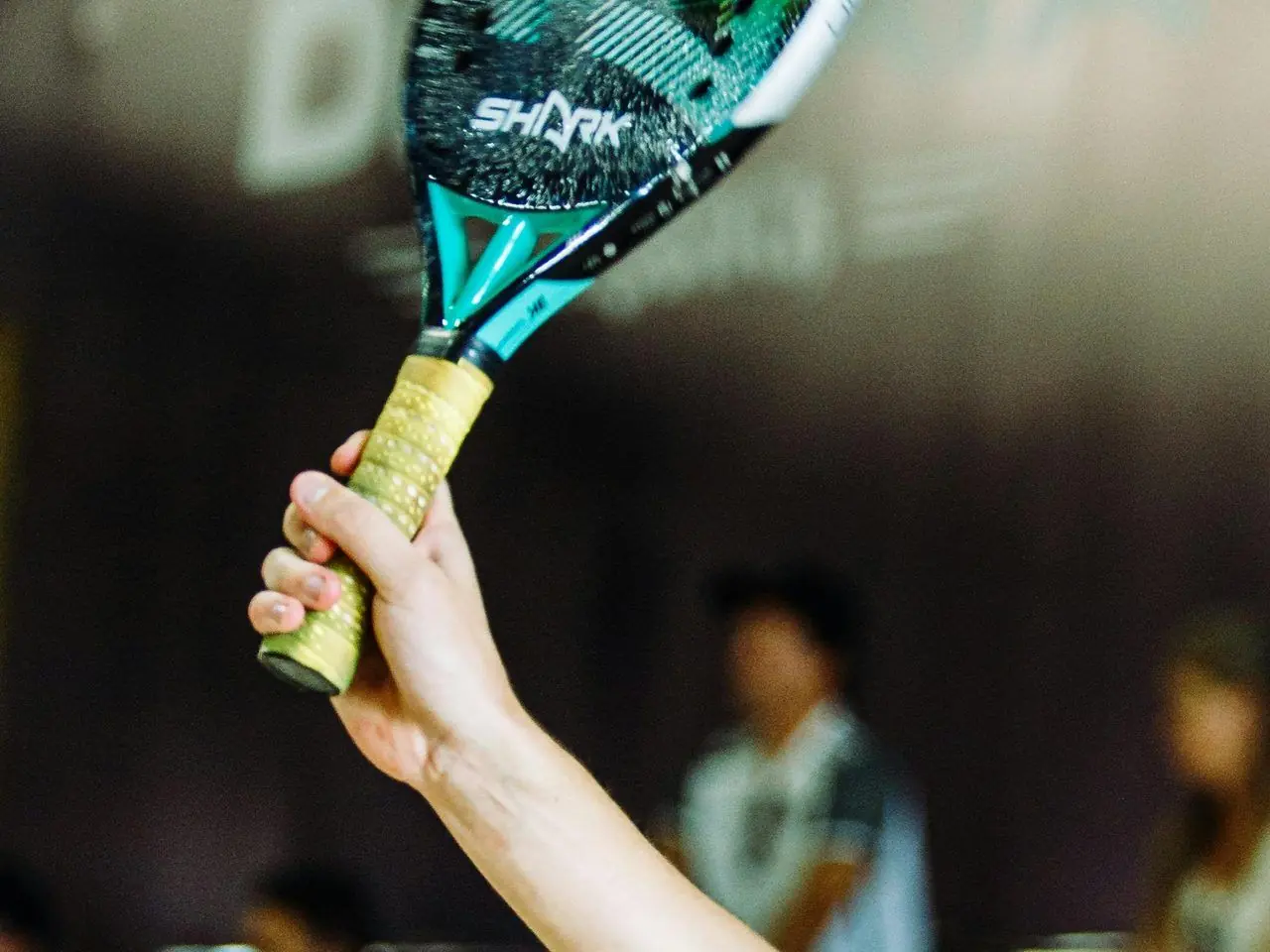
If the bandeja was the shot that turned your beginner padel into real padel, the víbora is the next one. It’s the shot that turns long defensive rallies into points you actually win. Víbora means “viper” in Spanish, named for the curving sidespin path the ball takes after a clean strike. Here’s what it is, when to use it, and how to add it to your arsenal once your bandeja is steady.
TL;DR
The víbora is an offensive overhead, played from above your head with a sidespin slice. Where the bandeja is built to keep position and push opponents back, the víbora is built to attack a lob that’s slightly too short or too low for a clean bandeja but not high or short enough for a full smash. It looks similar to the bandeja from the outside. The motion, the spin, and the intent are all different. Land one clean and the ball curves into the side glass, skids low, and forces a desperate defensive response from opponents who were just lobbing you a moment ago.
If you don’t have a bandeja yet, stop here and read What is a Bandeja first. The víbora makes sense only as a layer on top of a working bandeja.
What the víbora actually is
The motion is closer to a tennis kick serve than to a smash. You contact the ball above your shoulder, but instead of slicing down and through (like a bandeja), you cut across the ball with a sidespin path. The racket face is slightly closed and angled, the wrist stays firmer than on a bandeja, and the swing finishes lower and more lateral than vertical.
Technical details, in order:
- Stance: Sideways to the net, same as a bandeja. Shoulder leads.
- Contact point: Above the shoulder, similar height to a bandeja, slightly more in front of the body.
- Racket face: Slightly closed, around 30 to 45 degrees off vertical, angled to brush the side of the ball.
- Motion: Across the ball, not down through it. The hitting arm sweeps laterally with a touch of supination (palm rotating outward) at contact.
- Spin: Heavy sidespin with a touch of topspin. The ball curves in the air and skids low off the bounce.
- Target: Cross-court into the corner, ideally hooking into the side glass before opponents can read the line.
When you hit one cleanly, the ball does something the bandeja never does: it moves. It curves, dips, and accelerates off the bounce in a way that pulls opponents out of position. That’s the snake.
If watching is easier than reading, here’s a clean breakdown of the víbora and how it differs from the bandeja in motion. Worth ten minutes once and then again after your next session.
How it’s different from the bandeja
If you put both shots side by side, here’s the practical comparison:
Bandeja
- Intent
- Defensive. Keep the net.
- Spin
- Backspin and sidespin
- Motion
- Slice down and through
- Target
- Deep, near the back glass
- Risk
- Very low. The safety shot.
- Effect
- Resets the rally, opponents stay back
Víbora
- Intent
- Offensive. Force an error.
- Spin
- Sidespin with a touch of topspin
- Motion
- Slice across the ball, lateral path
- Target
- Corner, often into the side glass
- Risk
- Medium. Mishits sit up for the opponents.
- Effect
- Wins the point or sets up the next one
The biggest mental shift between the two: a bandeja is happy to extend the rally, a víbora is trying to end it (or set up the ending). You hit a víbora when you sense weakness in the lob, not when you’re scrambling.
When to use it
The víbora lives in a specific window between the bandeja and the smash. The decision tree:
- Lob is high and short → smash. If you can get under it cleanly with full extension and the ball is in the front half of your court, that’s a smash, not a víbora.
- Lob is high but deep → bandeja. If the ball is going past your shoulder and you’re moving back to track it, you don’t have time to set up a víbora. Bandeja, every time.
- Lob is medium height, medium depth, you’re balanced → víbora. This is the window. The ball is slightly too low for a true smash, but you have time and position to set up. The opponents are still recovering from their lob. The víbora is the answer that punishes a lob they thought was safe.
A reasonable rule of thumb: for every ten lobs you face, you’ll bandeja seven, smash one or two, and víbora the rest. As you improve, that mix shifts toward more víboras and fewer pure bandejas, because you’ll start recognizing the medium-height window earlier.
Why it changes your game
A working víbora does three specific things to your match.
1. Punishes lazy lobs. When opponents see you can hurt them on a less-than-perfect lob, their lob quality has to go up to neutralize you. That alone tilts the rally, because perfect lobs are hard to hit, and most opponents can’t stay perfect for long.
2. Opens up the smash. Once you start hitting víboras into the side glass, the opposing team will start cheating away from the glass to cover. That opens the middle for your smashes. The two shots feed each other.
3. Adds a real winning shot to your repertoire. A bandeja almost never wins a point outright. A víbora can. The first time you hit one that pulls an opponent into the side wall and produces a sitter your partner volleys away, you’ll feel the difference between playing not to lose and playing to win.
This is the moment your padel stops being purely positional and starts being tactical.
How to learn it (after the bandeja)
Three progressive steps. Don’t skip ahead.
1. Shadow the motion, fifty reps a day for a week. Start sideways. Imagine a ball above your shoulder. Practice the lateral swing path, racket face slightly closed, wrist firm. The feel you’re looking for is “across, not down.” Get the body comfortable with the shape before you put a ball in.
2. Easy feeds, two sessions, focused on contact. Have a partner or coach toss soft medium-height lobs. Don’t try to win the point. Aim for spin, not power. You should hear a different sound off the strings than a bandeja. Cleaner, sharper. The ball should curve visibly in the air. Twenty in a row before you change anything.
3. Live play, with the right trigger. Set yourself one rule for the next four matches: when a lob comes at medium-height in the front half of the court, your default response is a víbora, not a bandeja. Even if it feels ambitious. You’re training the recognition pattern. After about ten focused matches, the víbora window starts to look obvious instead of invisible.
A reasonable benchmark: after fifteen sessions, your víboras should land in the corner zones (last four feet near the side glass) at least 40% of the time. Lower than that and you’re either picking the wrong lobs or your motion is still bandeja-shaped.
If you can take a 30-minute lesson focused on the víbora alone, do it. The shot’s contact zone is small enough that a single coach session shaves weeks off self-practice. Most coaches will fit you in if you ask specifically for “víbora work.”
Common mistakes
The four mistakes that cost almost everyone a year of clean víbora development:
- Hitting it like a bandeja with attitude. A faster bandeja is still a bandeja. The víbora’s edge is the lateral motion, not just speed. If you’re slicing down through the ball, you’re hitting a bandeja no matter how hard.
- Picking the wrong lobs. Hitting víboras off lobs that should be bandejas is how you donate points. If you’re moving backward, defaulting to a víbora is overconfidence. Bandeja first.
- Wrist breakdown. The víbora rewards a firm wrist with controlled supination, not a loose wrist trying to whip the ball. Loose wrists produce inconsistent contact and sitters that opponents punish.
- Aiming for the line, not the corner. A víbora that lands in the back third of the court is a hard ball but not a winning shot. The whole point is the side glass and the corner. If you’re not aiming there, you’re hitting a fancy bandeja.
What unlocks after the víbora
The víbora is the gateway to the rest of the offensive shot tree. Once it’s reliable, two more shots become realistic:
- Kick Smash. Now that you can punish soft lobs, opponents will start lobbing higher and shorter to neutralize you. Those higher, shorter lobs are kick smash territory: the topspin overhead that bounces and kicks out over a side fence for a por tres winner. The smash isn’t the first shot you learn, despite what beginners think. It’s the third, after the bandeja and the víbora.
- Bajada. A specialized shot played off the back glass after the ball has hit the wall. Used to attack from the back by taking the ball high and hitting down on it. The bajada feels intuitive once you have the víbora’s body rotation in your swing.
The shot tree compounds. A reliable víbora makes the smash safer and the bajada possible. Padel becomes constructive instead of reactive.
What to do this week
If this article connected to your game, the action plan:
- Book a court this week and tell whoever you’re playing with that you’re working on víboras. Get used to picking the right lobs to attack.
- Lock in the bandeja first if you haven’t already (linked above). The víbora is built on the bandeja’s foundation.
- Tell a coach you want a 30-minute víbora session. Worth every dollar.
- Move on to the rest of the strategy series: the bajada for the back-court attack, then the kick smash for the finisher (both linked in the “What’s next” section above). Together with the bandeja and víbora, those four shots cover the full overhead and back-court game.
- Subscribe to the Sunday Drop for the next breakdown in your inbox.
If you’re working on the víbora and stuck on a specific issue, join Padelkin and send us a clip. Someone in the community has solved exactly the problem you’re hitting.
The bandeja keeps you at the net. The víbora wins from the net. Together they’re 90% of intermediate-and-above padel. Once both are reliable, you’re not learning padel anymore. You’re playing it.