
What to wear for padel (you already own most of it)
What to wear for padel, honestly: the rulebook bans only swimwear and US clubs mostly check your shoes. What to wear, what to skip, and when to buy kit.
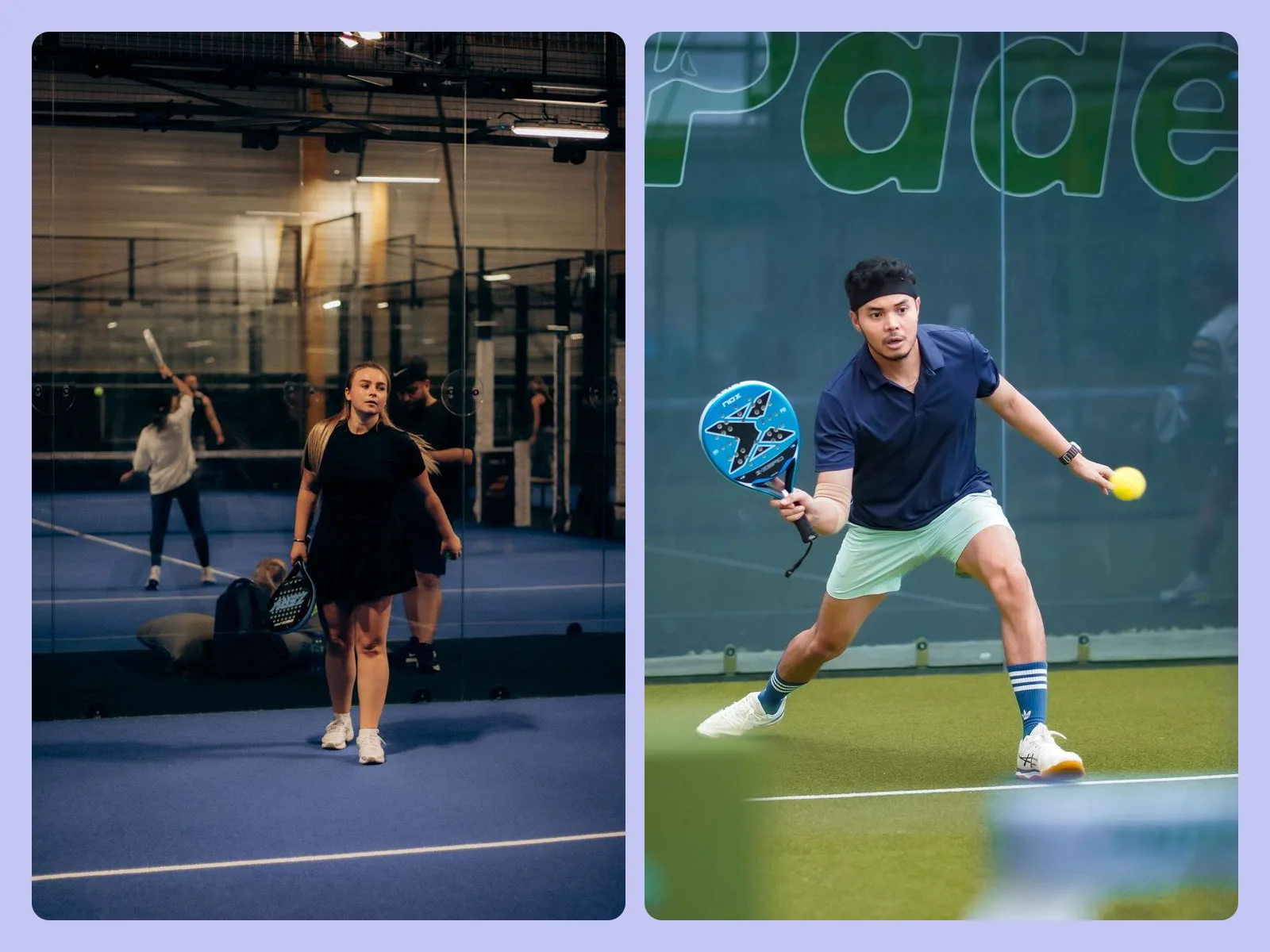
You’ve got a court booked, maybe your first one, and somewhere between the confirmation email and Tuesday night you started wondering whether you’re supposed to buy an outfit for this. Search that question and every answer is a shop.
Here’s the version a shop won’t give you. The sport’s own rulebook has almost nothing to say about what you wear, the club rules we’ve read come down to your shoes rather than your shirt, and the only thing that can genuinely get you turned away at the door is on your feet. Everything above the ankle, you probably already own.
TL;DR
For padel you want breathable, quick-drying athletic clothes you can move sideways in, plus non-marking court shoes. The official rules ban swimwear and nothing else. Shoes are the only genuinely padel-specific piece, and the only one a US club is likely to turn you away for.
- A breathable synthetic top. Tee, tank, or polo. Anything that isn’t heavy cotton.
- Shorts or a skort you can lunge in. You spend the match low, wide, and reaching.
- Non-marking court shoes. The one piece worth buying. They support the fast sideways movement and won’t chew up the surface.
- Socks that stay up. With some cushion, because your feet stop and start all session.
- A pocket that holds a ball. Not decorative. It has to grip.
Put the money in the shoes. Wear what’s in your drawer for the rest.
What the padel rulebook says about clothing
Start with the rulebook, since nobody selling you a padel outfit ever quotes it. Here is the attire section of the FIP rules, in full:
“Players will wear suitable sports clothing and footwear. Swim wear is not allowed. Failure to comply will result in a fault being given. If not rectified the player will be disqualified.”
That’s the whole thing. One line asking for sports clothing, one line banning swimwear. Elsewhere the same rulebook tells you players “may use footwear, clothing, and the rackets they want to provide they are regulation,” and that teams in competition are recommended, though not obliged, to match each other.
So at the level where the sport governs itself, there is no padel dress code. There’s a floor, dress like you came to play a sport, and one oddly specific ban.
You’ll also see it repeated that sleeveless tops aren’t allowed in padel. That clause came from an older version of the rules and isn’t in the current rulebook, so wear the tank.
Which means any “padel requires X” pitch you run into from here is one of three things: a preference, a club’s house rule, or a shop.
What US clubs enforce, and what they don’t
Clubs write their own rules on top of the rulebook, and this is where it stops being theoretical. Two US clubs, from their own published policies:
Padel Haus: “We do not have a strict dress code, but sportswear is mandatory for all players in addition to tennis shoes with decent tread and a low drop.”
Padel Hour: “Only proper padel shoes (non-marking soles) are allowed on the courts.”
Same sport, same country, opposite bars. One takes you in the tennis shoes already in your closet, as long as the tread is there and the heel isn’t stacked (a low drop means little height difference between heel and forefoot). The other wants padel-specific non-marking soles, in one sentence.
Notice what neither policy talks about. Your shirt.
That looser line covers a lot of ground: we list seven Padel Haus venues in our own directory across four states, four in Brooklyn plus Nashville, Atlanta and Denver, all under the same sportswear-and-tread rule. It’s still one operator’s policy, though. The club down the road writes its own, and Padel Hour’s is the stricter kind.
So the one job worth doing before your first session: find the club’s own policy page, or call the desk and ask what they allow on court. If the answer is padel-specific shoes, that’s your purchase, and our guide to padel shoes covers which sole suits which surface and what’s worth paying. The short version: padel courts are usually turf with sand infill, and the outsole that holds on sand is not the one under your running shoes. Sideways is where this sport lives, and running shoes have no answer for it.
Still working out where you’ll play? Our directory of padel courts near you lists US clubs by state, and most listings point to the club’s own site, which is where the policy lives.
Fabric, and why cotton quits before you do
Cotton absorbs sweat and holds it. It gets heavy, it clings, and it stops moving air across your skin exactly when you need that most. A padel court is a small box with four people running in it, and indoor humidity can be its own weather system.
Technical polyester and poly blends do the opposite. They pull moisture off your skin to the surface of the fabric, where it evaporates between points. Words worth finding on a label: moisture-wicking, quick-dry, mesh panels through the back and under the arms.
One caveat: a cotton tee won’t ruin your first session. Wear one, have fun, and notice how it feels by the last game. You’ll change fabrics on your own.
Fit: what “padel cut” actually means
Padel apparel does have a look, and under the marketing there’s one real functional idea. The game is lateral, low, and wall-aware: you reach overhead, you drop into deep lunges, and your hitting arm swings past your body in tight spaces.
So: a top that doesn’t bind across the shoulder on an overhead or flap into your own swing, and bottoms that survive a full lunge without riding, gripping, or reminding you they exist.
Padel-branded kit tends to run slimmer and shorter than baggy basketball-style athletic wear, and that, not the logo, is the difference you’re paying for. Slimmer is a sensible default, not a rule. If you play in loose running shorts and never notice them, nothing is wrong with you or your shorts.
The one feature that’s genuinely padel-specific: a ball pocket
Here’s the one place where padel apparel earns its name. A pocket that holds a ball.
A padel ball measures 6.35 to 6.77 cm across and weighs 56.0 to 59.4 g. A tennis ball measures 6.54 to 6.86 cm. Small gap, but real, and it’s why padel skorts and shorts advertise a waistband or thigh pocket sized to grip a padel ball and hold it while you move.
You serve underarm from a spot you can’t leave, and you want the second ball on you, not rolling around behind the back glass. So the test is whether a pocket holds a ball through a lunge, not whether it exists. Run that test at home, in your kitchen, with the shorts you already own. If it passes, you have the feature and don’t need to buy it twice.
Plenty of players skip the pocket entirely and just wedge the ball under the waistband of their shorts or skirt, pressed against the leg. That works, and it’s the oldest trick on court. The only catch is that a ball held against a sweaty thigh for a few games comes out damp, and a damp ball plays dead and heavy. If you go that route, rotate the ball you serve so you’re not putting the soggy one back in play.
What men wear for padel
Men’s padel kit is short: a top and shorts. That’s the whole category, the same way the big padel brands merchandise it.
The top. A technical tee or a polo, whichever you’d rather sweat in. Both work. The polo is the slightly dressier option some leagues and members’ clubs lean toward, but the fabric matters more than the collar.
The shorts. Athletic shorts you can lunge in, with a pocket that closes around a ball. Skip the long baggy basketball cut, which catches when you drop low for a volley.
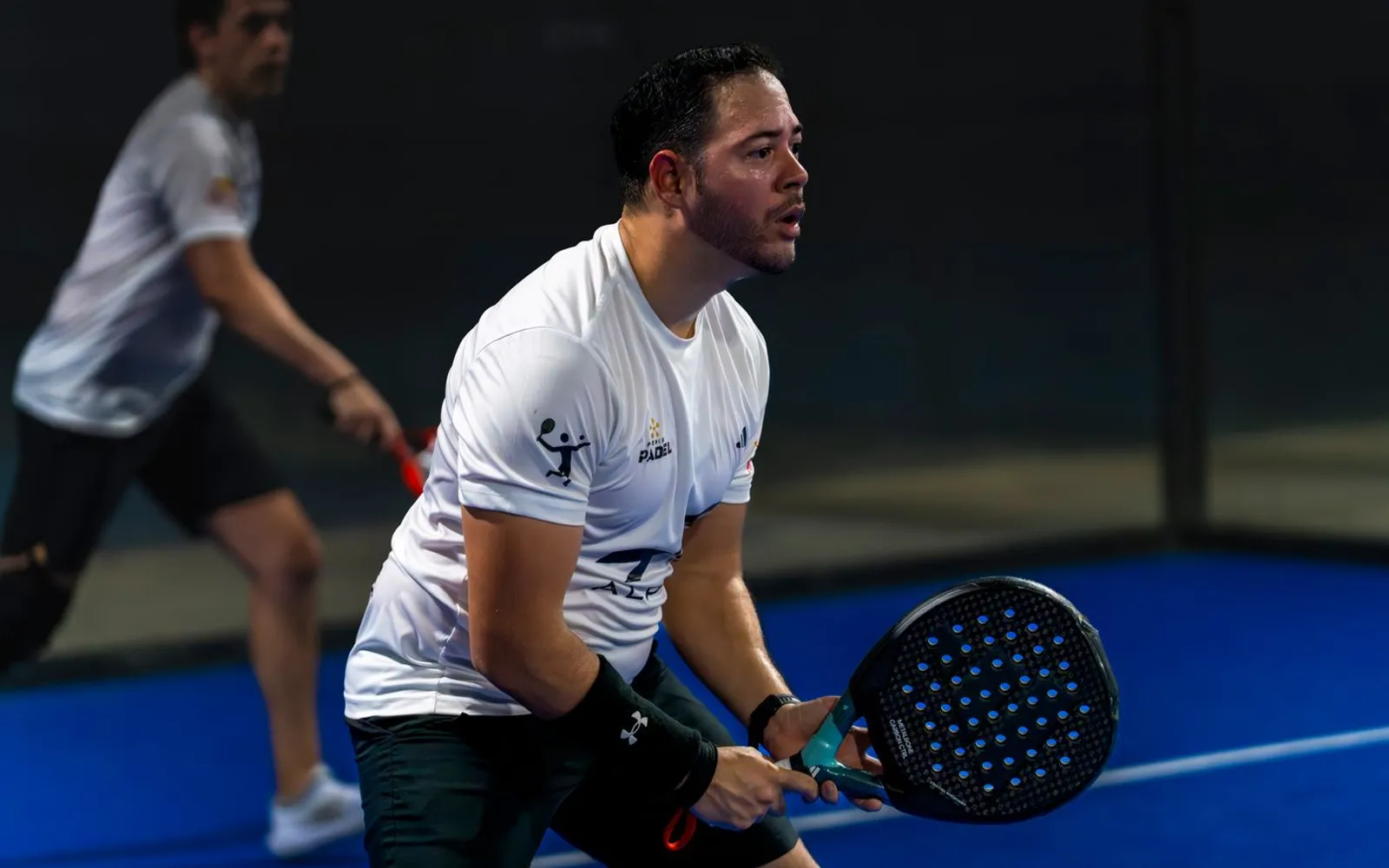
What gets in the way: heavy cotton, those long baggy shorts, and running shoes. Only the last one is a real problem.
One more, and it shouldn’t need saying: keep your shirt on. A few guys peel it off the second they get warm, but most clubs we’ve played don’t allow it, and nobody sharing a glass box for a full match wants it. Don’t be that guy.
What women wear for padel

Women’s padel apparel splits into a handful of real categories, the same ones the brands rack up: a dress, a skort or skirt, a tank or top, a sports bra, shorts, and a layer for the cold. You can play in any of them, so pick by fit and feel, not by the label.
The skort (or skirt). The staple. It solves two things in one garment: the built-in shorts underneath hold a ball and stay out of your swing, and the outer layer gives coverage a bare short doesn’t. If you already own a tennis skort, that is a padel skort. Wear it and spend nothing.
The tank and sports bra. For warm days and well-ventilated courts, a technical tank over a sports bra is as much top as you need, and it keeps the shoulders free for overheads where a baggy tee binds.
The dress. An all-in-one with shorts built in. Popular for match days because there’s nothing to coordinate and nothing to tuck; it does the same job as a tank and skort in one piece.
Shorts. If a skort was never your thing, athletic shorts with a real pocket do the job. The only thing to check is that the pocket grips a ball through a lunge.
A layer for the cold. An indoor court under a warehouse roof in January is not warm. A light long-sleeve or quarter-zip you can peel after the warmup covers it.
None of these is the correct answer. They all show up at US clubs, and the best one is simply whichever you’d happily play three sets in.
Here’s the part the gear talk skips: the outfit is part of the fun. Padel has a look, and it’s yours to play with. Lean into the classics, a crisp white dress or a black skort and tank, or build your own set and bring your own style onto the court. A kit you feel good walking on in is a small, real edge, and nobody is going to stop you either way. Wear what makes you want to show up.
Indoor, outdoor, and layering
US padel comes in both, and indoor doesn’t mean climate controlled. Plenty of indoor courts sit under a warehouse roof or an inflatable dome with big fans and a lot of optimism. Treat an indoor booking as a warm one unless you know the venue.
Outdoors in summer: a cap, and a second shirt for the drive home. That’s the piece people forget exactly once. Once you’re playing weekly, a spare shirt and dry socks just live in your padel bag and you stop thinking about it.
Cooler months, indoors or out: a light layer you can strip after the warmup, because you will strip it. If a layer stays on for a whole session, it was too heavy to begin with.
The accessories are mostly optional, but a few earn their place: a cap and sunglasses outdoors, a wristband or headband if sweat runs down into your hand or your eyes, cushioned socks that stay up, and a spare padel overgrip for when the handle turns slick mid-match. Everything past that is taste, not need.
What to skip, and when padel apparel is worth buying
Matching sets and “padel outfit” bundles are a genuine yes for some players, so this isn’t a blanket no. If coordinating your kit with your bag and racket is part of the fun, or you just like walking on in a clean matching look, buy the set and enjoy it. The only bundle worth skipping is the one you’re buying because you think the sport requires it, since it doesn’t. Compression sleeves are the same: skip them unless a physio put you in one.
And if you came to padel from tennis, skip shopping altogether for now. Above the ankle your tennis kit already works, and the adjustments worth making are tactical, which is what switching from tennis to padel gets into.
There are three moments where buying padel-specific apparel stops being marketing and starts being useful:
- You’re playing often enough that laundry cadence matters. When your rotation runs dry midweek, more kit is the fix.
- You want the ball pocket and nothing you own grips a ball properly.
- The fit of what you own is getting in the way. A top that binds on the overhead, or shorts you keep tugging back into place after a lunge.
For scale, technical padel tops at US-facing retail run roughly $30 to $80, and that band drifts with the season. You can also spend nothing and be completely fine, which is the point.
How to sort your padel outfit before your next session
- Check the club’s footwear policy first. Their site, or a call to the front desk. It’s the only rule that can stop you playing, and it changes club to club.
- Put your money in the shoes. Read up before you spend, buy for the surface your club runs, and let the rest of your kit come out of your closet.
- Book the session and wear what you own. Breathable top, bottoms you can lunge in, socks that stay up. Buy padel apparel later, when the pocket or the fit or the laundry gives you a reason, not because a collection page told you the sport requires it.
- Subscribe to the Sunday Drop. One email a week: something to try on court, plus a US club worth the drive.
Every rule we’ve read on this comes down to your feet, not your shirt. Spend accordingly.
Got a padel fit you love, a clean matching set or something you threw together that just works? Send it our way. We’re always happy to reshare a good court look.
FAQ
Can I wear tennis clothes for padel?
Yes. Above the ankle the overlap is close to total: a technical tee, a polo, shorts, a skort, and a dress all work in both sports, and the club dress rules you’ll find published tend to ask for sportswear and stop there. Footwear is the one place to think twice. Any court or sports shoe will do, and tennis shoes are generally fine, since padel is played on sand-dressed turf and they grip it well enough to start. The shoe to leave at home is the running shoe, which is built for going forward, not for the sideways push padel lives on. Bring the tennis kit and you’re set.
Do I need special padel shoes to start?
It depends on the club, which is why it’s worth asking. Some US clubs allow tennis shoes with decent tread and a low heel-to-toe drop; others say only proper padel shoes with non-marking soles are allowed on their courts. Call or read the policy page before your first booking. If you end up playing regularly, padel-specific soles are the upgrade that matters most anyway.
Is there a dress code in padel?
Not much of one at the sport’s own level. The rulebook asks for suitable sports clothing and footwear, bans swimwear, and leaves the rest to you. Individual clubs then set their own bar on top of that, and in practice their rules are almost always about shoes rather than clothing. The sleeveless ban you’ll see repeated online is from an older version of the rules and isn’t current.
What should I wear for my first padel session?
A breathable synthetic top, shorts or a skort you can lunge deep in, socks with some cushion, and court shoes that meet whatever your club requires. Bring water and a second shirt if you’re playing outdoors in summer. That’s the entire list, and the only line on it worth shopping for is the shoes.