
How to choose a padel bag (and why most players buy too much bag)
The number of rackets you carry decides the format. Racket bag vs tour bag vs padel backpack, what actually matters, and what to buy for your situation.
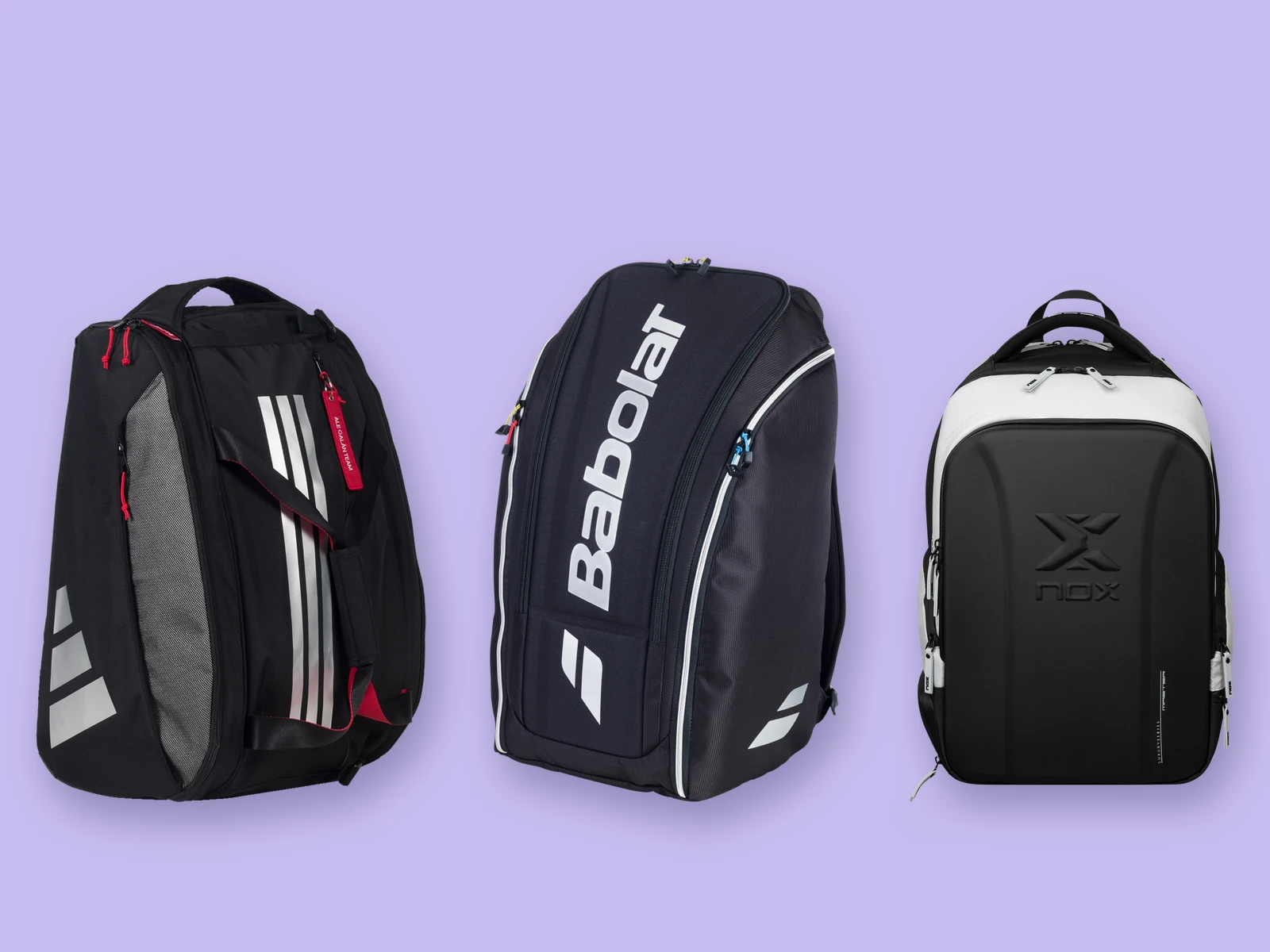
You own a racket. Maybe two. Right now they’re riding in the passenger seat under a towel, or in the supermarket tote you keep meaning to replace, and you’ve decided it’s time to buy a real padel bag.
Then you look at the category and it’s a wall. Racket bags, tour bags, backpacks, duffels, thermal linings, capacity labels that sound like they belong on a moving truck. Almost every guide answers that wall with a ranked product list. We’d rather answer it upstream, because two questions narrow the category fast.
TL;DR
Two questions decide your padel bag. Neither one is about brand or price.
- How many rackets do you actually travel with? Not how many you own. How many go in the car on a normal Tuesday.
- Do you drive to your club, or carry your kit through a day? Driving means the bag only has to survive a trunk. Carrying means it has to survive a commute, and your back gets a vote.
Answer both and the format picks itself:
- Drive, and two rackets or fewer: a racket bag.
- Carry your kit all day: a padel backpack.
- Tournaments, coaching, or hauling a partner’s gear too: a tour bag.
- One bag for the gym and the court: a duffel with a padded racket sleeve.
A common mistake in this category isn’t buying the wrong brand. It’s buying a tour bag and then carrying a racket bag’s worth of stuff in it forever.
The first question: how many rackets are you actually carrying
Not how many you own. How many go with you on a normal week.
This is the number the entire category is organized around. Bags are sold, sized, and priced by racket capacity, so getting it right settles size, weight, and cost in one move.
Do the audit honestly. One racket you play with, and sometimes a second that’s either a backup or the one you upgraded from and never sold. Everything else going in the bag is shoes, a towel, a shirt, water, and a can of balls.
If you own one racket, you don’t need a dedicated padel bag yet, and we’d rather you heard that here than from a product page. A padded racket cover plus the gym bag already in your closet does this job fine for weeknight play. If you’re still choosing the frame that goes in it, how to choose a padel racket is a better place to put the money.
If you carry two, a standard racket bag is built for exactly you.
If you carry three or more, you’re doing something specific: tournaments where a cracked frame ends your day, coaching, or hauling a partner’s kit. That’s when the bigger formats stop being vanity and start being useful.
Two things to keep in mind. Bags are labeled by maximum capacity, so buy for your normal load rather than your theoretical one. And a padel racket is flat and short, so frames aren’t the bulk: shoes and a change of clothes are what fill the volume.
The second question: do you drive to your club, or carry your kit through a day?
This one gets asked less, and it changes the answer more than the racket count does.
If you drive, your bag has one job between the trunk and the court: hold things, don’t fall apart. Carry comfort barely registers when the walk is a parking lot.
If you carry, everything flips. A bag that rides the subway, sits under a desk, and then arrives at the club after work has to be comfortable loaded, look normal in a work context, and keep wet shoes away from a laptop. That’s a different product, not a smaller version of the same one.
Be honest about which one you are, including the seasonal version of yourself. If you drive all winter and bike all summer, the bag that covers both is the backpack.
If you’re still working out where you’ll be playing, our padel courts directory lists US clubs by state. Where your club is, and how you get to it, is genuinely part of this purchase.
The four padel bag formats, and who each one suits
| Format | How you carry it | Who it suits | The trade-off |
|---|---|---|---|
| Racket bag | Grab handle or single shoulder strap | Drive to the club, play, drive home | Not built to haul a full day of stuff around |
| Tour bag | Stowable backpack straps plus a shoulder strap | Tournaments, coaches, anyone carrying for two | Bulky and awkward when it’s half empty |
| Padel backpack | Both shoulders, hands free | Commuters, cyclists, anyone carrying kit through a workday | Lower racket capacity and tighter shoe space |
| Duffel / holdall | Handles plus a shoulder strap | One bag for the gym and the court | Racket protection is often the weakest of the four |
Capacity is where the formats separate, and it’s worth using published figures rather than category folklore. Babolat is the useful reference because it prints a racket count and a volume for every model: its Court Backpack Lite is rated for 1 racket at 25 liters, the Court S racket bag for 2 rackets at 32 to 35 liters, and the RH Perf and RH Pro tour bags for 4 rackets at 52 and 62 liters. Other brands don’t all publish a racket count, so check the model rather than assuming the format has a fixed number.
The racket bag is the format the sport is built around, and it’s the right answer more often than the category’s marketing suggests. Slim enough to sit upright in a trunk, structured enough that the frames don’t get bent against your shoes. If you drive to your club and you’re not competing, you can stop reading the tour bag reviews.
The tour bag is the flagship, priced near the top of the range with a sponsored player on it. It earns that for a narrow group: tournament travel with a spare frame, coaches carrying other people’s kit, or a pair who share one bag. For a weeknight player it’s a lot of empty fabric going in and out of a car twice a week.
The duffel suits more people than it gets credit for. If your padel session is bolted onto a gym session, a holdall with a proper racket sleeve saves you owning two bags. Check the racket section is a real padded sleeve, not a strip of nylon between the shoes and the shirts.
The padel backpack gets its own section below, because it may well be the right answer for you and it’s the format most often covered in a single line.
Padel backpacks: who they suit and when they beat a racket bag
A padel backpack is a backpack with a dedicated racket compartment. That’s the whole idea, and it fits how a lot of US players get to a court.
Here’s who genuinely wants one: anyone who plays before or after work and can’t drop kit at home in between, anyone on a subway or a bike, anyone whose club is a walk from the parking garage or who goes from a school run straight to an evening court. If your gear has to survive a whole day attached to you, a single-shoulder racket bag loads one side of your body for all of it, and it sits awkwardly on a bike.
The argument for the backpack isn’t capacity. It’s hands free.
The trade-off is real. A backpack usually carries fewer rackets than a racket bag, and its shoe space is tighter. Within Babolat’s range, backpacks are rated for one or two rackets while its racket bag takes two and its tour bags take four.
Layouts do vary. The Nox backpack recommended below splits a racket-or-laptop main compartment from a second section Nox rates for two rackets, which gets you further than the Babolat figures suggest. Either way, if you need a spare identical frame alongside a full day’s kit, this isn’t your format.
What to check before you buy one:
- A racket compartment that’s separate. Not the laptop sleeve doing double duty. The frame needs padding around it and its own zip.
- Shoe storage at the base that seals. Padel courts are usually artificial turf with silica sand infill, though the amount varies by club and some surfaces are carpet-style. Whatever your club runs, your soles bring some of it home, and loose grit ends up in the laptop sleeve.
- A load-bearing carry system. A padded back panel, real shoulder straps, and a chest strap if the bag runs large. Thin webbing under a loaded bag is the first thing you’ll regret.
- A back panel that breathes. A flat foam panel against your back on a summer walk to the court does you no favors.
- A laptop sleeve, if the bag is doubling as your work bag. Check it’s padded and check it’s nowhere near the shoes.
Shoes are what a backpack handles worst, and they’re what you can’t skip. Padel’s constant lateral movement on sand wears through soles that weren’t built for it, and our guide to the best padel shoes covers why the sole type is the entire decision. Budget the space for them before you commit to a backpack.
What actually matters on a padel bag, and what’s marketing
What matters:
- A racket compartment that’s actually a compartment. Padded, separate, shaped to a padel frame. A large open cavity is not a racket compartment. The frame is usually the most expensive thing in the bag, and if you’re still shopping for one, our rundown of the best padel rackets covers what the money buys.
- A carry system matched to the load. Padded shoulder strap on a racket bag, stowable straps on a tour bag, proper harness on a backpack.
- Shoe storage that closes off. A sealed compartment keeps sand, damp, and smell away from your clothes. This detail separates bags that stay pleasant from bags you stop opening indoors.
- Zips you can inspect. Zips take the strain in a loaded bag, so look for chunky teeth, smooth pulls, and reinforced stitching at the stress points.
- A small pocket you can find without unpacking. Keys, phone, wallet, court card. A tube pocket for a can of padel balls is a nice touch, since loose cans roll around and dent everything else.
What’s mostly marketing:
- Thermal linings. Insulation slows heat transfer. It does not refrigerate. A thermal bag left in a car in a Texas parking lot in July is still a hot bag. Bringing it inside is the actual fix.
- Signature and player editions. You’re often paying mostly for the print and the name, so compare the spec sheet against the standard model before assuming the premium buys anything structural.
- Capacity labels. They describe the ceiling, not what you’ll carry. Buy for your floor.
- “Ventilated” compartments that are a mesh divider. Mesh between your shoes and your shirt is a divider. Real airflow needs an opening to the outside.
What we’d buy, by use case
What this rests on, plainly: manufacturers’ published specifications, US availability, and the two questions at the top of this page. We have not handled these bags, and there are no affiliate links anywhere on this page. US prices are what Padel USA and the brands’ own US stores listed in July 2026 and will drift.
You own one racket and you drive to your club. Buy nothing yet. A padded racket cover plus the bag you already own does this job. Put the money into shoes or a second racket instead. If you want something dedicated and minimal, the Babolat Court Backpack Lite is rated for 1 racket at 25 liters and lists around $65.
You carry two rackets and you drive. A standard racket bag. The Babolat Court S is the clean example of the format: 2 rackets, 32 to 35 liters depending on version, around $85. Priorities in order are a separate padded racket compartment, a shoe pocket that seals, and a shoulder strap with genuine padding.
We’ve just argued that thermal linings are oversold, so take this as serving the reader who wants one anyway: the Adidas Multigame racket bag lists around $115 with thermal-lined racket sections and a ventilated compartment for wet kit. That’s roughly $30 over the Court S for a feature we’d rank below a sealed shoe pocket. Its spec sheet also doesn’t list a dedicated shoe compartment, so check that against how you pack.
You carry your kit through a workday. The Nox Luxury Master Series backpack, around $105. Three things decide it: a rigid-shell main compartment sized for a racket or a laptop, a second compartment Nox rates for 2 rackets, and a ventilated shoe compartment at the front. That second compartment is what makes the racket-or-laptop main acceptable, since your frames aren’t sharing space with a laptop by default. If you want to spend less, Nox’s Pro Series backpack sits around $85.
You play tournaments, coach, or carry for two. A tour bag, and the Babolat RH Perf Padel is the reference point: 4 rackets, 52 liters, isothermal, two straps so you can wear it as a backpack across a long walk from the lot. Padel USA carries a second-generation version of it around $110, so confirm the capacity on the listing you’re buying. Its bigger sibling, the RH Pro, goes to 62 liters if you genuinely need it.
You want one bag for the gym and the court. A duffel with a real racket sleeve. We’re not naming a pick, because the padel-specific duffels we could verify didn’t publish enough about their racket protection to recommend one honestly. Buy on the sleeve: padded, separated from the shoes, shaped to a padel frame rather than a flat pocket sewn to the lining.
Looking after a padel bag
Most bags get killed rather than worn out, usually one of these ways.
The hot car. A bag left in a car through a summer afternoon cooks everything in it, and the rackets inside are worth more than the bag. Bring it in.
Wet shoes zipped in overnight. Damp soles sealed into a warm bag is how you get a smell you can’t get out. Unpack it the same night, every time.
Sand in the zips. Court infill gets into everything, and zip teeth are where it does damage. Turn the bag out, shake it, run a dry brush along the teeth now and then.
Overloading. If you’re leaning on the bag to close it, you bought the wrong size, and careful handling won’t fix that.
Hanging a loaded bag off one strap. Fence hooks and locker pegs put the whole weight on a single stitched anchor point. Set it down, or use the grab handle.
Cleaning is simple: spot clean with mild soap, never a washing machine, air dry out of direct sun.
A few things earn a permanent spot in there: spare padel overgrips, athletic tape, a small towel, sunscreen if you play outdoors, and dry socks. Restock on the same night you unpack, and you’ll never open your bag at the court and find a problem.
How to choose the right padel bag for you
- Count the rackets you actually travel with. Not the ones in the closet. The ones that go in the car on a normal week.
- Decide whether you drive or carry. Driving points to a racket bag, or a tour bag if you compete. Carrying kit through a day points to a backpack.
- Buy the smallest bag that covers both. Check the racket compartment, the shoe storage, the zips, and the strap. Then stop shopping.
- Get one fixable habit a week. The Sunday Drop is our weekly email: one tactic you can use on Tuesday, one US court worth knowing, and the occasional gear take like this one.
The best padel bag is the smallest one that gets your kit to the court without you thinking about it. If you’re thinking about your bag mid-session, you bought the wrong one.
FAQ
Do I need a padel-specific bag, or will a tennis bag work?
A tennis racket bag works. It’s just longer than it needs to be, because a padel racket is a much shorter frame, so you end up with dead space and a bag that’s more awkward to carry than the job requires. A padel-specific bag is shaped to the frame and lays out the shoe and kit compartments around padel’s habits rather than tennis’s. If you already own a tennis bag, use it and spend the money elsewhere.
How many rackets does a padel backpack hold?
Usually one or two. Babolat’s range is the clearest published example: its Court Backpack Lite is rated for 1 racket and its Court Backpack Hero for 2, against 2 for its Court S racket bag and 4 for the RH Perf and RH Pro tour bags. Capacity varies by model and not every brand publishes a racket count, so check the stated figure for the specific backpack rather than assuming a standard number.
Is a thermal padel bag worth paying for?
It’s a bonus, not a fix. A thermal lining insulates, which slows how fast heat reaches your rackets, but it can’t keep a bag cool in a car on a hot afternoon. If heat is your concern, the thing that actually protects your frames is not leaving the bag in the vehicle. Buy a thermal lining if it comes on the bag you already wanted, not as the reason to choose one.
What’s the difference between a racket bag and a tour bag?
Size and how you carry it. A racket bag is the slim everyday format, built for a session’s kit and carried by a handle or a single shoulder strap. A tour bag is the big multi-compartment format with stowable backpack straps, built for spare frames, more than one pair of shoes, and a change of clothes. Babolat’s published figures give a sense of the gap: its Court S racket bag is rated for 2 rackets at 32 to 35 liters, against 4 rackets at 52 to 62 liters for its RH Perf and RH Pro tour bags. If you’re not competing, coaching, or carrying for a partner, the racket bag is almost certainly enough.