
Padel gear: what you actually need
You can play padel without buying a kit. Clubs rent rackets and most include balls, so here's what to bring day one and what to buy once the sport sticks.
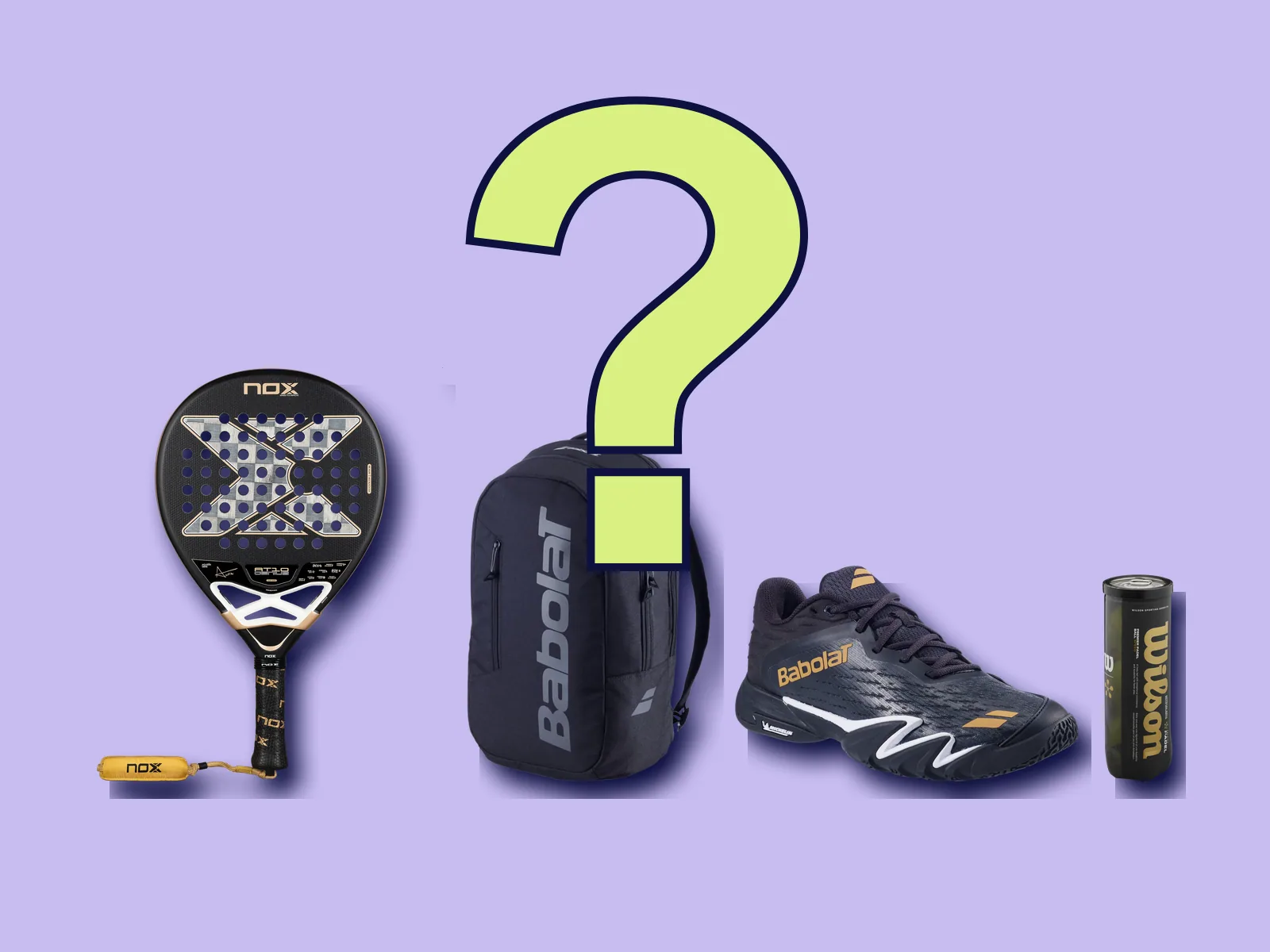
Search padel gear and nearly every result is a shop. What none of them tell you is how little you have to buy before you can play.
You can turn up to a first session with almost nothing. Clubs rent rackets, and some include one with the court booking. Most include balls too.
What you bring is a pair of sports shoes, clothes you can move in, and every intention of enjoying yourself. Everything else is a decision for later, once you know the sport has stuck.
TL;DR
You don’t need a kit to start playing padel. Most sports shoes will get you through a first session, the club covers the racket and usually the balls, and what you buy after that depends on whether the sport sticks.
- Most sports shoes will do. Running shoes are the exception. Padel shoes are the first thing worth buying, but not before you’ve played.
- Use the club’s racket at first. Rented or included with the booking, it’s fine to learn on. Buy your own once the sport has stuck, because the rental fees stop and an undamaged frame holds its value.
- Balls come with the booking at most clubs. Buy your own when you want a livelier game off the wall.
- A bag is a nice-to-have. Any backpack works until you decide otherwise.
- Check what your club includes. Some hand you a racket with the court, some rent one at the desk.
Your first session: what the club covers, and what you bring
| Item | Day one | When to buy your own |
|---|---|---|
| Shoes | Yours, any sports shoe except running shoes | After a few sessions, once you know your club’s surface |
| Racket | The club’s, rented or included with the booking | Once the sport has stuck |
| Balls | The club’s, included with the booking at most | When you want a livelier game |
| Clothes | Whatever you already train in | When fit or laundry gives you a reason |
| Overgrip | The club’s racket comes gripped | Once your own handle turns slick |
| Bag | Any backpack you own | Whenever you feel like it |
The racket is the one item worth checking before you drive over, because clubs handle it differently: some fold a frame into the court fee, others hand you one at the desk for a fee. The booking page usually says, and a quick message settles it if it doesn’t. Balls sort themselves out, since most clubs include them and somebody in the group has a can anyway.
That’s the whole day-one list. If you haven’t watched a game up close yet, what padel is covers the walls, the scoring, and why the ball keeps coming back.
Shoes: most sports shoes will do, except running shoes
Padel has an official rulebook, written by the International Padel Federation (FIP), and on clothing it comes down to the only line that matters: “Players will wear suitable sports clothing and footwear. Swim wear is not allowed.”
Nobody starting out needs the perfect shoe. Padel is played on artificial turf with sand on top, and almost everything you do out there is a side-step and a stop, so what you want is something with a wide, stable base. Most gym trainers and court shoes manage that fine for a first session. Clay-court tennis shoes come closest of all, since they use the same herringbone sole a padel shoe does, though they lack the lateral reinforcement padel eventually asks for.
Running shoes are the one genuine mistake, and the tall stacked ones are the worst of it. A thick, soft midsole lifts your foot well off the ground with nothing bracing it sideways, and that is how a hard side-step turns into a rolled ankle. Whatever else is in your closet, leave those at home.
Padel shoes are worth buying once you’ve played a few times, and the sole pattern is most of the decision on a first pair. Which pattern depends on how much sand your club’s courts run, so it’s worth asking them before you order. Our tiered picks for the best padel shoes run $70 to $160+ and walk through matching the sole to the surface. Above the ankle nothing is special: a breathable top, bottoms you can lunge in, a pocket that holds a ball, all of it covered in what to wear for padel.
The racket: use the club’s until the sport sticks
Whatever the club hands you is fine to learn on, and a few sessions on it teach you more about what you want in a frame than any spec sheet will.
The trigger for buying isn’t a skill level, it’s commitment. Once padel is a fixture in your week rather than a thing you tried, owning becomes the cheaper way to play: you stop paying the rental fee on every booking, and a frame that hasn’t been cracked or scraped holds its value on resale, because a padel racket wears only slightly with use. It doesn’t take many games before the purchase has paid back what you’d otherwise be handing the desk.
Feel is the other half. The same frame every session is what lets your timing settle, so the ball starts landing where you meant it instead of where a loaner sent it. Still playing the occasional game with friends? Stay on the club’s racket.
One thing worth knowing before you start reading product pages. The rulebook caps a racket’s dimensions, and every frame sold as a padel racket already sits inside those caps, so “meets FIP specifications” is a fact about a factory rather than a reason to buy. It says nothing about weight, which changes how a racket feels in your hand more than almost any other spec.
Shape, weight, hardness, and how long you’ve been playing are what actually decide it, and that’s the job of the padel racket buyer’s guide. On money: a first racket under $80 does the job while you’re learning, and the first upgrade you’ll genuinely feel sits between $80 and $150. Buying an advanced frame for a game you haven’t built yet is a reliable way to spend more and enjoy it less.
The one thing your own racket will need is grip tape, once the handle starts twisting on contact. A few dollars, and the best padel overgrip is a small decision.
Balls: the club has them, fresh ones play better
You rarely need to bring balls, since most clubs include them with the booking. The reason to start buying your own isn’t a rule, it’s the quality of the game.
A fresh ball bounces up, comes off the wall fast, and gives you something to work with. A tired can sits low, dies on the second bounce, and drags the rallies down with it. Knowing when a can is finished takes a squeeze, which our padel balls guide walks through.
The rulebook defines a new ball partly by that bounce: 135 to 145 cm when dropped from 2.54 m onto a hard surface. Nothing in the rules describes the flat can at the bottom of somebody’s bag.
Fixing that is cheap. Wilson Premier Speed lists at $8.00 a can, Head Padel Pro+ at three cans for $19.00. FIP approval, the stamp on the tube, binds official competitions and nothing about your Tuesday night.
A bag: a nice-to-have
The backpack you already own carries a racket and a can perfectly well. A padel bag is the nicer version: a padded sleeve so the frame isn’t sharing space with your keys, a vented pocket so wet kit doesn’t travel next to your laptop.
Buy one once the sport has clearly stuck, or whenever the cost stops bothering you. A one-racket backpack starts around $65 and the bigger formats land near $105 to $110, but read the padel bag guide before you spend the difference, because buying more bag than you’ll ever fill is a common mistake.
How to get on court before you buy padel gear
We play at US clubs and we keep the court directory, so the rental question comes up constantly. The answer is that it varies. Some clubs hand you a racket with the court, others rent one at the desk, and most have balls, which makes “what’s included?” the only question you need before a first session.
- Book a session on the club’s kit. Find a padel court near you and ask that one question when you book. The answer decides whether you spend anything at all this month.
- Already played? Buy the shoes. Ask the club what their courts run for sand first, then match the sole to it.
- Subscribe to the Sunday Drop. One email a week: something to try on court, a US club worth the drive, and the occasional gear take like this one.
The shops sell a kit. The sport asks for shoes and a booking.
FAQ
What equipment do you need to play padel?
Less than a product grid suggests. Sports shoes you can side-step in, anything but running shoes, and clothes you can lunge in. The club covers the racket and the balls, so if yours includes both with the court, a first session costs you the booking and nothing else.
Do padel clubs rent rackets?
Yes. Some rent them at the desk, others include one with the court booking, and it varies from club to club, so check what yours includes when you book. Ask about balls in the same message, though most clubs include those with the booking.
Can you use a tennis racket for padel?
No. A padel racket is a solid perforated frame with no strings, capped by the rules at 45.5 cm including the handle, which is shorter than a tennis racket. Legality aside, it plays badly: the court is small and walled, and a strung frame sends the ball long.
When should you buy your own padel racket?
Once the sport has stuck. If padel is in your week most weeks and you can see that continuing, buying wins on both counts: you stop paying rental fees, and an undamaged frame holds its value if you ever sell it. Feel is the other reason, since the same racket every session is what lets your timing settle. Before that, use the club’s.