
How to Play Padel: Rules, Scoring, and Strategy
The full padel rules-and-strategy manual. Court, scoring, the serve, wall play, doubles positioning, and the moves new players miss.
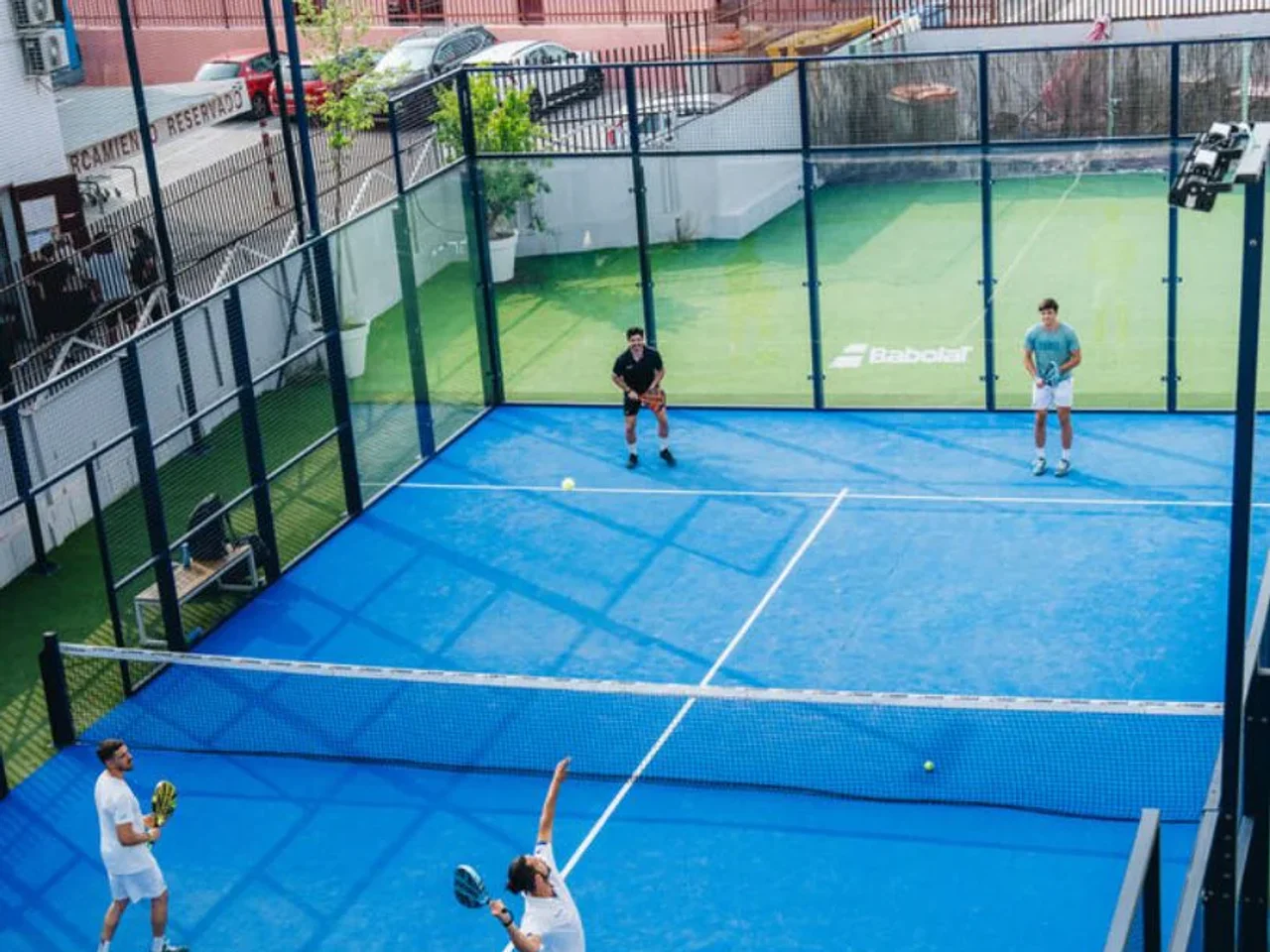
If you’ve watched a padel match and thought “okay, but how does any of this actually work,” this is the page for you. Padel borrows tennis scoring, squash walls, and badminton’s all-doubles rhythm, then mixes them into a sport that takes about ten minutes to start playing and a lifetime to stop being humbled by. We’ll walk through every rule and every shape of a real point, end with a glossary so the Spanish words stop feeling like Spanish words, and link out to the deeper shot guides as we go.
Read it once before your first session and again after it. The second read is where the rules become muscle memory. If you’re brand new and want the short version first, what is padel covers the basics in a couple of minutes; this guide is the full rule set.
TL;DR
Padel is doubles only, scored exactly like tennis (15, 30, 40, game), and played on a 20 by 10 meter court enclosed in glass back walls and metal mesh sides. You serve underhand below the waist. The ball is allowed to bounce off the walls after it bounces on the floor, the same way it would in squash, and that single rule is what makes padel padel. Whoever holds the position at the net usually wins the point. Whoever stays patient at the back without panicking usually wins the rally. Power is not a real strategy at the beginner level. Placement, lobs, and learning to read the glass are.
The hard part isn’t the rules. The hard part is letting your tennis instincts go.
The court
A padel court is a rectangle, 20 meters long by 10 meters wide, divided in half by a net. Each half is split into a service box and a back area by a service line three meters from the net. There’s also a center service line splitting each service box into a deuce side and an advantage side, exactly like tennis.
What makes padel a padel court instead of a small tennis court:
- Glass back walls. Roughly 3 meters tall, made of tempered glass. The ball plays off them.
- Glass plus mesh sides. Glass for the first 3 meters from the back, then metal mesh for the rest. The ball plays off the glass. The ball does not play off the mesh on its way back into your court (we’ll cover the edge cases below).
- An enclosed feel. You can’t run a ball down by chasing it past the baseline like in tennis. The wall is back there. Use it.
The court itself is faster than it looks because you have less ground to cover. A short ball that would be a winner in tennis is a wall rebound in padel. A lob that would land deep in tennis is a perfect setup for the team at the back to use the wall to take the net back. Everything you used to know about court geometry is mostly intact, but the walls add a third dimension to it.
If you’ve never seen one in person, the first thing that surprises everyone is how small it is. A padel court is about a quarter the area of a tennis court, and it feels closer to a bigger pickleball court than a smaller tennis court. The padel vs pickleball comparison goes deeper on the court geometry.
Scoring (it’s tennis, with two footnotes)
Scoring is identical to tennis, with one common variation you’ll see in pro and league play.
- Points within a game: 0, 15, 30, 40, game.
- At 40-40 it’s deuce. Win two points in a row from there to win the game.
- Win 6 games, with a 2-game lead, to win a set.
- At 6-6, play a tiebreak to 7 (win by 2).
- Most matches are best of 3 sets.
The two footnotes:
- Golden point. In FIP and Premier Padel professional play, deuce is “sudden death.” The team who wins the next point wins the game. The receiving team picks the side. Most amateur leagues now use this too because it speeds the game up. Casual play usually still does traditional advantage scoring. Ask before the match.
- Stamping the score. The server says the score before each point, your team’s score first. Get used to it. It keeps everyone honest, and at 4-3 in the third set it’s the only thing keeping you from forgetting where you are.
If you played tennis, the only thing you have to internalize is that the rest of the rule book is wildly different. The score sheet is one of the few places it isn’t.
The serve
The serve is the most distinctive rule in padel after the walls, and it’s the most likely thing a tennis player will get wrong on day one. Read this twice.
- The server stands behind the service line, behind their own service box.
- The ball must be dropped (not tossed) and bounced once on the floor before contact.
- Contact must be at or below the waist.
- The serve is underhand. No tennis-style overhand serves.
- The ball must travel diagonally into the opposite service box, the same way it would in tennis.
- The ball must clear the net without touching it. A let on the net is replayed.
- After bouncing in the service box, the ball can hit the side glass and still be in play. If it hits the mesh on the full, it’s a fault.
- You get two attempts. Two faults loses the point. (FIP rules also call a serve that bounces in the box and then into the wire mesh a fault.)
There’s a quiet sub-rule here that beginners miss: a serve that hits the side glass after bouncing in the box is in play, but a serve that hits the back glass after bouncing in the box is a fault. The receiving team has to play the serve, but they can choose to play it before or after it hits the side glass. They can also choose to let it go if they’re confident it’s heading into the wire mesh on the full (which would be a fault).
The fastest way to internalize the serve is to hit fifty of them by yourself before your first match. Bounce, paddle below the belt, low slice over the net. Don’t worry about pace. Pace will come.
Wall play (the rule that makes padel padel)
This is the rule that breaks every tennis instinct, and it’s the rule that turns padel into the sport people get obsessed with.
A ball that has bounced once on the floor is still in play if it then hits any wall (or walls). You can hit it back from there. That’s it. That’s the rule.
What this means in practice:
- A deep shot that lands at the back of your court and rebounds off the back glass is your ball. Set up, let the ball come off the wall, and play it back. This shot has a name: contrapared (literally, “off the wall”).
- A wide shot that goes out toward the side glass after bouncing is also your ball. The ball can hit the side glass after bouncing and you can still play it. (You cannot intentionally play it off your own side glass before it bounces. It has to bounce on the floor first.)
- The ball can bounce on your side, hit the side glass, then hit the back glass, and you can still play it. In high-level matches, the ball sometimes hits two or three walls before being played, which is hypnotic to watch and difficult to do.
What is not allowed:
- The ball cannot bounce twice on the floor. The standard “two bounces and the rally is over” rule from tennis still applies.
- The ball cannot hit the mesh on the full from your own shot (that’s out).
- You cannot hit the ball directly into the back wall on the volley to use it as a deflection. The ball has to bounce on the floor before it goes into your wall.
- The ball cannot hit the ceiling or any structure outside the playing area.
The wall is your friend. Tennis players spend their first six sessions chasing balls they should have let bounce, and padel players spend their first six sessions hitting balls into the wall instead of waiting for the bounce. Both habits unlearn around session four. The cleanest practice drill is just standing at the back of the court and letting your partner feed deep balls into the back glass, then playing them back. Twenty reps and your brain rewires.
The wall game is also where the entire shot tree lives. The bandeja is the shot you use when the other team lobs you and you need to keep your net position. The víbora is the more aggressive cousin once your bandeja is solid. The bajada is what you use when they hit a bandeja or víbora at you and you need to push them back. The kick smash is the finisher that ends rallies by sending the ball up and out over a side fence. Each one of those is its own piece because each one is the unlock for a phase of the rally. We’ll come back to them in the strategy section.
What’s in, what’s out
The simple rules of “in” and “out” once the ball is in play:
- Ball lands inside your opponents’ court, then rebounds off any wall, then bounces a second time? In. They can play it as long as the second bounce is after the wall, not before.
- Ball lands inside your opponents’ court, then bounces a second time before they get to it? Out, your point.
- Ball goes directly into the mesh from your shot, without bouncing? Out, their point.
- Ball passes through the door of the court (at the side mid-court entrance) before bouncing? Out. (Most amateur clubs treat the door area as out automatically.)
- Ball clips the top of the net and lands on their side? In. Play continues.
- Ball goes over the entire glass cage (over the back glass, out of the playing area)? Out, but in pro and high-level play, a player can step out of the court, run around the cage, and play the ball back as long as it returns into the court legally. This is called jugar por la puerta (“playing through the door”) and it’s spectacular when it works. We do not recommend trying it on day one.
- Net cord on the serve? Let. Replay the serve.
- Net cord during the rally? In. Play continues.
The “ball goes out” call is occasionally controversial in amateur padel because the back glass is high but not infinite, and very high lobs can clear it. In your first hundred matches you’ll see this maybe twice. Don’t worry about it until you do.
A point, played out
Here’s what a real point at the beginner-to-intermediate level looks like, beat by beat. The point isn’t always going to play out this way, but this is the archetypal version, and recognizing the pattern is half the work of learning.
- The serve. Underhand, into the deuce service box, low and angled.
- The return. The receiver waits for the bounce, lets it come up, hits a deep return down the middle to keep the serving team from coming forward easily.
- The first volley. The serving team has now followed their serve in (this is the standard pattern). They play a volley that goes into the open court, looking to keep the receiving team back.
- The lob. The receiving team is at the back of the court and out of position. The simplest tool here is the lob (globo): a high, deep shot that arcs over the net team’s heads and forces them to either hit a defensive shot above their heads or retreat to the back to let it bounce.
- The bandeja. A net team that knows what they’re doing doesn’t smash the lob. They play a bandeja: a controlled, slicing overhead that travels deep into the back of the opponents’ court without ceding the net position. The point of the bandeja is not to win the rally. The point of the bandeja is to keep the net.
- The bajada. The back team now has a bandeja landing deep, probably bouncing into their back glass. The right answer is a bajada: you take the ball high off the back wall and hit down on it, aiming to push the bandeja team back to the floor and reset the geometry of the point.
- The exchange. From here the rally usually settles into a back-and-forth: the net team plays bandejas and víboras, the back team plays bajadas and lobs, and somebody eventually loses patience or makes a mistake.
- The kill. A short ball, a panicked lob, a ball that sits up on the bounce. The net team plays a kick smash that lands hard, kicks up high, and sends the ball out over a side fence for a clean winner.
Not every point looks like this. But most points have a version of this rhythm: serve, return, lob, bandeja, exchange, finish. Once the rhythm clicks, padel stops being chaotic and starts being readable.
Doubles positioning, the basics
Padel is doubles only, every single match, every level. This makes positioning more important than in any other racket sport because the geometry is fixed and predictable.
Two basic principles:
- Move as a team. When you advance to the net, your partner advances. When you retreat, your partner retreats. The two of you are always roughly in line side-to-side, never at staggered depths. A staggered team is a team about to lose a point through the gap.
- The team at the net has the advantage. Padel is a game of court position. The team that holds the net wins more rallies than the team that doesn’t, full stop. Most strategy in the sport is about either keeping the net or stealing it back.
On the deuce side: the right-handed player typically plays the right side (deuce side) so they can play forehands cross-court and backhands down the middle. Two right-handed players will usually agree on who plays which side based on shot tendencies.
On the ad side: the left-handed player almost always plays the ad side (left side) for the same reason. A right-hander on the ad side has to hit forehands down the middle, which is a defensible setup but a less fun one.
Cover the lob. The most common point-losing positioning mistake at the beginner level is both players hugging the net while the other team has time to lob. As soon as you see the lob is coming, the player on the side it’s heading is already retreating. The other player slides over to cover.
Cover the cross. The cross-court is the longest line on the court and the safest target for the team at the back. Most points get won by hitting deep, cross-court shots that force errors out of the net team. Position yourself slightly cross-court of your partner so you’re covering the most likely shot.
Watch your partner’s shoulder, not the ball. Beginners watch the ball the entire point. The ball is fine without your help. What you actually need to track is your partner: where they’re moving, what kind of shot they’re about to play, where the next ball is likely going. The shoulder rotation tells you everything 200 milliseconds before the ball does.
Common beginner faults (we’ve done all of these)
A non-exhaustive list of what beginners do that gives points away. We are admitting to all of these from our own first season.
- Hitting the ball directly back when it could go off the wall. Tennis instinct says “play the ball.” Padel instinct says “wait for the wall to give it to you on a plate.” Pause one beat longer than feels natural.
- Letting balls go that are still in play. The classic. Ball lands deep, you turn around to walk to the back, and the ball bounces off the glass right past you. Track every ball until it has bounced twice.
- Trying to crush winners at the net. A hard volley at the net just gets returned harder. Soft volley angled into the open court wins more points. Power is the second-fastest way to lose at the beginner level.
- The first way is standing at the back forever. Padel is a net game. If you’re at the back of the court and not actively executing a recovery, you’re losing the rally. Get to the net as a team, every point.
- Not communicating. “Mine” / “yours” is the only vocabulary you need. Use it constantly. The team that calls the ball wins the ball.
- Missing the serve into the side glass. Three faults in a row from the same side and the ball is whispering to you. Slow the serve down. Aim middle, not corner. Get the serve in. The point starts after the serve, not during it.
- Hitting too hard at the net and getting lobbed off it. If your volleys are sailing past the service line on the other side, you’re inviting the lob. Aim for the feet of the back team, not the back fence.
- Forgetting that lobs are an offensive tool. Beginners think of lobs as a desperation shot. At every level above beginner, the lob is one of the highest-leverage offensive tools. A well-placed lob steals the net more often than not.
If you do half of those things in your first month, you’re normal. If you do all of them in your sixth month, find a coach.
Beginner strategy that actually wins points
Five principles. Internalize these and you’ll win matches against people who outrun you.
- Placement beats power, always. A ball aimed at the gap between the two opponents wins more points than a ball aimed at the back fence at speed. Find the gap. Hit the gap. The gap is usually down the middle and slightly cross.
- Lob early, lob often. The lob is the most useful shot in padel until you’re at the level where opponents can bandeja it back at you cleanly. Below that level, the lob is a free pass to the net. Use it.
- Get to the net as a team. Following your serve in, following your partner’s deep return in, taking the net after a successful lob: any time the geometry allows, advance together.
- The wall is your friend. Don’t fear deep balls. They’re going to come off the back glass, and they’ll come off it predictably. Stand far enough off the wall to let the ball play. About a meter is right for most beginner balls.
- Patience wins more rallies than aggression. Long rallies favor the team making fewer mistakes. The team trying to crush winners makes more mistakes. Hit the third-best shot consistently and let your opponents lose the point. This is the single hardest mental adjustment to make from tennis or pickleball.
If you’ve played pickleball, principle 5 will feel familiar. If you’ve played tennis, it will feel painful. The padel vs pickleball comparison covers the full cross-sport translation. The padel for tennis players guide handles the tennis-specific translation in depth.
Glossary
The Spanish words you’ll hear at any padel club, even ones with no Spanish speakers in the building.
- Pelota. The ball. Looks like a tennis ball, lower pressure.
- Globo. A lob.
- Bandeja. Defensive overhead with slice. The most-used overhead in padel.
- Víbora. Aggressive cousin of the bandeja, played with sidespin.
- Bajada. The downward attack played off the back glass to push the net team back.
- Chiquita. A short, soft ball aimed at the opponents’ feet to force a defensive volley.
- Dejada. A drop shot. Used when the back team is far back and you have time at the net.
- Contrapared. A shot played off your own back wall after the ball has bounced. The fundamental defensive shot.
- Por tres. The topspin kick smash that bounces in, kicks up, and flies out over a side fence. The classic out-of-the-cage finisher.
- Por cuatro. A smash that exits over the back fence, usually a flat, powerful one. The rarer, harder exit.
- Punto de oro. Golden point. The sudden-death point at deuce in pro and league play.
- Saque. The serve.
- Devolución. The return of serve.
- Volea. A volley.
- Smash / remate. A smash. The English word is used about as often as the Spanish one.
- Pareja. Your partner. Used the same way “doubles partner” is in tennis.
You don’t need to use any of these words on day one. You will absorb them by month three the same way you’d absorb them by living in Buenos Aires or Madrid for a summer.
Where this leaves you
If you’ve read this far, you understand padel better than most people walking onto a court for the first time. The rest is just reps. Find a court (the Padelkin court directory maps over a thousand of them, sorted by state), book a session, ask the desk for loaner rackets, and go play. The walls take about three sessions to start using on purpose. The bandeja takes about ten. The full strategy stack takes about a season. Every step of it is more fun than the last.
→ Subscribe to the Sunday Drop for a weekly Padelkin email: court spotlights, gear takes, and the questions every padel player asks first.
If there’s a question you keep getting asked about padel, send us a note at admin@padelkin.com and it might end up here.